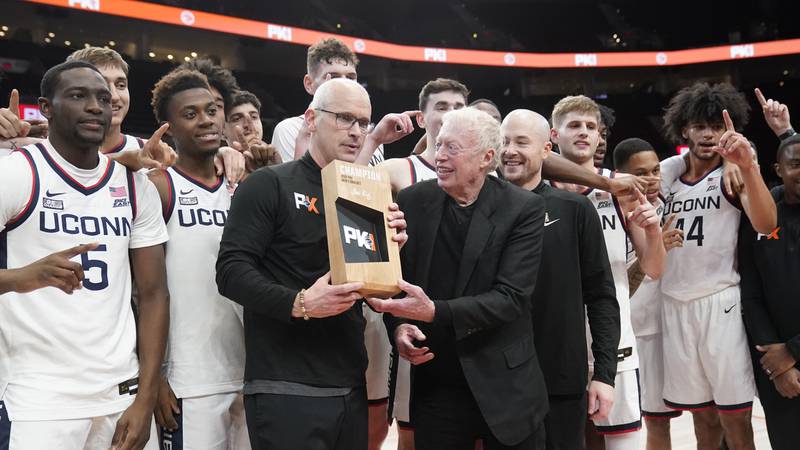
UConn Has a Lot of Positives to Take With Them Into the Sweet 16

As a natural pessimist, I wasn’t sure if UConn would live up to its No. 4 seeding in the NCAA Tournament. Would the team be able to play disciplined on both ends and put their best players in position for success? Would the Huskies be able to make effective adjustments and stay calm under pressure? The last two postseasons had left me scarred, but the players showed me on Friday and Sunday that there was no reason to be concerned.

Behind Adama Sanogo and Jordan Hawkins, UConn put together two outstanding second halves to earn comfortable wins over No. 13 Iona and No. 5 St. Mary’s and return to the Sweet 16 for the first time since 2014. Despite trailing for much of the first half in both games (UConn was down 39-37 at halftime of the opener), the team maintained composure and Dan Hurley made smart adjustments, particularly with using the Huskies bench. This allowed UConn to wear down both teams in the second half and earn 24 and 15-point wins. The Huskies have won each nonconference game they’ve played by double digits.

With UConn’s excellent performance in the opening rounds and losses by other top seeds, the team is again seen as one of the favorites to go to the Final Four and win a national championship. It is in arguably the toughest region (West) and facing a Sweet 16 opponent better than its record in No. 8 Arkansas, but the Huskies look like they are capable of beating anyone right now.

Below, I go over the strengths UConn demonstrated in the opening two rounds, as well as areas they struggled and need to improve upon to possibly win the region.

Adama Sanogo is a Monster

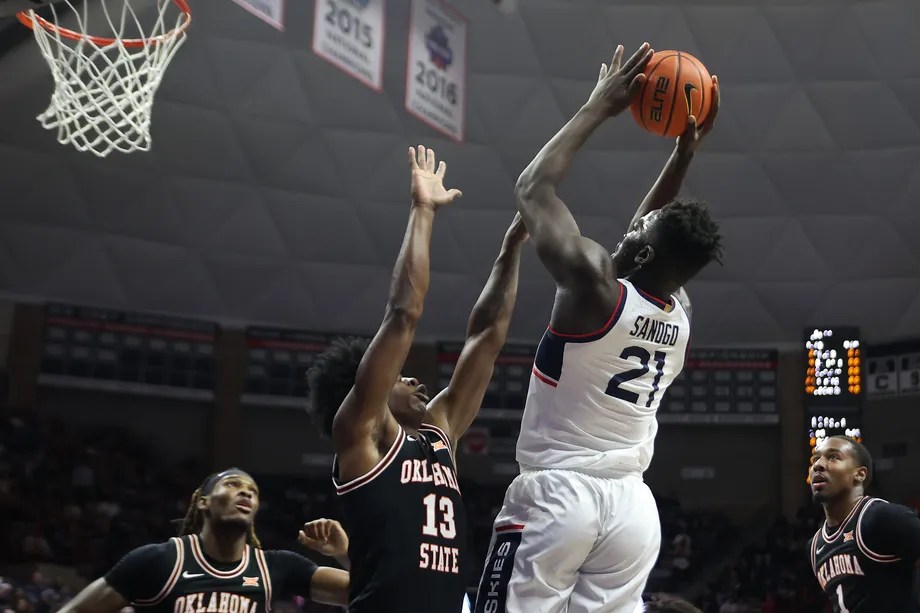
Sanogo’s performance this season has been unappreciated throughout, with the junior center being replaced by Hawkins as the team’s “star”. He continued to be one of the best big men in the country, and reminded viewers all over of this with unforgettable performances against Iona and St. Mary’s. Sanogo put up 28 points and 13 rebounds on 13-17 shooting in the first round and 24 and 8 on 16 shots in the second win, with his KenPom offensive rating finishing over 124 in both.

His shooting efficiency and rebounding made Sanogo the first player since Blake Griffin in 2009 to shoot 70 percent or better from the field and average 25 points and 10 rebounds per game in the NCAA tournament. Sanogo also scored the third-most points all time for any UConn player in the opening two rounds, behind Richard Hamilton and Caron Butler’s 55.

Against both the Gaels teams, Sanogo’s footwork and strength allowed him to dominate defenders. He did an excellent job of positioning himself deep in the post to score easy baskets, and using shot fakes and hook shots to score over defenders. Sanogo’s improved outside shooting forced players to keep tabs on him outside the paint, therefore making it easier for him to get to the basket. Sanogo’s effort on the backboards was outstanding in both games (he had six offensive boards against Iona), and resulted in a few extra points with putbacks. Sanogo’s success was also a reflection on the offense as a whole, as his teammates did a great job of getting him the ball where he could easily score.

Sanogo’s efficiency on offense and solid defensive play gave his teammates a big lift and allowed the team to stay in both games despite slow starts and then pull away in the second half. He and Donovan Clinigan combined to wear down the opponents, and will again have the advantage against a smaller Arkansas frontcourt. It’s often said that a team will go only as far as its backcourt in March, but Sanogo is trying to remind people that a dominant big man can lead his team to a national championship.

UConn Again Demonstrates How its Depth Makes the Team Stand Out

During its 11-0 start in nonconference play, the team’s depth was maybe its most distinguishing characteristic. That depth was key to UConn winning the PK85 Tournament, and made it stand out in comparison to other teams at the top of the polls in November and December. While that depth remained a strength in the Big East schedule for the most part, UConn’s supporting cast and bench was much more inconsistent. However, they have improved in the last month and were outstanding throughout against Iona and St. Mar’s.

The Huskies got 26 bench points against Iona, with a majority coming in the first half as they struggled to establish a lead. Naheim Alleyne and Joey Calcaterra each knocked down two 3-pointers and scored a combined 14 points, with Alleyne also playing strong defense against the Gaels tough guards. Clinigan was an absolute beast with 12 points, 9 rebounds and 2 blocks in just 14 minutes, putting up his best stat line in arguably more than two months. Calcaterra and Alleyne’s perimeter scoring helped pick up the slack for Hawkins and Newton, who made just one basket in the game, while Clinigan did an outstanding job of defending the rim and finishing shots at in the paint. This meant that there was barely any drop-off when Sanogo was on the bench, and it exhausted Iona’s frontcourt. Andre Jackson also did yeomen’s work on both ends, putting up 10 points, 7 assists and 5 rebounds to go with solid defense. With all the complimentary pieces clicking, UConn was bound to pull away from Iona once Hawkins finally began draining shots.

While UConn was much more reliant offensively on their starters against St. Mary’s, Clinigan and others still made big contributions. The freshman had 4 points, 5 rebounds, 3 blocks and even 2 assists in 11 minutes. Clinigan played exceptional defense and kept St. Mary’s from getting to the rim easily like they were in the opening minutes, and vacuumed up rebounds. Alleyne and Calcaterra each hit a 3-pointer and played solid defense, and they, Clinigan and Hassan Diarra were key to helping UConn bounce back from an initially poor start (it trailed 17-9 less than 10 minutes into the game). And while Newton and Sanogo mainly carried the offensive load until Hawkins started hitting threes, Jackson again did a little bit of everything and made some great plays for teammates, earning 7 assists to just one turnover.

As UConn goes on to face Arkansas and possibly other opponents, its depth should continue to be a big strength, particularly with Clinigan backing up Sanogo. It has guards that can provide strong defense and perimeter shooting off the bench, and Jackson’s versatility allows him to somewhat transcend stats. Now the Huskies just need to get Alex Karaban going offensively.

The Defense Locked in Over the Course of Both Games

UConn started both of last week’s games struggling on defense, especially against the guards of Iona and St. Mary’s. The players were beat off the dribble too much and failed to stop their man from getting downhill to the basket, and the help defense was lacking too frequently, especially in the round of 32. As the games went on however, UConn tightened up its man-to-man defense and covered the paint better, especially when Clinigan was on the floor. Combine this with solid perimeter defense and excellent work on the defensive boards, especially against St. Mary’s, and the Huskies had a recipe for success. In the end, Iona and St. Mary’s averaged just 0.95 and 0.86 points per possession. UConn’s ability to defend in the paint and help on pick and rolls will especially be tested against Arkansas, which makes it’s living offensively on attacking the basket and getting defenders in foul trouble.

Dan Hurley Shut up the Haters

While many people take it too far at times, the criticism Hurley has gotten over the past few seasons has been somewhat warranted, especially for UConn’s play in both the Big East and NCAA tournaments. Losing to double-digit seeds in March Madness in consecutive seasons was especially frustrating, and I still don’t understand what happened against New Mexico State. When the team lost to Marquette in the Big East semifinals, the pressure Hurley had on him entering last Friday must have felt suffocating.

Luckily, Hurley responded perfectly to the challenge. It’s clear he had UConn ready to play in both games and knew what advantages he wanted to exploit. Hurley recognized that Sanogo would be a handful for both opponents and made sure teammates got him the ball consistently, and wore down both opponents by exploiting the depth of UConn. He made sure to sub frequently and get the Huskies bench players scoring opportunities, and recognized that giving Clinigan extended minutes could demoralize the opponents. The team had great composure throughout both games even when they were trailing, and Hurley managed to keep Hawkins focused and prepared even when he was struggling to score. Hurley also made adjustments to the defense when necessary, such as having UConn press St. Mary’s to speed players up and throw their offensive flow off. While Arkansas will be a much tougher test and has an outstanding coach as well, I don’t UConn will loose due to a lack of preparation in any way.

Lessons UConn Must Learn From Marquette Loss

After UConn’s 70-68 loss to Marquette in the Big East semifinals last Friday, I had many reasons to be frustrated. The Huskies had lost another one-possession game for the second straight year in the semifinals, continuing a trait that has plagued the program for multiple seasons. The defense had stepped up midway in the second half after switching to zone, allowing UConn to rally from a 10-point deficit to tie the game at 60 with 9:26 remaining. However, this defense was negated by the offense going 3-13 from the field the remainder of the game, preventing the team from ever taking the lead.

After a layup from Adama Sanogo with a little less than three minutes remaining brought his team within two, the Huskies missed the final five shots of the game. Their shot selection during this stretch left a lot to be desired, as UConn focused on scoring from the perimeter instead of trying to get the ball to Adama Sanogo, who was being guarded by bigs in foul trouble, or at least playing inside-out. Joey Calcaterra missed two great looks from deep, and on the last play of the game Jordan Hawkins threw up a prayer after Dan Hurley elected to not call a timeout. Fittingly, Tristen Newton missed a wide-open Sanogo under the basket on the play.

Despite the frustrating loss, I am mostly at peace with the results. Yes, UConn has arguably more talent than anyone else in the Big East, including tournament winner Marquette. However, the team learned a lot of lessons from the game that can hopefully allow it to go on a tournament run.

First, I believe that the loss showed the Huskies that they need to be willing to get the ball inside more, whether for baskets in the paint or shots off of kick-outs and cutting to the rim. This is especially the case if the team is struggling heavily on 3-pointers, as it was in the second half. Despite Sanogo’s dominance inside (he scored 19 points), the junior center took just 11 shots and none in the final minutes as the guards failed to score. Donavon Clinigan was excellent as well with 7 points and 5 rebounds, but curiously played just 10 minutes. With UConn’s guards struggling and Karaban and Andre Jackson limited by fouls in the second half, Dan Hurley should have emphasized to get the ball in the paint and challenge the Marquette players who were in foul trouble (granted, he may have done so and the team just failed to execute). It’s hard to imagine Jackson and most UConn’s guards playing that badly on offense again versus No. 13 Iona Friday in the opening round of the NCAA Tournament, but the team should be able to score effectively inside considering the size, efficiency, and rebounding of Sanogo and Clinigan.

Second, the loss demonstrated that UConn needs to compete hard on defense the entire 4o minutes. None of the guards played strong man-to-man against Marquette and seemed to be unfocused particularly due to their offensive struggles. Jackson’s foul trouble also caused the Huskies defense to be much less dynamic, and Sanogo’s help defense was atrocious, allowing the Golden Eagle guards to score very effectively at the rim. Combine this with Marquette’s success from beyond the arc, and it was the perfect recipe for a loss despite UConn’s effective zone defense. While Iona has strong offensive guards and can score in a variety of ways, I believe the Huskies athleticism and depth should allow them to slow down the offense enough as long as the players are locked in. Hopefully, the semifinal loss will give UConn a lot of t to step up on that end.

Finally, UConn needs to play composed. Against Marquette, the players were visibly frustrated and Hurley was having difficulty communicating with them. As the team has done all year, it seemed to tighten up and show poor shot selection in the final minutes. They will have to avoid this and handle the press effectively against Iona, which is the bread and butter of its defense. As far as individual players, Jackson and Hawkins, who each had two of their worst games of the season, need to play with confidence and intelligence. Jackson needs to be the human dynamo he is capable of, and Hawkins needs to get out of its shooting sleep and start establishing a legacy of postseason success. Finally, Hurley needs to show more smarts as a coach for UConn to go on any sort of March Madness run. He admitted that UConn wasn’t prepared mentally to face Marquette, and struggled to find the right way to communicate to his players as the Golden Eagles executed great on both ends. Harley waited too long to switch to the zone in the second half, and should have played Clinigan more, especially after he was vital in UConn’s comeback to tie the game midway through the second half. Finally, Hurley must do a better job of using his timeouts, and calling ones in the final moments of close games if a play isn’t working effectively. Hurley’s decision to not call one on the final play of the game against Marquette was dumb and put way too much pressure on the offense. This is a make-or-break tourney for Hurley, as he needs to prove he can win at least one game in March and avoid an upset. I think he will, but any criticism he gets if UConn doesn’t is justified.

UConn can make a lot of adjustments to prepare for Iona tomorrow afternoon, based on what they see on tape from Iona’s games and the strengths and weaknesses the team has shown recently. The Huskies have the talent to beat anyone these next few weeks, as we’ve seen at points throughout the season. Starting Friday, it’s now the responsibility of the players and coaching staff starting Friday to play to the team’s strengths against individual opponents and minimize their weaknesses.

Observations on Last Week’s Games: UConn Continues to Look Like an Elite Team

This time last month, UConn was reeling. Following their home loss to Xavier on January 25th, the team had lost six of eight games and was under .500 in the Big East at 5-6. The defense was playing terribly, and UConn was getting inconsistent production from multiple starters, particularly Andre Jackson, as well as much of its bench. The worst part of this was that the Huskies were playing tentatively, and no one seemed to be having any fun. Never mind reaching the heights of the team’s 14-0 start: UConn needed to turn things around to still get a strong seed in the NCAA Tournament as well as avoid having to play in the first round of the Big East tourney.

Flash forward to today, and the Huskies are the hottest team in the Big East and again seen as one of the most likely squads to go deep into March and reach the Final Four. UConn defeated ranked Providence and St. John’s with ease on Wednesday and Saturday, with the first 18-point triumph on Senior Night one of the program’s signature wins of the season. The Huskies have one six of seven and are now 22-7 and 11-7 in the Big East (good for fifth in the standings), earning them a No. 14 ranking in the AP Poll yesterday. After two mediocre offensive games, they were on fire against the Friars and Red Storm, showing their versatility and depth. On defense, UConn did a much better job of limiting offensive penetration and defending at the rim, especially against Providence, and keeping players off the offensive glass. From better communication and focus as a team to improved coaching to individual players turning things around, everything is looking up for the Huskies going into the last two regular season games against DePaul and at Villanova tomorrow and Saturday.

Below, I discuss my famous observations about the Providence and St. John’s wins and the big-time positives and one negative fans can take from the games. UConn is frequently clicking on all cylinders right now. Let’s hope they don’t lose focus in this last week and hurt their momentum going into the Big East tourney.

Adama Sanogo Reminds Opponents and Fans That he is One of the Best Players in the Nation

As Jordan Hawkins has earned more and more accolades for his shooting and overall improvement in Big East Play, Sanogo has faded to the background a little bit, particularly since he is not a serious NBA prospect like Hawkins is. Sanogo’s reliability is sometimes not appreciated by the Husky fanbase, and the junior hasn’t been helped when asked to carry the load so frequently by the team, as was happening when the offense was being run through Sanogo during UConn’s January swoon. In February however, Dan Hurley made the smart decision to have the big man play significant minutes at the top of the key, allowing Sanogo to focus on setting screens and starting scoring opportunities facing towards the basket. Sanogo’s strength and footwork allows him to be very effective as a scorer from this spot, and it allows him to take better advantage of his surprisingly strong 3-point shot. It also makes it much easier for Sanogo to pass the ball. And of course, Sanogo has been just as strong as ever in the low post since Hurley’s changes, especially now that he is not being double-teamed so much. Sanogo showed off his increased offensive efficiency as well as an improved all-around game against Providence and St. John’s.

Sanogo averaged 17 points against the Friars and Red Storm on 75% shooting and went 10-12 at the free throw line. He also averaged 7 rebounds, grabbing 9 on Saturday. Sanogo did an excellent job of beating his man both down low and off the dribble from the top of the key, and displayed great touch and footwork. Against St. John’s, he did an outstanding job of attacking defenders head on and forcing contact, going 8-10 at the charity stripe. Sanogo also demonstrated his improved passing by dishing out a combined three assists in the wins. On the boards, Sanogo did a strong job of boxing out and reacting quickly to rebound opportunities.

Sanogo’s defense has been much improved in recent games, and that continued to be the case against Providence and St. John’s. He did a good job of staying in front of his man as well as providing help defense when necessary. Sanogo’s rim protection, which has dropped off this year, was much improved, and he recorded a season-high 3 bocks against the Friars. Sanogo did a strong job of avoiding foul trouble in the wins, although he certainly got help from Donovan Clinigan when he was on the bench.

Even if Hawkins is now UConn’s number one, Sanogo is 1B. His ability to score and rebound consistently is remarkable, and when Sanogo is locked in defensively as well, he becomes a great two-way player. Now that Dan Hurley has seemingly figured out how to allow Sanogo succeed without dominating the ball, he has become an even tougher matchup for opponents. Sanogo is UConn’s best big man of the last decade, and he is in position to add postseason success to his legacy if he continues to perform at this high of a level.

The Bench Has Come Alive Again

For most of Big East play, UConn has gotten little offensively from its best players even since it got out again, minus Clinigan at some points. Against Providence and especially St. John’s however, the bench awoke from its slumber. The Huskies bench players supplied 19 points against the Friars and 32 against the Red Storm, while also generally playing good defense.

The duo of Naheim Alleyne and Clinigan were a great bench duo in the last two games. Alleyne scored a combined 17 points and drained all three 3-pointers he took against Providence. He especially stepped up offensively in the first half to give the team momentum. Alleyne has been UConn’s most reliable defender off the bench, and again limited player’s ability to penetrate against the Friars and Red Storm. He had steals in both games and a block against St. John’s.

Clinigan, which had seemed to hit a freshman wall in previous weeks, appeared to be returning to his effectiveness he showed earlier in the season in the last two games. The freshman center scored a combined 16 points against Providence and St. John’s in 25 minutes, while shooting 6-12 from the field and 4-6 at the line. He also kept his turnovers under control, committing just one in each win. Clinigan also grabbed 9 rebounds, 7 offensive. Clinigan did a better job of finishing around the rim after struggling to do so for a few games and continued to do an outstanding job of earning putbacks. Clinigan also again showed how gifted he is at reading where shots will come off the rim and outmuscling  offensive defenders for offensive rebounds. It was heartening to see Clinigan finally performing under pressure on foul shots after struggling so much on them recently. After not being as much of a force defensively for much of February, Clinigan was a monster against a small Red Storm squad, blocking 5 shots and also earning a steal. With this increased effectiveness, Clinigan should earn more minutes against DePaul and Villanova squads that he matches up well against.

While seeing Alleyne and Clinigan have two strong games was satisfying, it was particularly fun to see Joey Calcaterra have a great game against St. John’s. The super senior, whose 3-point shot had abandoned him in conference play, drained three of four treys on Saturday and made four free throws in just 17 minutes, finishing with 15 points. It was the first time Calcaterra had more than two 3-pointers in conference play, and tied his season high in points. His teammates did an excellent job of finding Calcaterra against the Red Storm, and he also did an excellent job of moving without the ball. With no surprise, the UConn fans at Madison Square Garden went crazy when Joey California caught fire. While Calcaterra must have more than one good game to prove that he is back on track, the guard can certainly give the Huskies a huge weapon off the bench in tournament play if he has a strong touch in a game.

When UConn is at its best, the aforementioned players as well as Hassan Diarra are capable of stepping up on both ends when needed, especially sense the team has one starter in Andre Jackson whom can be very  inconsistent offensively. The performance of the bench against Providence and St. John’s was very promising and fun to watch. However, the bench players must prove that they can be consistent in more games for the Huskies to reach their potential.

Andre Jackson is Changing the Game on Both Ends

Throughout January and early February, no one had a bigger target on their head than Jackson, sometimes to an excessive extent from fans. The junior was playing undisciplined on both ends, and appeared to have no confidence at times offensively. However, he has been much better defensively in February, and his offense has improved as well now that Hurley and Jackson have placed him in the dunker’s spot to get easier scoring opportunities and not be tempted to regularly shoot from the outside, where Jackson has struggled heavily this season. Against Providence and St. John’s, Jackson was locking down multiple players while making plays for both teammates and himself around the rim.

While Jackson was effective offensively against Providence, especially in setting up teammates (he scored 4 points on 3 attempts and dished out 4 assists to just one turnover), it was against St. John’s where he especially impressed. Jackson scored 15 points on 5-6 shooting, going 4-5 at the line, and added 3 assists. It was the second time in three games Jackson dropped a season-high 15. The forward completed multiple athletic shots around the rim, including a dunk and putback, and drained an open 3-pointer. He did a strong job of getting the ball to teammates for open shots., and as always had multiple moments where he came out of nowhere to grab loose balls on both ends.

Jackson’s defense was strong in both games, particularly in the first when he had to cover Friars star Devin Carter. Jackson limited Carter to just 7 points on 3-10 shooting and was consistently in his face while not fouling. Against the Red Storm, Jackson was again aggressive defensively and had 2 blocks while playing 38 minutes.

After Jackson’s underwhelming play for much of the Big East schedule, fans had a reason to feel that the small forward was having an underwhelming year and would never reach his full potential. In the last two weeks however, the adjustments Hurley made to simplify things for Jackson offensively, and his overall re-commitment on the defensive end, have allowed Jackson to reach his full potential on both ends. Jackson is a playmaker and agent of chaos on both ends, and UConn is more dangerous going into March as result.  

Rebounding Continues to be Elite

After a drop-off in UConn’s rebounding during its struggles, the team has improved on the glass on both ends the last few weeks, and that was on display against Providence and St. John’s. Their offensive rebounding has been particularly strong, and the Huskies are now the number one team in both the country and Big East at offensive rebounding percentage (39.1% and 40.3%). After struggling on the boards in the first matchup with the Friars, UConn outrebounded them 40-20 overall and 15-8 on the offensive end in last Wednesday’s 87-69 win. While the Huskies had no players in double-digits, five grabbed at least 5 rebounds, led by Alex Karaban’s 8 (he also scored 16). In contrast, no Friar has more than 5 and Bryce Hopkins, one of the best rebounders in the conference, did not record one against UConn’s front line. While the battle on the boards between the Huskies and St. John’s was more even, they still outrebounded the Red Storm 38-32 and won on the offensive glass. UConn had four players with five or more rebounds, led by Sanogo with 9 and Tristen Newton with 7. While Joel Soriano was great on the boards for St. John’s grabbing 11, no other player had a big rebounding game. As in other recent games, the Huskies did an excellent job boxing out and reading balls off the backboard and got to loose balls very quickly.

UConn’s ability to rebound will be a huge strength in tournament play, and especially in the NCAA Tournament when games will likely be less physical. It’s been proven over time that teams which rebound well can frequently go deep into March Madness, and I can see UConn winning a tournament game because of its rebounding and scoring second-chance points. Now let’s make it a reality.

The Huskies Still Need to Improve Their Ball-Handling and Focus for 40 Minutes

The to issues identified in the title have been a huge problem throughout conference play and cost the team wins. While UConn did a better job with passing and ball-handling against Providence and St. John’s, it still committed a combined 27 turnovers and had more turnovers than their opponent in both. Players still made unnecessarily risky passes that were out of bounds or stolen, or either were stripped or lost the ball out of bounds. Newton, Hawkins, and Jackson were the primary culprits. The Huskies are continuing to make unforced errors that reflect a lack of basketball IQ. While UConn was in control throughout against both Providence and St. John’s, they made a handful of silly fouls that allowed both teams to keep their offense afloat in both games. The team especially grew lackadaisical on defense in the final few minutes against the Red Storm, making the score look much closer than it actually was. The Huskies need to tighten up on defense against DePaul and especially at Villanova this week, which will beat UConn if it isn’t giving 100 percent effort.

Positives and Negatives for Huskies to Take From Last two Games

UConn has gone on runs in February the last two seasons, and it looks like this year’s team may be poised to do the same. After a brutal January, the Huskies are 4-1 in their last five Big East games, including a 15-point triumph against Marquette that’s one of the team’s signature wins of the season so far. They have improved to 20-7 overall and are 9-7 in the conference and in sole position of fifth place in the standings, good for a No. 18 ranking in the AP Poll.

UConn’s last two games at Creighton (a 56-53 loss) and home against Seton Hall (a 64-55 win) the past two Saturdays did an excellent job of reflecting UConn’s strengths and weaknesses at this point in the season, and where the team still needs to improve to go on a deep NCAA tournament run that seemed in the cards during the nonconference schedule. Below, I discuss my thoughts on these specific strengths and weaknesses to a greater extent. They range from the performance of individual players to execution on both ends of the floor and Dan Hurley’s decision-making. There’s certainly a lot to think about going into tomorrow’s Senior Night rivalry game against Providence.

The Positives

Andre Jackson Has Signature Performance

As every UConn fan is well aware of, Jackson has been incredibly inconsistent in conference play, displaying a huge loss of confidence on offense that has caused him to be undisciplined on defense and struggle to lead his teammates at times. Jackson has been working with Hurley to put himself in position to score more easily and be efficient offensively however, and it slowly but surely seems to be working and helping Jackson play better all-around.

The junior had 15 points, 10 rebounds and 3 assists against Seton Hall, while shooting 5-6 inside the arc and 5-7 at the free throw line. He also added a block and steal while playing 35 minutes. Jackson’s stats don’t reflect just how important he was to UConn dominating the paint and taking control of the game in the second half. After missing four open 3-pointers early, Jackson made the wise decision to focus on scoring around the baseline and attacking the basket on fastbreaks, situations where he could use his otherworldly athleticism to beat Pirate defenders at the rim. The point forward had a handful of spectacular dunks, one highly memorable fastbreak layup, and got to the charity stripe effectively. Jackson did a strong job of leading UConn on the fastbreak, where it was more effective than the last couple of games, and all his assists were pinpoint (he would have had more if teammates didn’t lose Jackson’s passes).

He stepped up in the biggest moments, recording four points, three rebounds and a block after entering the game with the Huskies leading 44-40 midway through the second half, allowing the lead to stretch to 16 at 56-40 with less than seven minutes remaining. Jackson also hit two free throws with UConn up 61-53 and less than a minute left to seal the win. Jackson’s defense continued to be aggressive but disciplined throughout the game, allowing him to stay in front of ball-handlers and avoid foul trouble.

Just because Jackson has been playing slightly better doesn’t mean that he is anywhere close to playing at his full potential. Jackson still struggled to make shots and do too much against the BlueJays, leading to 3 reckless turnovers and a 3-11 performance from the field, and was limited against Marquette due to foul trouble. He will need to play intelligently on offense and need to stitch together a couple good performances in a row before many have full trust in Jackson again. Still, I am confident he will do everything to improve. Jackson must be at least somewhat effective for the Huskies to beat Providence.

The Defense Has Been Vastly Improved

After a period in which UConn’s defense had played poorly, especially in defending the dribble drive, the Huskies have picked up their intensity and efficiency against the last four opponents and done a much better job defending the paint and limiting their offensive rebounds. UConn held Creighton, an elite offense, and Seton Hall to a combined 36.2% shooting and just over 25% on 3-pointers. UConn consistently challenged and altered shots at the rim, generally covered the 3-point line well, and communicated effectively on defense while staying in front of their man. While the Huskies forced only 25 turnovers over the two games and had more against both opponents (although they blocked 7 Seton Hall shots), their ability to play at a high level and not allow second chance opportunities limited runs by both teams, and kept UConn in the game against the BlueJays and build a large lead against the Pirates even with an inconsistent offense. While it’s certainly possible that the defense and rebounding will again fall off, especially against a Providence team that matches up well with the Huskies, the team is currently playing the quality defense Dan Hurley expects from his teams.

Hassan Diarra Fulfills His Role

It’s been a weird year for Diarra. While he was never meant to regularly play a lot of minutes barring an in injury to Tristen Newton or one of the UConn shooting guards, his overall shooting numbers have gone down in all three areas and he is averaging just 2.8 points on 32.5% shooting in 14.7 minutes per game. However, Diarra’s consistently strong defense and decent ball-handling has allowed him to be valuable in certain games. While the stat line wasn’t huge on Sunday, Diarra’s performance against Seton Hall was one of his best of the season.

Diarra had 4 assists (with no turnovers), 3 rebounds, 4 points and a block and steal in 24 minutes against the Pirates, the highest total he has provided in Big East play. Diarra supplied his usual bulldog defense, and with Newton playing one of his games where he is missing in action, Diarra shared regular ball-handling duties with Jackson. He did an excellent job of providing scoring opportunities for Hawkins and others and got Jackson going, and ran the fastbreak well when necessary. Diarra’s shooting still needs to improve if he wants to play more, but he is definitely UConn’s best backcourt defender off the bench and is capable of shouldering ball-handling duties if necessary. Along with Clinigan, I think Diarra can be the Huskies most valuable weapon off the bench in tournament play if he ends the regular season well.

Jordan Hawkins Continues to be More Creative on Offense

While it might seem word at first glance to focus on Hawkins offense performance the last two weekends with him only shooting a combined 5-18 from three in the past two games (not that any other Husky is setting the world on fire), the sophomore is continuing to do an effective job of attacking and finishing at the rim and getting to the free throw line, while also contributing in other ways. Hawkins was particularly effective in doing so against Seton Hall, going 4-6 inside the arc and making all three of his foul shouts against an elite defense to lead UConn with 20 points. He continues to do a better job of recognizing when he is off from three, and instead moving without the ball to get inside and using his speed and creativity to beat defenders at the rim. Even in the Creighton game when his shot was off throughout and he struggled with foul trouble, Hawkins showed the defense to continue to go to the rim. Throw in his continued strong rebounding and doing a better job of avoiding turnovers, and Hawkins continues to show just how well-rounded he’s become over the course of the season.

If Hawkins can continue to be effective at the rim and get his 3-point shot going, then he should help get the Huskies out of their recent offensive funk and and put them in position to go undefeated in the remaining conference games. He needs to be especially effective against Providence, where he struggled in the first game, and open up the floor spacing for his teammates.

Donavon Clinigan has finally Started to Get Going Again

For a long time, Clinigan was struggling. Although you could argue that Hurley was too reluctant to let Clinigan play through mistakes or try to play him and Sanogo together for even short stretches, he wasn’t doing as strong of a job of finishing shots around the rim and avoiding foul trouble while struggling heavily around the rim and turning the ball over two months. In the last two games however, Clinigan has been much better rebounding the ball and finishing around the rim, despite playing just 22 combined minutes.

He had 7 rebounds and four assists in just 11 minutes against Creighton, and it’s hard to understand why Hurley didn’t play him more when Sanogo wore down in the second half and Clinigan could continue to provide UConn more second chances on offense. Hurley seemed to realize his mistake and gave Clinigan 15 minutes against Seton Hall with Sanogo playing under the weather. The center had 6 points and rebounds and shot 3-4, finishing multiple shots teammates missed at the rim. Clinigan could have played better on defense, but he still picked up just one foul. He was a big part of UConn’s run midway through the second half to put them up by 16, and also provided another big body when the Pirates surged back near the end.

Clinigan still could have been much better on both ends against Creighton and Seton Hall. He committed a combined 5 turnovers and still can’t hit a foul shot, and he has struggled to stop the big men on both these teams. However, Clinigan had one of his best games against Providence with a double-double, and he matches up very well against their big men. Clinigan can be especially effective if Hurley is willing to play more zone and possibly play Sanogo and him together to make it tougher for the Friars to score and rebound. Clinigan is still one of the best freshmen big men in the nation, and Hurley will need to have more trust in him for the Huskies to play up to their full potential in the remaining games.

The Negatives

Turnovers Continue to Kill the UConn Offense and Lead to Easy Opportunities for Opponents

UConn has had an issue with turnovers throughout conference play, a majority of which have been unforced. It had a combined 31 turnovers against Creighton and Seton Hall, with 18 coming against the Pirates. While the Huskies did a good job of handling the ball against the BlueJays in the first half, they did a much poorer job in the second half. Again and again, silly turnovers killed UConn’s chances to take the lead even as its defense played excellent. Turnovers were a problem throughout Saturday’s game. They first led to a long scoring drought at the end of the first and beginning of the second, and then helped Seton Hall rally and get within two baskets in the final five minutes. In both games, many of the turnovers were easily preventable. They included moving screens, passes that were either dropped out of bounds or uncatchable, and the players wasting too much time to initiate the offense and losing the ball as they rushed to make shots. In addition to Clinigan, Sanogo and Newton were major culprits, with Newton committing 7 turnovers in the two games.

At this point, UConn’s propensity to commit turnovers is a legitimate weakness and not just an occasional bad habit. It commits almost a higher percentage of turnovers than almost any team in the Big East, and almost any team in either the metrics or AP polls (12.9 per game on the season). Teams that commit turnovers at this level rarely go deep in the NCAA tournament, even if they have many strengths otherwise. What’s especially frustrating is that the same types of turnovers are happening from game to game despite many being preventable, and a result of either general sloppiness or poor decision making offensively at the most costly moments. I don’t know how much Dan Hurley works on correcting these mistakes in practice, but this weakness is arguably the biggest reason why UConn is just a pretty good team and not a great one.

Tristen Newton is Mia on Offense Again

Newton has been an enigma all season. The senior is UConn’s best player at getting to the basket and handling the ball, and can be an elite rebounder and passer when playing at his best. And yet it’s always two steps forward and one step back with Newton, and way too much of the time he plays disengaged. After scoring in double digits six straight games and putting up a triple-double against Marquette, Newton scored just 2 points against Creighton and 6 against Seton Hall on 2-8 shooting, while committing 7 turnovers against just 6 assists. Newton did not attack the basket in either game and failed to reach the line against the BlueJays. His passes were risky at times, and Newton did a poor job of moving without the ball to get open for perimeter shots. With the senior not in the flow of the offense and his defense not quite up to par, it’s no surprise Hurley has given more time to an aggressive Diarra in the last two games.

At this point of the season, there is no excuse for a player as talented as Newton to disappear this frequently, especially when UConn needs him the most. When he was playing at a high level in late January and early February, Newton was consistently attacking the rim, getting to the free throw line and taking solid care of the ball. While Hurley arguably had Jackson handle the ball more against Creighton and Seton Hall in an effort to get him going offensively, that doesn’t give Newton an excuse for being passive offensively and either attacking the basket or finding ways to get open on the perimeter when the opportunity presented itself. If I were Hurley, I would have Newton handle the ball more against Providence and have Jackson focus on playing defense and rebounding and getting open on the baseline for easy scoring opportunities, while emphasizing to Newton that he needs to attack the basket. Newton’s size should give him a good advantage over the Friars guards, and he has a great opportunity to get to the rim and reach the free throw line. If Newton doesn’t get his act together, there is a good chance he will play fewer minutes and could leave Storrs with the reputation of being a disappointment.

UConn Still Isn’t Demonstrating That it Can Play Well Down the Stretch

The Huskies biggest weakness this season along with turnovers has either coming back to win against opponents in the final minutes of games or being inefficient when they have leads in the final 1o minutes, allowing opponents to outplay UConn and make them sweat even in wins or even coming back for improbable comebacks, as we saw at Seton Hall in January. The team has still not one a game by five or fewer points this season. In my mind, there are a few connected reasons for why this keeps happening:

  1. UConn waits too long to initiate its office down the stretch no matter if they are leading or trailing. Against Creighton and especially Seton Hall, the Huskies spent a ton of time dribbling before running offensive plays. This results in rushed shots, turnovers and generally a lack of communication. Against the Pirates, a great example of this was Sanogo getting the ball late in the shot clock multiple times and hesitating between whether he should shoot a 3-pointer or drive the ball, resulting in multiple turnovers. I don’t know how much of this offensive strategy is based on Hurley’s orders or the players just not executing well (I suspect more of the latter), but UConn should start running the plays earlier in the shot clock even if they have a lead late in the game, as it should allow it to either have more time to get an efficient shot or offensive rebounds to extend the possession.
  2. As I already discussed, UConn is susceptible to a variety of sloppy turnovers, particularly if it is pressured.
  3. The Huskies frequently do a poor job of inbounding the ball when other pressure, resulting in poor passes and turnovers and sometimes even 5-secound calls. If the team works on doing this a lot in practice it doesn’t seem to pay off, as either the guards don’t do a good job of getting the ball to either Jackson or one of the bigs, who usually have a height advantage over the defenders on an inbound.
  4. Dan Hurley doesn’t regularly call timeouts when UConn is having trouble inbounding, even if he has multiple timeouts remaining. As a result, 5-second calls and turnovers can occur, and Hurley isn’t able to draw up plays to make inbounding easier and plan out what plays the team wants to run after it gets quality inbound passes.
  5. A seeming lack of mental toughness, which I have already discussed on the site. UConn consistently gets tense and makes unforced errors late in games, while sometimes reflecting the demeanor of their coach. While it’s understandable that the freshmen could have these jitters, it’s hard to understand how players as skilled and experienced as Sanogo, Jackson and Newton to suffer the same issues.

Dan Hurley’s Recent Coaching

Hurley’s in-game coaching and ability to make adjustments has always been inconsistent, but it has been especially questionable the past few games. I have been particularly concerned about Hurley’s late-game coaching, with his hesitancy to call timeouts, make changes to inbound plays and encourage the team to play faster seemingly causing UConn to be undisciplined down the stretch. It’s not just then, however. I believe Hurley doesn’t have UConn push the tempo enough in general, and that he encourages the team to take too many 3-pointers even when they are struggling . He seems to not always hold starters accountable for listless plays and mistakes, especially Jackson, and that he doesn’t have Newton be the primary ball-handler enough so that he is consistently involved in the action. While UConn’s defense has been much better, I still believe that Hurley isn’t creative enough with the lineups, especially using zones or double bigs defensively and not playing Clinigan enough in general. I will give credit fore realizing that Diarra was having a great game against Seton Hall and sticking with him with Newton struggling. Still, Hurley seems to be playing checkers too much against opposing coaches when they are playing chess. He will certainly be forced to make adjustments against Ed Cooley and Providence.

My Exciting, Memorable and Disappoint Return to Gampel to See UConn-Xavier

This January has been four weeks of heartbreak for Huskies fans, and probably the most challenging month the program has experienced since the final years of Kevin Ollie’s tenure. At this time last month, fans were rightfully believing UConn was the best team in the nation and would win the Big East. Now, the Huskies are 5-6 in conference play after Wednesday’s home loss to Xavier, and both Husky nation and the wider college basketball fanbase are wondering if the team is capable of pulling itself together in February, or will instead stumble into the conference and NCAA tournaments.

Together with an electric crowd, I got to see UConn up close at both its best and worst in at Gampel Wednesday against Xavier in an 82-79 loss. In the first half which ended with UConn down 15 points, I saw a team that is a mess both offensively and especially defensively. This collection of players is incapable of both stopping  opponents one-on-one and making high-quality shots, and does not communicate well with one another on either end of the floor. In the second half, the Huskies became a completely different team. They constantly both attacked the basket and scored on layups and free throws, while hitting both open and challenging perimeter shots. On defense, they used both multiple zones and constant ball pressure to force turnovers and generally just make a formidable Musketeers offense uncomfortable (and yet they still scored more points in the second half). As a result, UConn came roaring back into the game and almost made an unforgettable comeback. It cut the deficit to one multiple times, but a few costly mistakes on multiple ends in the final moments thwarted a comeback, resulting in the Huskies falling to 5-6 in the Big East and still searching for answers on how to beat the best teams in the conference.

It was very sad to see UConn lose in person at Gampel, especially sense you could sense how eager the fans were to see the Huskies get a win they desperately needed. Still , I loved the experience and will remember the game for a long time. Despite losing to Xavier, there were a few positives both the team and the fans could take from the games, which they can hopefully learn from and use to get back on track in February. At the same time, there were weaknesses that continued to present, which UConn needs to mitigate and solve if it wants to be a threat in March. Below, I go into detail about both some positive and negative observations I took from the game.

The Positives

  1. Jordan Hawkins Continues to Emerge as a Star

During the preseason, there was a lot of talk about how Hawkins had significantly improved as an offensive player and could emerge as one of the best scorers in the Big East. In non-conference play and the early portion of the Big East schedule, Hawkins was a reliable scorer but only occasionally took over games. Over the last four games however, Hawkins has been the Huskies best player and carried the team even when he has gotten very little help. The sophomore has scored 20 or more points three times and averaged 23 while shooting 42 % from three and over 53% overall, even as the team has gone 1-3.

Hawkins was sublime against Xavier in the second half after a quiet start, and finished with 28 points while shooting 5-10 from beyond the arc and making all seven of his free throws. Despite the Musketeers defense keying in on him, Hawkins was able to get free off screens and knock down huge 3-pointers, even with defenders draped over him several times. He also continued his recent habit of attacking the basket when the opportunity arose. Hawkins was able to make some challenging layups and consistently get himself to the charity stripe. He single-handedly kickstarted the UConn offense and got the team and the crowd back into the game, and was the best player on the court. It’s just a shame that his effort couldn’t be rewarded with a comeback win.

Besides his scoring, Hawkins has visibly taken on a bigger leadership role in the last month, while continuing to be a solid rebounder and defender. Hawkins still can improve his ball handling (he had three turnovers against Xavier) and tighten up his defense, but if he continues to play at this level than he will be in position to be drafted high in the first round of the NBA draft if he chooses to leave UConn after the season. Hawkins is demonstrating that he is capable of leading the Huskies on a possible March Madness run, something no other Husky is doing right now. Let’s just hope the team gets back on track and becomes capable of going on such a run.

  • Tristen Newton Seems to be Turning a Corner on Offense

For much of the Big East schedule, Newton has been a disappointment at point guard. The senior transfer, whom was one of the best offensive players in the American Athletic Conference at East Carolina last season at shooting guard, was playing extremely passively on offense earlier this month and appeared uncomfortable running the offense. Yes, Newton had been inconsistent on offense the entire season, but gone was the player early in the season whom constantly attacked the basket and got to the free throw line, was a credible 3-point threat, and handled the ball effectively. In addition to Newton’s lack of aggressiveness, he appeared to struggle with sharing the responsibility of running the offense alongside Andre Jackson, who was injured and then coming off the bench when Newton got off to a strong start on the season. Combine Newton’s poor offensive play with an inconsistent performance on defense, and UConn fans had a legitimate gripe with the big-time transfer.

In the two games before the contest against Xavier (at Seton Hall and home against Butler), Newton finally started to demonstrate the aggressiveness Dan Hurley was looking for. He scored 11 points in both games while going a combined 11-12 at the free throw line, and had a combined six assists (unfortunately, Newton also committed five turnovers). Amazingly, this was the first time he had scored in double figures in consecutive games for the first time all season. Newton’s awakening from his slumbers set the stage for a very strong performance against the Musketeers.

Newton gave his all against Xavier offensively. He was UConn’s best player in the first half while almost everyone else was struggling, and continued to attack the rim in the second half while also hitting two timely treys. Newton finished with 23 points, tying a season high, and went 6-12 from the field and 9-11 on free throws. These were the most field goals Newton had drained in a game for the Huskies. While Newton made some poor decisions with his passing, committing five turnovers, he did a very strong job of moving the ball and pushing the tempo, especially in the second half, while playing with high intensity throughout. Newton recognized he needed to step up with Andre Jackson and the other guards besides Hawkins struggling, and he helped UConn right the ship in the second half and put Xavier’s defense on its heels in the second half. It may not have been quite good enough for a win, but Newton helped demonstrate what the team’s offense needs to do if the Huskies are going to go on a winning streak.

Hopefully, Newton’s memorable performance Wednesday can continue to be built upon. Newton’s better at earning free throws than almost anyone in college basketball, and if he can sustain his improved shooting and tighten up his ball handling and defense, than UConn may finally have the versatile player they thought they were getting out of the transfer portal. Newton may not be able to fit the role of a traditional point guard, but if he continues to play to his strengths and emerge as a leader, it will take a huge load off of Jackson, Adama Sanogo, and the rest of the team’s guards. I think that Newton can sustain this level of play and Dan Hurley can push him effectively. As a result, the Huskies will improve in February and hopefully when it matters most in March.

  • The Use of Zones and Heightened Pressure on Defense Caused Xavier to be Less Efficient in the Second Half

Even as UConn’s man-to-man defense has sucked and been extremely foul-prone for the last month, particularly when guarding players that are attacking the paint, Dan Hurley has been extremely reluctant to make any adjustments, whether that is playing zone or planning Sanogo and Donavon Clinigan together. This has resulted in the team allowing opponents to come back and win multiple games, and the players to ultimately lose confidence on both ends. After his defense’s ugly performance in the first half against Xavier however, Hurley finally took the plunge and made significant defensive adjustments in the second half, which were responsible for the Huskies nearly making an incredible comeback. It  may have taken way too long to happen, but Hurley’s flexibility on the defensive end may be a great sign going forward.

While UConn was more likely to struggle against defending Xavier’s elite offense playing man-to-man, it’s poor defense in the first half was very predictable. The Musketeers jumped out to a 9-0 lead and were ahead by double digits for almost the entire half, and ultimately went into the break shooting 50% and up 2-24. The Huskies got beat off the dribble constantly and allowed many open layups, and did a poor job of defending the rim. They also surprisingly struggled to stop Xavier beyond the arc, allowing several open threes as players did a poor job of closing out. Alex Karaban, Jackson and Sanogo especially struggled on defense, with Jackson continuing his habit of allowing players to below by him and then picking up ticky-tack fouls going for steals.

As fans are well aware of, Hurley isn’t a coach who makes quick adjustments or inclined to change up his defense. But with Xavier again shredding UConn on that end, he finally decided he had no choice but to switch up to a zone. Bu alternating between 1-3-1 and 2-3 zones and pressuring the Musketeers full-court, the Huskies were able to regularly force turnovers and offensive fouls and caused them to look discombobulated, especially as the half wore on. Jackson was especially effective on defense with these adjustments, as they allowed him to use his athleticism to hound defenders. UConn’s aggressive defensive certainly got the crowd into the game, and it also allowed the offense to get more fastbreak opportunities and open shots everywhere on the floor.

I strongly feel that if the Huskies hadn’t adjusted on defense, it would have easily lost by double digits. Playing zone and upping their ball pressure made the team much better on both ends of the floor, and allowed it to be in position to possibly win. While UConn should be much more effective playing man-to-man in the next two games at DePaul and Georgetown, Hurley absolutely should continue to experiment with playing zone and pressuring ballhandlers in half-court sets for a few minutes. He could possibly even play Sanogo and Clinigan together and see how effective they are on both ends. The same goes for experimenting in practice. By doing all this, UConn can be in better position to slow down Marquette’s elite offense and earn a huge home win next Tuesday.

  •  The Crowd Was Outstanding

The XL Center can be an intimidating environment for opposing players, as it can host more fans. However, it cannot compare to Gampel Pavilion, especially when it is sold out and many students show up. The crowd was charged from the opening tip, and were able to still maintain solid energy throughout the first half even as UConn played terribly. However, it was the second half when the energy ramped up. As the Huskies began to force turnovers and Hawkins caught fire, the crowd noise became deafening. They stayed standing throughout the remainder of the game, and all this excitement helped rattle the Xavier players and cause timeouts. Even when UConn couldn’t get over the hump and take the lead in the final minutes of the game, the crowd continued to provide players encouragement. The fan’s excitement was infectious to experience in person, and heartwarming to see considering how much the team has been struggling. Let’s hope the Huskies can turn things around and reward the fanbase for its support.  

The Negatives

  1. The Poor Play from the Bench, Karaban and Jackson

UConn’s bench play has been weak for much of the Big East schedule after being a huge strength during the nonconference schedule, and it was no different against Xavier. The quartet of Naheim Alleyne, Hassan Diarra, Clinigan and Joey Calcaterra scored just six points and grabbed three rebounds in 35 minutes while shooting 2-9 and recording no assists. Calcaterra and Alleyne largely couldn’t hit the broad side of a barn, going 1-6 from three. Clinigan had maybe his worst game of the season, missing two crucial free throws and picking up two ugly fouls in just seven minutes. His struggles forced Sanogo to play 33 minutes. None of the other bench guys particularly distinguished themselves defensively, either.

Karaban’s struggles weren’t a huge surprise on defense. He was facing a pair of strong big men in  Zach Freemantle and Jerome Hunter who are both bigger and stronger than the freshman. Still, Karaban did not box out great and grabbed just three rebounds in 35 minutes. He was mostly MIA on offense, scoring just five points with only one assist and missing two of three 3-pointers. The freshman will bounce back offensively, but he needs to be more aggressive and badly get stronger in the offseason. It will be a huge help when Samson Johnson fully returns from injury and takes some of those minutes.

While Karaban’s inconsistency is to be expected from a freshman, Andre Jackson’s is much more concerning. The junior ability to score just enough and keep defenses honest has completely evaporated in January (just under five points per game on 30% shooting overall and under 25% from deep). Jackson, who started Wednesday’s game by missing his first seven shots and was 3-12 overall, still rarely scores on anything more than dunks, floaters or open 3-pointers. Worse, Jackson’s passing and decision-making has gone down as the Huskies have floundered. He has averaged nearly two turnovers per game in January and made crucial ones against Seton Hall and Marquette. Jackson’s assist numbers have gone down (he had two against Xavier , and he is regularly playing out of control and asking teammates to make plays they are incapable of doing. For example, in the second half Jackson threw an alley-oop pass to Sanogo on a fastbreak, even though Sanogo doesn’t have the vertical left to finish that play, missed an open dunk and putback, and was called for a controversial goaltend which he also fouled on, leading to a 3-point play which halted a UConn run. And in addition to Jackson’s offensive struggles, I have also talked about the overaggressive defense which has regularly put the junior captain in foul trouble, and Jackson’s inconsistency with keeping players from driving by him.

While other players haven’t been great lately Jackson’s decline has hurt the Huskies very badly. His play has declined across the board, as well as his leadership and confidence in games. Jackson will have to play more under control on offense while figuring out where he can best contribute and reestablish his identity as a lockdown defender. His level of play took a jump around this time last year. If Jackson can do that again, it will take pressure off of the Huskies stars and allow the team to be a big threat again both in the conference and especially nationally.

  • The Huskies Yet Again Played a Bad Half, and Made Critical Mistakes in the Final Minutes  

In all of UConn’s six losses, a big theme is the team not playing competitively for all 40 minutes. Usually this has been the case in the second half, as the team was either up or tied at halftime in the first five losses. Wednesday’s game was a big reversal, with UConn playing its worth first half of the season by far. It looked all out of sorts on both ends, and Dan Hurley took way too long to call timeouts and refused to change up his defense despite his players getting burned on that end. Whether the team was not well-prepared enough or tin a state of shock after falling behind by so much can be debated, but either way the opening 20 minutes were an embarrassment. There is no good reason for the Huskies to put together a full game and make the changes to ensure they do.

By falling behind by 15 at halftime, the Huskies had almost no margin for error during their comeback. After they cut the deficit to a basket in the final minutes multiple times, errors raised their ugly heads. First, Newton was called for an offensive foul when driving to the basket along the right baseline with 4:03 remaining and the score 73-72, with the officials ruling that he pushed off. Then with score 78-77, Hawkins slipped on a drive and lost the ball before fouling two minutes later. After a layup by Jack Nunge, Newton had a very similar turnover a minute later. UConn was able to force a turnover on the next play, but Dan Hurley than called a timeout with 20 seconds left as Hawkins drained a jumper, wiping away the basket. Xavier called a timeout 11 seconds later with the same score to give the Huskies a chance to set up a final scoring play, but whatever was drawn up was blown up by excellent Musketeers defense. Desmond Claude bailed them out when he fouled Newton with two seconds left, but he unfortunately made the second free throw he was trying to miss, depriving the team’s bigs any chance at scoring on a putback. In a vacuum, most of these errors were understandable considering how desperate the team was playing and their urgency to finally take the lead. However, they added up, and UConn was handed its second consecutive loss by a basket.

Throughout Hurley’s tenure in Storrs, UConn has been sadly famous for losing close games to good teams again and again. It looked like things may finally change after the 14-0 start, but so far that has proven to be just a mirage. To put it bluntly, UConn needs to learn how to execute down the stretch and make winning plays in close games, and fast. Otherwise, it is not going far in tournament play yet again, and Hurley’s seat will start to get warm.

  • A lack of Fundamentals and Smarts When Playing Man-to-Man Defense

I’ve alluded to the poor defense in the first half throughout this article, but I had to devote an individual section to it considering just how lousy the D was. Among other things, it featured:

  1. Doing a terrible job of limitingdribble penetration, leading to either quality layups or open baskets for bigs or kickouts to the perimeter for open shots
  2. Poor help defense and communication among players, helping lead to Xavier foul shots as well
  3. Poor rim protection, particularly by Sanogo
  4. A loss of confidence by the entire team, which carried over onto the offensive end.

Almost all defenses would initially struggle to stop the Musketeers, and their ball movement and ability to make tough shots was remarkable to see in person. Still, there is no excuse for UConn’s man defense to be this bad against every strong opponent. Even if playing zone is somewhat effective, you can’t do that for 40 minutes against any opponent. I hope that the Huskies worked a lot on improving their defense in every facet of the game during their 6-day layoff between games, and that it will pay dividends immediately.  

  • Dan Hurley needs to be better  

Hurley is a solid coach and a great program-builder and recruiter. Players and recruits seem to love competing for him and Hurley’s high-energy style. That being said, at some point Hurley needs to figure out the issues with this team and start beating tough opponents so the players are ready for March Madness and UConn gets a good seed. He needs to make quicker adjustments, especially in-game, be willing to remove players for a short time if they are not executing, and just be more flexible on both ends of the floor. Hurley prides himself at being a defensive coach, and it’s up to him to figure out a way to improve the Huskies man defense and put players in position to succeed. Ditto on the offensive end, especially with getting more out of the bench players. Starting the season so well was thrilling, and this is probably Hurley’s most talented team at Storrs on paper. But it ultimately doesn’t matter if the team isn’t mentally tough and the program fails to go on a tournament run.  

UConn Must Execute on Defense to Beat Xavier

With UConn primed to play its biggest game of the season tomorrow home in Storrs against Xavier and your esteemed writer in attendance (a Christmas present), it is a good time to look at the No. 19 Huskies (16-5, 5-5 in the Big East) and figure out what they needs to do well to shut down the No. 12 Musketeers (16-4, 8-1), which is first in the conference and has an elite offense. Xavier has the best starting five offensively in the conference and can score efficiently from all areas of the floor, as UConn learned in its devastating 83-73 loss on New Year’s Eve.

The Huskies looked great on both ends of the floor in its 86-56 win against Butler on Saturday, but it’s hard to say the team is rounding a corner in any way when the Bulldogs are already a bad team that was missing its best player. UConn must beat Xavier and go over .500 again to show it can be an upper echelon team in the Big East and gain momentum heading into what should be two comfortable wins at DePaul and Georgetown. It should be favored to win at Gampel, but there are multiple areas the Huskies must play well in to emerge victorious, starting with playing quality defense.

Below, I talk about what UConn needs to do well defensively to win Wednesday. I am not sure if the team has the skills and mental fortitude to slow down Xavier’s offense and win what should be a close game, but it’s time for the team to put up or shut up. I look forward to being there with nervous anticipation, and will provide you dear readers with my observation’s on the team’s performance in many areas and the crowd atmosphere within the next few days. Let’s go!

The Defense Needs to be Smart and Flexible  

Starting in mid-December against Georgetown, UConn’s previously elite D began to slip, and the Xavier loss initiated lousy defensive performances in each of its losses over the next three weeks, with the team’s win against Creighton the lone receipt. After the Huskies took a 50-43 lead three minutes into the second half in Cincinnati, Xavier’s offense started dominating their defenders and never let up. UConn could not stay in front of Xavier’s guards, and they attacked the basket constantly, either scoring around the rim or finding bigs Zach Freemantle, Jack Nunge and Jerome Hunter for easy baskets. Most frustratingly, the Huskies were unable to play smart defense and avoid unnecessary contact, resulting in 23 free throws on 28 attempts. Ultimately, the Musketeers shot over 60% inside the arc and scored 1.12 points per possession (PPP). With all the talent Xavier has, they are fully capable of repeating this success Wednesday.

The inconsistent defense and inability to defend players without fouling continued in the next game at Providence, with the Friars making 29! free throws and winning by 12 despite making five fewer field goals tan UConn. After a strong performance against Creighton, the defense again wilted throughout the next two games against Marquette and St. John’s, as the team’s scored at least 1.10 PPP. After a great first half defensively against Seton Hall, the Huskies allowed the Pirates to score 41 points and shoot over 60% in the final 20 minutes to come back from 17 down and hand UConn a devastating last-second loss.

In these four losses, the team continued to struggle mightily with defending the rim. The guards were beat off the dribble constantly and Husky bigs could not defend the rim effectively, leading to layups or free throw opportunities. The Husky defenders did a particularly poor job of staying in front of their man and avoiding biting on pump fakes, leading to either touch fouls as players reached for the ball as a player got past them or guys jumping in the air and fouling opponents after they faked a shot (Andre Jackson and Alex Karaban seemed like were the biggest offenders in these categories). UConn has shot fewer free throws than their opponents in all five losses and recorded more turnovers in four. UConn players have seemed to frequently miscommunicate with each other and leave players wide open after going to defend another opponent, leading to easy baskets. Of course, all these issues seemed to crop up down the stretch in these losses, leaving the Huskies looking rattled. Combine all these factors with not boxing out consistently on rebound opportunities and an obvious lack of hustle at times, and you have some of the poorest defending since Dan Hurley’s first year in Storrs.

While UConn looked much more disciplined on defense against Butler, they were still playing a team that lacks guards who can attack off the bounce and which was missing star big man Manny Bates. In Xavier, it is matching up against a squad that shoots 39.7% from three and is also excellent in the paint. First, Husky players just need to fight harder to get over screens and stay in front of their man when defending one-on-one. It sounds cliché, but players have been lazy and fundamentally unsound on defense at times, especially when also struggling offensively. Along the same lines, defenders need to avoid committing costly ticky-tack  touch fouls or leaving their feet on defense after fakes. If the Huskies can control their hands and stay on the floor when defending, then they should avoid the foul trouble which has plagued them and force Xavier to win by taking tough shots. In addition, players need to recognize they can’t overextend too much on the Musketeers out on the perimeter, as it could result in easy drives to the basket and defenders being unable to recover. As great of a 3-point shooting team as Xavier is, UConn needs to be more concerned with protecting the paint and avoiding fouls. It has defended the perimeter extremely well throughout the season, and I think it will do a solid job again Wednesday. Finally, the Huskies and especially their bigs need to box out more effectively, especially off perimeter shots and Hurley needs to reiterate this to his guys. I would hope the ending against Seton Hall gets that message across to the team.

At the same time, UConn and Hurley need to make adjustments. Freemantle absolutely dominated Karaban last game using his size and athleticism, and could absolutely do so again if he is not double-timed. In some situations, Hurley needs to be willing to try double-teams on other hot players as well. In addition, he should be willing to let players switch defensively in certain situations. UConn should play zone as well if Xavier is scoring easily. A 2-3 zone could prevent guards from being able to easily score in the paint or get the ball into the bigs. Such a zone could also allow the Huskies to use both Sanogo and Clinigan for small stretches, providing both rim protection and a big advantage on the boards. With Samson Johnson finally back from injury, he can hopefully provide the team much needed rim protection. I am sure UConn has a detailed defensive game plan ready they will try to follow. What they need to do is be able to adjust when things aren’t going the team’s way. The Huskies defense failed to do that at Xavier and all their losses.

During Hurley’s tenure at UConn, the program has hung its hat on being relentless on defense and shutting down the paint. The team was doing that earlier in the season, and it still has great defensive numbers overall when you look at analytics, including being ranked 13th nationally on KenPom. It is time for the Huskies to regain their identity and play strong defense for 40 minutes. While the offense must meet certain goals as well, UConn will ultimately win or lose with their defense. Time to buckle up.

Game Observations on OSU Win: Hawkins Breaks Out, Andre Continues to Break Out, and an Underperformance on the Boards

It was not the prettiest performance, but UConn got its first standout home win of the season Thursday against Oklahoma State, defeating the Cowboys 74-64. It improved to 9-0, with all the wins by double digits, and earned their fourth win of the season against a team ranked in the top 50 of KenPom. The win ultimately propelled the Huskies to a No. 5 ranking in the AP Poll on Monday in advance of a huge contest at Florida tonight.

UConn dominated the final seven minutes of the first half to go into the break with a 17-point lead. After OSU fought back from a deficit to take a 28-25 lead with 7:25 remaining, the Huskies overpowered it on both ends, going on a quick 15-0 run and ultimately outscoring the Cowboys 23-3 to enter halftime with a 48-31 lead. The run was propelled by outstanding perimeter shooting from Jordan Hawkins and UConn powering their way to the free throw line and earning 19 shots. It also earned high-quality scoring opportunities due to aggressive defense and poor ball-handling by Oklahoma State, which committed 10 turnovers. Hawkins had 18 first-half points and Adama Sanogo 13.

After a solid first five minutes, the Huskies played poorly on offense and inconsistently on defense for the remainder of the game. The Cowboys were more disciplined defensively and kept them off the offensive boards. Hawkins got fewer good looks and Sanogo made poor decisions on offense. No one else really stepped up, with Newton and Karaban being particularly inefficient for how many minutes they played. On defense, OSU was able to attack the basket much more successfully, with UConn being caught out of position on drives and looking tired. It also was able to consistently beat the Huskies for offensive rebounds and earn second-chance opportunities. Still, they did just enough to keep the Cowboys from going on an extended run. Maintaining a double-digit lead throughout the second half.

As discussed more below, the trio of Hawkins, Sanogo and Andre Jackson carried UConn to the win. Hawkins had his best game of the season with 26 points, shooting 5-9 on 3-pointers. Sanogo finished with 20 points, 6 rebounds, and 2 steals while playing excellent defense. Jackson continues to improve each game since coming back from injury. He was again making hustle plays on both ends of the court and finished with 11 points, 7 rebounds, 6 assists and 3 steals. Joey Calcaterra hit two 3-pointers on his way to 9 points. The Huskies managed to win handedly despite shooting just 37.5%, but did make 24 free throws and commit just 7 turnovers. Kaleb Boone and Avery Anderson scored 15 and 14 for Oklahoma State, respectively. OSU outrebounded UConn 39-35, but committed 17 turnovers.

Below, I analyze more in depth the importance of Hawkins, Sanogo and Jackson, the team’s strong defensive performance in the first half, and the significance of UConn’s ability to still control the game despite playing mediocre for long stretches.

Jordan Hawkins and Adama Sanogo Demonstrate Why They Can be Such a Dangerous Inside-Outside Offensive Combination

Every fan knows the potential that Hawkins has, and that he has been praised by both coaches and reporters for being one of the most natural shooters in the program’s history. Still, the sophomore shooting guard has never been consistent enough to meet those expectations, partly due to injury issues. On Thursday night however, Hawkins was on fire and had probably the best game of his UConn career. Hawkins scored a career-high 26 points, shooting 5-9 from three and 6-13 overall. He did a great job of coming off screens for quality shots and moving without the ball, and hit shots with hands in his face as well. Hawkins hot streak in the first half was essential to the Huskies getting enough breathing room in the first half that they could withstand an inconsistent final 15 minutes. While Hawkins was quieter in the second half, he still had a few key daggers. He also did an outstanding job of getting to the line, hitting a career-high 9 free throws on 12 attempts. Throw in another strong night on defense for Hawkins, and he did an outstanding job of carrying UConn in a game that could have been a trap otherwise.

Meanwhile, Sanogo had a big bounce-back game from his season-worst performance against Iowa State. He scored 20 points on 7-14 shooting, going 6-8 at the charity stripe. It was Sanogo’s fifth game of 20 or more points. In the first half, he showed he could bully his way to the basket, as well as some nifty footwork and the ability to step out and hit jumpers. Sanogo did a strong job of getting to the line throughout the game, where he made 6-8. He also had 3 offensive boards. Sanogo’s defense was also mostly phenomenal, as he altered a ton of shots and got “7-1” Mousa Cisse into foul trouble, and did a strong job of blocking out Cowboy players. Sanogo also had 2 steals. Sanogo still has plenty of work to do on offense in practice, as he reverted to looking for his shot and not sharing the ball in the second half, resulting in some ugly shots and disgruntled teammates. Ultimately though, he was still fabulous for most of the game.

Andre Jackson, Human Highlight Machine

As he has returned from injury, Jackson has gotten better from game to game, at least from my perspective. While the junior did not have a double-double like the previous game against Iowa State, Jackson had his most efficient offensive game of the season with 11 points on 4-7 shooting and 2 free throws, 7 rebounds, and 6 assists with no turnovers. Jackson attacked the basket and finished better than in previous games, and scored on a beautiful alley-oop dunk. More importantly, he took over the unofficial point guard role with Newton and Hassan Diarra both ineffective. There, Jackson did an excellent job of handling the ball throughout against a strong defense and pushed the tempo, especially in the first half. He delivered some pinpoint passes inside, especially to Sanogo, and was able to find Hawkins for open perimeter shots. Jackson was also again strong on the offensive boards. Just like last game, Jackson was everywhere on offense, getting loose balls, grabbing tough rebounds, and constantly moving the ball.

Jackson was no less dynamic on defense. In addition to his three steals, Jackson forced multiple travels or offensive fouls and loose balls, and regularly altered shots around the rim. His athleticism allowed him to hound ball-handlers as well as to beat OSU players to rebounds, as he had 7 defensive boards. Jackson has become more disciplined on defense since returning, as he committed just three fouls in 30 minutes despite the highly physical play. It does not matter how many points Jackson puts up on a given night. He can make an impact in so many ways that he is the straw that stirs the drink for UConn.   

UConn Needs to Step Up its Rebounding

One of Oklahoma’s State’s biggest strengths is its work on the boards, and they outclassed the Huskies there, especially in the second half when Cisse reentered the game. The Cowboys won the rebounding battle 39-35 overall, and outrebounded UConn on the defensive end 26-22. It did not do a good enough job of boxing out or anticipating rebounds, especially defensive ends. While a lot of praise goes to OSU’S effort, the Huskies appeared tired as the game went on (it was their fourth game in seven days) and a lack of focus in the second half after the team had established a comfortable lead.     

UConn’s performance on the boards, and the struggles of its bigs besides Sanogo, can also be somewhat attributed to the absence of Samson Johnson and the inexperience of Karaban and Donavon Clinigan. Karaban has been run ragged due to Samson’s injury and Hurley’s confidence in him. He played 38 minutes against Iowa State and over 25 minutes against both Alabama and Oregon. Karaban has justified all the minutes with his quality play across the board, but it finally caught up to him against Oklahoma State, as he scored just six points and missed the trio of 3-pointers he took. Karaban fought valiantly against Boone defensively and on the boards, grabbing six rebounds, but he lacked the strength and athleticism in check. Clinigan was of no help, failing to score in seven minutes and picking up two fouls that forced him to sit the remainder of the game. Considering how great he has been recently, it is easy to wave off his performance as a mulligan. Having Johnson against Oklahoma State and similarly constructed teams will be huge, as it will give UConn another big who is a strong rebounder and an already proven rim protector, which the team does not really have right now. And obviously, it will take a load of Karaban and Sanago. Let’s hope he is back for Big East play as has been reported.

UConn’s Transfer Guards Need to be More Consistent Offensively

While Joey Calcaterra continues to be effective against tough competition (he had nine points and two 3-pointers against OSU) and turning into a folk hero among the fans, Naheim Alleyne, Newton and Diarra have been all over the place recently. Alleyne played himself out of a starting spot the last four games, scoring a combined six points while shooting 0-9 from deep (he was scoreless against the Cowboys in 10 minutes, missing both his shots). Alleyne is now hooting just 23% from three, and he has not made up for it enough by getting quality jumpers or reaching the free throw line, where Alleyne is outstanding. His defense has been his saving grace while his shooting is off, but Alleyne played poorly on defense against OSU when he was in, failing to switch correctly or cut off drives several times. Hurley will give Alleyne plenty of opportunity to prove himself, and he has too much history as a quality shooter to not step up in big moments at some point if he stays healthy. Right now, however, UConn fans have plenty of justified reasons for being frustrated with Alleyne.

Newton has been all over the place with his numbers throughout the season, but the last two games have been especially frustrating the last three games. He did little offensively in the first half against both Alabama and Iowa State and committed eight turnovers in the second game. Against Oklahoma State, Newton scored just two points on 1-5 shooting, did not get to the free throw line, and had just one assist. Jackson appeared to take over many of the major point-guard opportunities as the game went on, but there is still no excuse for Newton to be that little involved on the offensive end, and be somewhat passive early in general. Yes, the Huskies have more talent than it appeared coming into the season, but Newton will be one of the most important players when all is said and done.

While Diarra has been solid as a backup point guard on defense, his offense has been mostly down starting with the Phil Knight Invitational. He went scoreless in eight minutes against Oklahoma State, missing three shots and getting no assists, and scored just a combined nine points at the Invitational while going 2-10. Diarra’s 3-point shot has been off all season, and his ball-handling continues to be inconsistent. Hopefully, Diarra can continue to bring it on defense and get more comfortable offensively once UConn enters Big East play.   

UConn Dominant Across the Board in Winning The PK85 Invitational

Starting with UConn’s coming-out party as a national power in the early 90’s up through Kevin Ollie’s 2014 championship squad, the Huskies had plenty of signature regular season performances over the span of just a few days, with these weeks frequently being a signal of tournament success down the line. These unforgettable weeks dried up in the last few years of Ollie’s tenure, and Dan Hurley had not quite brought them back even as the program improved the last three seasons. Until now.

UConn‘s performance at the Phil Knight Invitational over Thanksgiving weekend was remarkable. The Huskies curb—stomped their way through the competition in Portland to win the championship. They blew out Oregon on Thanksgiving and then wearing down and pulling away from Alabama and then Iowa State in the tourney title game. Ultimately, UConn won the games by an average of 19 points, improving to 8-0 and jumping all the way to No. 8 in the AP Top 25.

As I discuss more below, the games were especially satisfying to watch because of the unique ways UConn won them. Against Oregon, it won 83-59, setting a program record for 3-pointers made in a game with 17 and completely shutting down the Ducks backcourt. It then beat a highly talented Alabama team with more excellent defense and star performances by Adama Sanago and Jordan Hawkins. Finally, the Huskies overcame Iowa State’s relentless defense and foul trouble, relying on their dominance of the boards and great performances on both ends by freshman Donavon Clinigan and Andre Jackson to win 71-53. The team’s depth and cohesiveness were reflected in Clinigan being awarded the tournament MVP.

UConn has won all its games by at least 15 points, and scored over 70 in each while holding opponents under 60 five times. It has shot up to No. 6 in the KenPom standings, and is the only program in the country that is ranked in the top 10 in both the site’s offensive and defensive algorithms. It is also the highest UConn has been ranked in the poll since it was ranked eighth in January of 2012. The team’s start makes a compelling case that it is the most talented team UConn has had since then, and that the Huskies are very capable of winning the Big East and going on a significant run during March Madness. I know that things can change quickly, especially due to injury, but I am sky high on the Huskies right now.      

Here are a few observations about UConn’s play at the Phil Knight Invitational.

Huskies Display Their Ability to Pull Away Against Quality Opponents

Last season, UConn had an ugly habit of getting ahead against good teams, and then allowing them to rally back before losing by a few baskets. It hurt their seeding in the NCAA Tournament and then defined its loss to New Mexico State in the first round. This group is very different however, and eventually put its boot on the neck of Alabama and Iowa State and did not take it off.

First, the Huskies poor shooting early in the second half allowed the Crimson Tide to rally from 14 points down and tie the game multiple times. With less than nine minutes remaining, UConn completely flipped the script when Sanago and Hawkins returned from foul trouble and Newton got hot. Sanago and Newton went on a 16-1 run all their own. Sanago started dominating in the paint and hit a three, while Newton started bullying his way to the line and hit a three, ultimately giving the Huskies a 68-53 lead with less than six minutes remaining. Sanago finished with 25 points, and Newton had 9 with eight assists and four steals. Three other players (Hawkins, Alex Karaban, and Joey Calcaterra) were in double figures.

While UConn led the entire time against ISU, the Cyclones were able to keep it close with their defense, as the Huskies struggled to make shots and committed a lot of sloppy turnovers. ISU got it to within single digits in the open minutes of the second half, and trailed 53-48 with 9:47 remaining and Hawkins on the bench with four fouls (He would never return). Alex Karaban immediately kickstarted a 7-0 run with a three, and the Huskies ability to continue to dominant the boards, attack the basket and get easy looks and free throws for Newton and Clinigan, and most importantly play outstanding defense let them immediately regain control of the game and cruise to the victory. Clinigan had 15 points and 10 rebounds on 5-6 shooting, and Andre Jackson was everywhere on defense and contributed 10 points, 13 rebounds and five assists.

The mental toughness and poise UConn so far in not only these two games and throughout the season has been remarkable to see. Even when it has been cold on offense or struggling with foul trouble or turnovers, the players and Dan Hurley have been calm and communicated well with one another, eventually finding a solution to these problems. This is despite incorporating so many new players, who have immediately brought into UConn’s culture and established chemistry with the returnees. These qualities that the team has showed it should be able to keep its cool against any team, no matter the stage.

Offense Shows Remarkable Depth Throughout the Entire Invitational   

Throughout the preseason, Hurley and his staff along with the players were always talking about how UConn would have great depth and more versatility on both ends due to their experienced transfers and the skills of Karaban and Clinigan. Through the first five games, that depth was on display and much needed because of the absence of multiple starters at different times. Still, fans still needed to see that many players could make an impact against quality teams, and the Phil Knight Invitational was a perfect stage to have their questions answered. Suffice to say, the Huskies answered any and all doubters.   

Tristen Newton was the lynchpin of the offense through all three games. Newton averaged 15 points, 5.7 assists and 4 rebounds while also snatching six steals. He shot 52% overall, 8-12 from three and     15-17 at the free throw line. Newton is becoming more comfortable as the team’s point guard, and displayed poise, a strong handle, and the ability to find open teammates for quality scoring opportunities, especially against Oregon and Alabama. While Newton was still inconsistent at making shots inside the arc, his 3-point shot was much cleaner in the tourney and he demonstrated the ability to both shoot from the top of the key and off screens. And of course, Newton continued to be a machine at getting to and converting at the free throw line, especially during scoring runs. Newton has clearly become more comfortable from game to game, and I think he has already established himself as a strong replacement for R.J. Cole.

Adama Sanago did not quite play at an All-American level in the Invitational, but he was still solid offensively against Oregon and dominant at times versus Alabama. Sanago plaid second fiddle to Newton in the quarterfinals bit still had a very efficient day, scoring 12 points on 5-7 shooting with 6 rebounds (2 offensive). In the semifinals, he was a huge handful in the paint on his way to 25 points on 8-12 shooting, 4 rebounds and 2 blocks. Sanogo did an outstanding job in that game of both bullying defenders and scoring on jumpers and shot fakes, as well as passing out of the post. His offensive performance against Ohio State was ugly and marred by foul trouble (just 4 points on 1-5 shooting in 22 minutes), but Sanago at least contributed some solid defense to make up for it. Considering how hard-working and intelligent Sanago is, I have no doubt that he will get in the gym and work on what he needs to do to be more efficient against Oklahoma State Thursday and going forward.

The rest of the team made their unique contributions on offense throughout the three games. Hawkins brough some much needed sharpshooting in the first two games, scoring a combined 34 points and shooting 42% overall and 8-20 from three. He showed the ability to knock down contested 3-pointers and help the Huskies go on key runs, while also driving to the hoop and making layups or free throws when needed. Alex Karaban continued to be a Swiss-Army knife for UConn, scoring when needed (especially on the perimeter), getting big offensive rebounds, and doing an outstanding job of moving the ball to teammates for scoring opportunities. Clinigan, who we will talk about more later, was a nightmare for the three opponents as a substitute for Sanogo. His height and bulk made it almost impossible for the defenders to contain Clinigan on alley-oops or putbacks, at least without fouling. The Bristol freshman also averaged 3 offensive rebounds in the tournament. Joey Calcaterra continued to be deadly on the perimeter, shooting 6-10 from three and averaging almost 10 points, and recorded four assists against Oregon. While Jackson’s scoring did not show up until the championship game, the junior still had five assists both in that game and against the Ducks, and grabbed three offensive rebounds against Alabama and ISU. Finally, Hassan Diarra came up with seven huge points in just 15 minutes, in addition to his usual strong defense.

UConn’s offensive depth is reflected in all the analytics they have recorded this season. It has assisted 65.9% of field goals, which ranks 10th in the nation. The team is 13th in offensive rebounding percentage (38.1), 19th in effective field goal percentage (56.8), 23rd in 2-point percentage (57.7), and 59th in 3-point percentage (37.1). The Huskies bench outscored its starters against Iowa State, and came close to doing so in the other two games. With the improved shooting and ball movement and handling of this year’s squad, UConn can have good offensive nights against any opponent, something which certainly not the case last season.

Defense and Rebounding Continues to be Outstanding Against Big Time Programs      

Over the last few seasons, UConn has been defined by its consistently strong defense and proficiency on the boards. So far this season that has not changed, especially with the added depth the team has. In the Phil Knight Invitational, the Huskies held Oregon, Alabama, and Iowa State under 45% shooting and 31.8% from three overall. Alabama and Oregon committed 21 and 17 turnovers respective, resly, and all three opponents had more turnovers than assists. Finally, UConn outrebounded Oregon and came close to doing so against an excellent rebounding Crimson Tide Squad. It then whipped Iowa State on the boards, outrebounding the Cyclones 46-19!, leading to a ton of second-chance points and fastbreak opportunities.

While the Huskies team defense was ultimately what stood out, there were a few individual players who had great performances. Newton did an excellent job of pressuring ball handlers up front and forcing difficult passes, and had a combined seven assists against Oregon and Alabama. The 6-5 Newton’s defensive rebounding was also excellent as always. Hawkins was a little too aggressive at times, resulting in foul trouble, but ultimately continued to demonstrate his improvement as an on-ball defender. The duo of Sanago and Clinigan shut down the frontcourt frequently. Sanago was great on the defensive boards and consistently altered shots. Clinigan completely blocked shooters from getting to the rim, and grabbed a combined 14 defensive rebounds in the three games and had four blocks against Oregon. Ultimately however, UConn’s great defensive performance was captured through the incomparable work of Jackson.

Jackson established himself as arguably the best defender in the Big East last season, and despite playing just four games so far, he may be the favorite for that crown. The junior’s on-ball defense was spectacular in the tournament against both guards and forwards. Jackson constantly forced difficult passes and altered shots, and helped set up steals and blocks for both himself and teammates. He also did an outstanding job of rebounding on defense and recorded several contested rebound opportunities. Jackson had two steals against Oregon and Iowa State, blocks against Alabama and ISU, and averaged six offensive boards per game, including 10 against the Cyclones. Jackson’s athleticism and hustle was constantly on display in the three games as he leapt off the TV screen, and impressed both the announcers and opposing coaches. The Invitational was another reminder of why Jackson can be one of UConn’s most valuable players even when he is not scoring much.

Dan Hurley Continuing to Come into His Own as a Head Coach

After UConn’s first-round loss in the NCAA Tournament last season, there was a lot of grumbling about Hurley’s ability to take UConn to the next level. That grumbling kicked into overdrive after the Huskies had four players transfer in the offseason. Hurley blocked out these criticisms and immediately set about looking for quality transfers who could address the program’s shortcomings last season (inconsistent outside shooting, ball-handling, quality defenders on the perimeter and small forward with size), and be a good fit alongside the remaining roster as well as Karaban and Clinigan. Hurley seems to have hit the jackpot with his portal additions, and made adjustments to UConn’s playing style which have turned them into a more well-rounded squad. Factor in all of this as well as Hurley’s calmer demeanor on the sidelines, and you have a squad that is looking like one of the best squads in America after this past weekend.

At the PKI85, Hurley did a great job of making substitutions which had an immediate impact on both ends, especially offense. This was especially apparent in the finale against Iowa State when Hurley took out Hawkins with nearly 16 minutes remaining when he got two fouls (the second a technical for arguing the first call), and did not put him back in for the rest of the game. This sent a message to Hawkins about he needed to better control his emotions and be more disciplined on defense. Hurley also recognized that Sanago was struggling and rode Clinigan as a result, being rewarded with a dominant performance that helped the Huskies pull away. Other examples of smart decisions in the final included Hurley recognizing that Diarra matched up well against the Cyclones and using him heavily in the first half with Newton in foul trouble, giving Jackson significantly more minutes, and maintaining his cool when the referees were making very questionable foul calls. The ability to effectively substitute, maintain composure and allocate minutes was consistently on display against both Oregon and Alabama as well. Throughout the tournament, Hurley also switched up defenses when needed, with examples being occasionally using zone and relying on the high hedge regularly against the Crimson Tide.

The maturity and adaptability Hurley has demonstrated from the beginning of his UConn tenure until now has been remarkable. He will make poor decisions and deal with significant challenges as UConn plays more close games and must face quality Big East opponents at least two times, but this is a mature team that appears to be more prepared for those challenges than last season. If Hurley can keep these  Huskies as one of the best teams in America, Storrs will continue to be a destination for great recruits and transfers as long as he is there.  

Fans Need to be More Positive About Team

During the few weeks leading up to UConn’s preseason against Stonehill Monday night, I noticed a frustrating trend from the Huskies fanbase: Way too many members of Husky nation are extremely cynical about this team. Yes, there is the small contingent whom are already certain UConn will be lifting the national championship trophy. But many, especially online, are constantly questioning the team’s reliance on transfers and the ability of certain players to live up to the hype. These fans are especially skeptical of Dan Hurley’s ability to adjust as a coach and lead the Huskies to greater postseason success.

I don’t mind reasonable skepticism about UConn’s ability to be successful this season, and share a lot of the same questions and concerns as these fans to some extent. However, this cynicism is misplaced. Yes, there will be growing pains as the team integrates a lot of new faces and probably new styles of play (four-out on offense and a faster pace of play, zone on defense), and the Huskies will eventually have to demonstrate they can consistently win close games against tough opponents. But there will also be more depth and likely offensive versatility than the last few seasons, players are primed to take large steps forward, and the transfers each offer clear strengths already. The beginning of the UConn season is a time for optimism, not worry.

First, I believe the fanbase is expressing too much concern about transfers Tristen Newton (senior guard), Hassan Diarra (junior guard), and Naheim Alleyne (senior guard). UConn has shown already that they can develop transfers from smaller conferences into impact players in R.J. Cole and Tyrese Martin, and that will continue.

Newton, a 6-5, 190-pound combo guard, had a huge season at East Carolina last season, averaging 17.7 points and 5 assists and earning First Team All-AAC honors. He averaged just under 12 points overall in three seasons at ECU. Newton showed last season that he can take over games and be a floor general against strong competition, and brings more size and speed to UConn’s backcourt.

As he gets comfortable against the tougher competition, Newton should develop into a go-to scorer for the Huskies. He does not need to be the guy constantly handling the ball for UConn with Andre Jackson and Diarra also right there, and I don’t expect him to be. Newton just needs to gain the trust of his teammates and Hurley and demonstrate reliable ball-handling. By the middle of the season, I think Newton will be main guy the team relies on to attack the rim and get big-time buckets and free throws in crunch time. Dan Hurley has indicated he has high expectations for Newton and that he needs to work hard to meet them, and I believe Newton can meet Hurley’s demands.

 While Newton’s success will likely depend on his ability to create offense for both himself and others and make baskets when the game is on the line, Darra’s will depend on him being a junkyard dog and doing all the little things, especially on defense. The 6-2, 190-pound combo guard from Queens and Texas A&M is highly regarded as an on-ball defender and can use his size and strength to force turnovers. He showed at A&M that he can be a primarily ball-handler when necessary, and improved his assist-to-turnover ratio tremendously from freshman to sophomore year.

While Diarra is still an inconsistent offensive player, he similarly made strides as a shooter and demonstrated he could be a threat behind the arch, most memorably in the Big 12 Tournament. Diarra was highly regarded by the Aggies coaches for his work ethic and competitiveness, and all reports indicate Hurley and his staff feel the same way. I strongly believe that Darra’s strength and competitiveness could help him develop into a solid rebounder for a guard of his size.

Diarra seems like he is destined to eventually become a fan favorite at UConn. With his defense, ability to play the point, and improved shooting, he could be a sparkplug off the bench or an ideal running partner for Andre Jackson, Newton, and Jordan Hawkins. Diarra showed off his versatility against Stonehill (11 points on 5-8 shooting, 5 rebounds, 7 assists, 3 steals) as well as his intensity. Reports coming out in the preseason said that Diarra was demonstrating improved shooting and the ability to run the offense effectively, and Hurley seems to get the most out of any player who plays all out. In a few years, Diarra could emerge just like Christian Vital did as a senior.

While Alleyne players shooting guard and not forward, it appears to me his game is a better, more complete version of Tyler Polley. The 6-4, 195-pound senior transfer was a reliable perimeter scorer in three seasons at Virginia Tech and made 37.3% of his threes for the Hokies last season. He is over 38% in his career from deep. While Alleyne missed all four threes, he took against Stonehill, there is no reason to think those numbers will not be similar at UConn. With his size and shooting range, Alleyne should open up the offense for whomever else is on the floor.

Alleyne is more than just a 3-point specialist, however. He is considered a solid defender, and had four steals in the opener. Alleyne can play at small forward against certain teams and has been both a starter and sixth man. His maturity and extensive experience playing in a high-major league can allow him to be a leader for the Huskies, especially in these first few weeks while Jackson and possibly Hawkins are out with injury.

Most of the feedback about Alleyne’s play in the preseason was positive, and Hurley expressed satisfaction with the flexibility he offers UConn on both ends of the court. Alleyne is the perfect complimentary player every good program needs to improve.

I have become even more frustrated over the skepticism fans have in the ability of Adama Sanogo, Andre Jackson and Jordan Hawkins to become more complete and efficient players. All the offseason work Sanogo put in to expand his game, and the team’s efforts to make the offense more flexible, can allow him to be the Big East Player of the Year. Fans have read the reports/stories and seen video about Adama expanding his shooting range and passing ability, and his passing certainly looked much smoother against Stonehill. I expect Sanogo to become a more disciplined defender over the course of the year as well, especially if Hurley fully adjusts the defense so Sanogo must defend the high hedge less. I also think that with the encouragement of Hurley, Sanogo will be more aggressive offensively (more dunks please!). Finally, the likely improvement of the Huskies shooting can make it much easier for Sanogo to score and create offense for others. Fans will have to wait a while to see if he can consistently make jumpers against good teams when the opportunity arises. But Sanogo has told the rest of the Big East for two years that they should not bet against him.

Andre Jackson is already likely the most essential player to UConn reaching its ceiling not named Sanogo, as well as my favorite Husky now that Martin left. He improved tremendously as a defender (I would argue he is one of the best in the Big East) and rebounder last season, and as a ball-handler in the second half of the season. While Jackson’s offensive game was extremely inconsistent and his shooting mechanics remained ugly, he significantly improved his shooting last season and was a 3-point threat, albeit with very few attempts. With all the hard work Jackson put in to improve those mechanics and ability to finish at the rim during the offseason, and the positive feedback Hurley and reporters have given about those efforts, I think Jackson will be a more aggressive offensive player and consistent scoring threat. He may even be able to average double digits.

While I am excited about Jackson’s potential to improve as a scorer, I am way more bullish in his ability to run the offense and create good scoring opportunities for others. Jackson’s speed, vision and unselfishness is unique, especially for a forward. If he can just be more disciplined and not always go for the spectacular pass, he can be a nightmare for defenders, especially on the fastbreak. Throw in Jackson’s eagerness to embrace the role of the Huskies vocal leader, and there is a reason Hurley thinks Jackson is the heart and soul of the team. I need a little time to see if Jackson can really be a point guard like he claims, especially if Jackson is rusty when he returns from injury in a week or so, but the NBA will come calling if he can.

I am a little less confident in Hawkins’s ability to take as big of a leap offensively as fans and pundits are predicting, and that the added muscle and weight he put on in the offseason will still make it easier for him to score and avoid injury. And of course, that fear of him getting injured has only increased since his possible concussion against Stonehill that will keep him out at least one game. Hawkins has excellent shooting mechanics and was consistently praised for the offensive improvements he showed in preseason practice and scrimmages by both Hurley and reporters. While James Bouknight was better as a freshman than Hawkins, Hurley has shown the ability to develop talented freshman into sophomore stars in both Bouknight and Sanago. There is a reason NBA scouts are so high on him and he is already projected to be a first-round pick if he leaves UConn. If Hawkins can improve his ball-handling and ability to score around the rim, Hawkins will be a double-digit scorer and could consistently take over games. And as a result, UConn will likely go on a postseason run and put Hawkins in position to be a possible lottery pick next summer. 

Finally, I feel a small but loud contingent of fans believe that based on the last two seasons, Dan Hurley is incapable of winning a majority of close games against quality teams and taking the Huskies to a Big East Tournament championship and far in the NCAA tournament. These fans have unrealistic expectations for Hurley and can sound ridiculous when saying he should be fired if UConn does not get to the Sweet 16 or further in the next two seasons. I am frustrated by how the past two seasons ended, and feel that Hurley can be too slow to make in-game adjustments and call timeouts, especially in their final minutes. His tendency to always be highly emotional in games also appears from my high to have a negative effect when the players are struggling. Still, Hurley’s strengths fair outweighs his faults. He appeared to make the necessary roster adjustments in the offseason for UConn to became a more well-rounded team.

Hurley is an excellent defensive coach, and his teams the last two seasons have been especially strong at guarding the paint and getting blocks, led by the incomparable Isiah Whaley. With the departure of Martin to the NBA and Whaley and Cole to other professional leagues, Hurley made sure to bring in two well-regarded defenders in Diarra and Alleyne. While Hurley’s offenses have been more limited, he made a concentrated effort to add better shooting and ball-handling through both the portal and recruiting (for this season and next). As already stated, generating improved perimeter shooting should give Sanago more space to operate in the post, which he frequently lacked last season.

In regards to returning players, Hurley has been clear that he plans on playing Jackson at point guard frequently when he returns. While that is an audacious move to make with a guy that was recruited as a forward and has been sloppy with his passing at times, it has a ton of upside. Jackson has outstanding court vision and length and has improved his ball handling, and a point guard with his speed and size could help UConn run a devastating fastbreak. Finally, Hurley has indicated he is willing to play more zones and other defensive styles with this year’s team instead of being so reliant on the high hedge. I think doing so successfully will help the big guys a ton, especially Sanago and Clinigan, and possibly allow the Huskies to have more energy for the end of games.

I am sure I will be plenty critical of Hurley on this blog at times throughout the season, especially if the Huskies continue to lose close games like they did last year. But if Hurley truly can adjust and learn from his mistakes, this is the year the team should break through in March Madness and win a few games. Who knows what will happen in future seasons, but it is nice to have a top-5 recruiting class coming to Storrs next season.

I urge Husky nation to embrace this fun team with so many newcomers. Enjoy the opening slate of games and the opportunity to see less experienced players contribute, and do not freak out if UConn drops a game or two when they start facing powerful out-out conference teams. This group has the talent to seriously challenge for the Big East titles and go on a tournament run, and is showing a lot of promise already despite missing some key players. If UConn has a strong year, it will put them in position to likely challenge for a Final Four in the next couple of years with the talent coming in. Support the players and enjoy the ride!

Transfer Joey Calcaterra Brings Reliable Outside Shooting to Bench

The former San Diego Torrero will be leaving the West Coast Conference and heading to the East Coast for his sixth and final college season. Calcaterra, a ‘6-3’ shooting guard, played four seasons for USD and averaged 8.5 points and shot 34.4% from three as a regular starter last season. Calcaterra struggled with injuries at times, missing two games, and had a shooting slump in the middle of the season that caused his rate states to go down in comparison to his sophomore and junior seasons, when he averaged double figures.

If one just briefly looks at Calcaterra’s stats from last season, they can be forgiven for wondering why the Huskies would want to bring in a super senior transfer from a mid-major conference that isn’t elite in any one area, especially as the program’s likely final transfer portal acquisition. But looking closer, you recognize that Calcaterra’s perimeter and free throw shooting, passing and experience makes him a great fit for the Huskies as a rotational guard, especially considering Dan Hurley’s stated desire to play a 4-out offense.

In addition to his injury issues, part of Calcaterra’s offensive inconsistency last season was due to the lack of help his teammates gave him. San Diego’s offensive efficiency was ranked 298th on KenPom, and players assisted on just over 39% of field goals, the fourth-worst mark in the nation. Calcaterra is much more suited to playing a catch-and shoot game than creating off the dribble, and it’s easy to see how having to constantly create his own scoring opportunities as well as for others could depress both the sharpshooter’s overall stats and efficiency. With UConn, Calcaterra will benefit from open, high-quality shots and be pressured into turnovers less.

In Storrs, Calcaterra should be an effective off the bench sniper who can consistently provide 10-20 quality minutes on offense, especially against defenders he matches up well with physically that he can shoot over. Calcaterra should be able to get good looks both when set and on the move off of screens. While his shooting splits were mostly down across the board as a fifth-year senior (41/.2/34.4/86.8), they were much more efficient during his pandemic-shortened junior year (44.6/37.7/867), when his true shooting was at 62.3%, and even Calcaterra’s sophomore campaign. When you go back and look at videos of his shooting stroke from last season it appears to be as technically sound as ever, even if the ball didn’t go in the basket as much. With UConn, I expect Calcaterra to improve on his shooting percentage from three as he’s given more space to operate. Even if he doesn’t, similar shooting numbers should be more than acceptable with the other perimeter threats joining the Huskies both through the portal and as freshman.

The feedback fans have gotten back about Calcaterra’s performance in practice and scrimmage since he arrived should make them even more confident about his ability to be a “microwave scorer” off the bench. Associate head coach Kimani Young called him “the best shooter by far” in the summer sessions in early August, and both Andre Jackson and Jordan Hawkins testified to Calcaterra’s shooting prowess as well as his leadership ability.

Calcaterra’s ability to contribute in areas other than perimeter shooting are a little more up in the air. White he could act as a secondary ball handler for brief stretches of time against certain opponents, he was an unspectacular ball handler and passer with the Toreros and did not show the ability to create plays off the dribble for others. This is borne out by both video and Calcaterra’s stats, as he has averaged more turnovers than assists every year of his college career (his rates were 10.8% to 19.5% last season). UConn fans know after last season that its team needs as many spare ball handlers as possible, but don’t expect Calcaterra to soundly develop a great handle or playmaking skills anytime soon. Hurley and the Huskies didn’t recruit him for that role, and it’s mostly fine.

Calcaterra’s ability to be an effective defender is also up in the air. While he is widely seen as a hard worker on that end, Calcaterra may struggle to cover more quicker and more athletic perimeter players who he doesn’t have a size advantage on. At the same time, what was considered strong defense against WCC opponents will definitely not carry over against top Big East and additional power conference foes. Calcaterra’s overall box plus-minus was -2.4 last season. Dan Hurley has shown the ability to especially coach up and help improve players on the defensive end however, and I expect him to be able to do the same for Calcaterra. And again, the transfer is at UConn to provide depth and versatility on offense in likely limited minutes.  

While Calcaterra’s defense and ball-handling may not make a positive impact in his final college season, it is heartening to see how eager he was to play for a prestigious program like UConn and willing to take a reduced role to play for a winner. When he officially transferred, Calcaterra told the media that “It’s just an exciting time to be a part of such a historic program and successful program and the opportunity itself is just really a blessing,” and “I know nothing’s gonna be given to me. Obviously, they have a great roster already, so I’m just excited to get out there and play with the guys that are on the roster.” Every program needs experienced guys who take that mentality, especially as the transfer portal becomes a much bigger part of the game. The Huskies need experienced starters to set an example for such a young team, and Calcaterra’s ability to do so is just as important as the stats he will put up.

After becoming more familiar with Calcaterra over the past few weeks, I think he was a great pickup as a reliable and heavily experienced shooting guard who should be able to regularly play 10-15 minutes and have a few standout performances when his 3-pointers are following. You can’t do much better for a sixth backcourt option, especially now that Hurley has committed to regularly playing a 4-out offense. I can immediately see Calcaterra becoming a favorite of myself and many other loyal fans. One thing is for certain: Hurley’s quartet of transfer pickups (Calcaterra, Tristen Newton, Hassan Diara and Nahiem Alleyne) has to be one of the most impressive of any power conference team and bodes well for their chance of improvement.