The Unforgettable Experience of UConn vs. Creighton

When I entered Gampel Pavilion Wednesday night to see UConn take on Creighton, I admit that I was apprehensive about the top-ranked Huskies ability to defeat the experienced Blue Jays, even at home. They have a strong offense that scores very effectively around the rim and can regularly knock down 3-pointers and is one of the best defensive teams in the country in many categories. Meanwhile, UConn was very inconsistent on offense in the preceding few games, struggled badly on the boards, and was not sure what it would get from Donavon Clinigan in his first game back from injury. Finally, Creighton had been the Huskies kryptonite since they rejoined the Big East, winning every game but one. I expected a close game in which UConn needed to limit Creighton in the paint and execute well on offense to win.

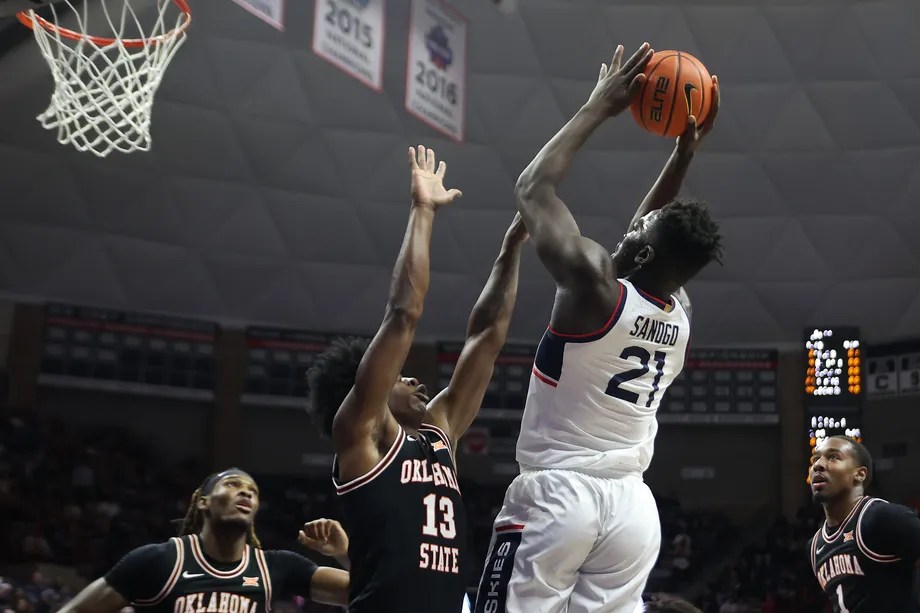
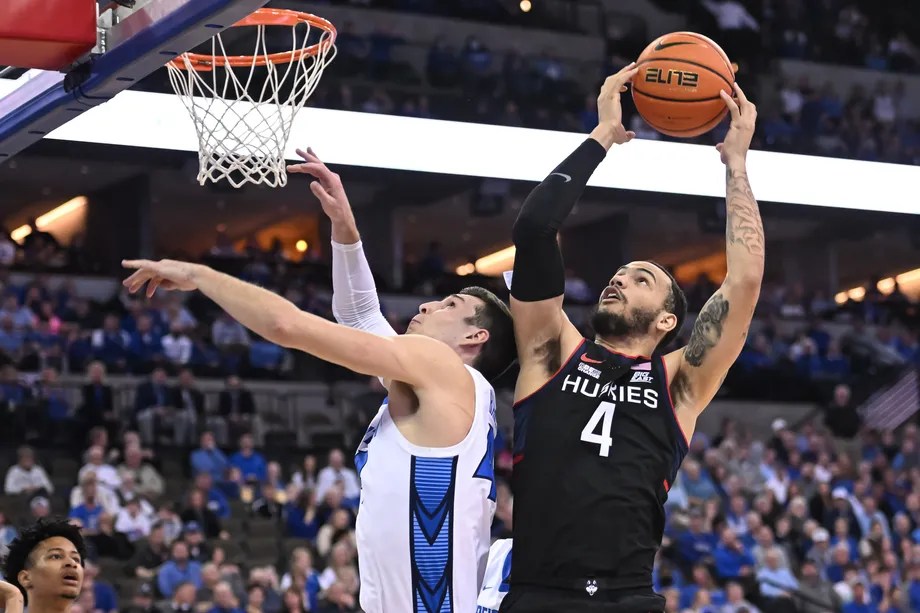
Instead, I saw UConn win comfortably 62-48 against one of the Big East’s top programs. The Huskies played absolutely suffocating defense, dominated the boards, and made clutch shots when needed in front of a rowdy crowd. The game, which was obviously a sellout, was one of the most memorable regular season wins for UConn in a long time. It was a joy and privilege to watch in person.    

Instead of writing my traditional detailed observations about one or multiple games, I have decided to cover the Creighton win. Instead, I am going to list and do a short discussion of what I enjoyed the most about UConn’s performance up close. I hope you enjoy it!

  • Being able to see Donavon Clinigan in his first game back from injury was a lot of fun. In 16 minutes, Clinigan was running the floor maybe the best he has had all season and was in better shape. Clinigan was excellent on defense, blocking two shots and denying Creighton the ability to take the ball to the rim and find star center Ryan Kalkbrenner. While Clinigan was rusty shooting the ball, going just 3-8 from the field for 6 points, he snatched five rebounds and recorded 2 assists. Finally, Clinigan fueled multiple runs and brought a ton of energy when out on the floor, including a memorable sing-along to Taylor Swift. If this was what the big fella looked like in his first game back, I could see him dominating opponents soon.
  •   UConn’s defensive performance was remarkable, especially when observing it up close. The unit never allowed Creighton’s players to get comfortable. The Huskies constantly pressured ball-handlers and rarely allowed the Blue Jays to run effective offensive sets. Their players were forced into taking difficult shots inside the arc or kicking it out for 3-pointers, with Creighton shooting just 6-26(23.1%) from there. UConn’s ability to fluster their ball-handlers led to 14 turnovers. Somehow, the Huskies limited the Blue Jays to 6 foul shots despite their aggressive defense. The 48 points were the fewest an opponent has scored in more than two seasons.
  • In addition to Clinigan, Stephen Castle and Hasson Diarra were especially great to see in person on defense. Castle, who covered multiple players but was on point guard Trey Alexander the most, hounded everyone he guarded and refused to let ball-handlers get downhill. The freshman forced a lot of poor shots and although he had only one steal, Castle was partially responsible for multiple turnovers. He is on another level defensively than most freshman. Diarra has always been an excellent defender and was all over the place in his 17 minutes on the floor. I also commend Samson Johnson for his defensive effort, as he was able to defend multiple players by hard hedging while still defending well. Hopefully the win will give Johnson, who had 4 points, 3 rebounds and a block, more confidence as a defender.
  • After a few games without Clinigan in which UConn struggled badly to rebound, it was dominant on that end throughout the game, kicking Creighton’s ass on that end 48-32. The Huskies were more physical and athletic than the Blue Jays players up front and did an excellent job blocking out and reacting to where the ball is coming off the rim. Six Huskies had at least 6 rebounds, led by Tristen Newton’s 8. By grabbing 21 offensive rebounds, UConn was able to offset its lousy shooting to some extent and control the clock better. The team won’t rebound this well every game, but having Clinigan back to handle center with Johnson will allow players to play their regular positions and make it easier to rebound.
  • UConn’s offensive performance was ugly. They shot roughly 35%, had only 13 assists and pretty much stopped scoring in the last six minutes of the game. Creighton was mostly able to keep the Huskies from attacking the rim or scoring in the paint effectively when playing half-court offense, and missed a lot of open midrange jumpers and 3-pointers. When they needed a player to step up and make a basket or create offense they turned to Newton, just as they’ve done all season. He hit tough jumpers, especially in the first half to give the team early momentum. The senior also was the only Husky that could consistently make threes, hitting two of four and having a third waved off due to a foul. Newton scored 16 points and was more efficient than either Alex Karaban or Cam Spencer, who each finished with 13. He may have not have gotten off to the best start in Big East play, but Newton has been one of the top players in the country this year, and the Huskies will go as far as Newton can lead them.
  • The crowd was outstanding all night against Creighton. Their energy and enthusiasm gave the UConn players a ton of energy and propelled runs, and the fans also helped to rattle Creighton. Everyone was loud and celebratory, and the students were very engaged. UConn gets good crowd support wherever they played, but the Gampel experience is a lot more fun because of the intimate setting and students leading the way for the rest of the crowd.

Positives and Negatives for Huskies to Take From Last two Games

UConn has gone on runs in February the last two seasons, and it looks like this year’s team may be poised to do the same. After a brutal January, the Huskies are 4-1 in their last five Big East games, including a 15-point triumph against Marquette that’s one of the team’s signature wins of the season so far. They have improved to 20-7 overall and are 9-7 in the conference and in sole position of fifth place in the standings, good for a No. 18 ranking in the AP Poll.

UConn’s last two games at Creighton (a 56-53 loss) and home against Seton Hall (a 64-55 win) the past two Saturdays did an excellent job of reflecting UConn’s strengths and weaknesses at this point in the season, and where the team still needs to improve to go on a deep NCAA tournament run that seemed in the cards during the nonconference schedule. Below, I discuss my thoughts on these specific strengths and weaknesses to a greater extent. They range from the performance of individual players to execution on both ends of the floor and Dan Hurley’s decision-making. There’s certainly a lot to think about going into tomorrow’s Senior Night rivalry game against Providence.

The Positives

Andre Jackson Has Signature Performance

As every UConn fan is well aware of, Jackson has been incredibly inconsistent in conference play, displaying a huge loss of confidence on offense that has caused him to be undisciplined on defense and struggle to lead his teammates at times. Jackson has been working with Hurley to put himself in position to score more easily and be efficient offensively however, and it slowly but surely seems to be working and helping Jackson play better all-around.

The junior had 15 points, 10 rebounds and 3 assists against Seton Hall, while shooting 5-6 inside the arc and 5-7 at the free throw line. He also added a block and steal while playing 35 minutes. Jackson’s stats don’t reflect just how important he was to UConn dominating the paint and taking control of the game in the second half. After missing four open 3-pointers early, Jackson made the wise decision to focus on scoring around the baseline and attacking the basket on fastbreaks, situations where he could use his otherworldly athleticism to beat Pirate defenders at the rim. The point forward had a handful of spectacular dunks, one highly memorable fastbreak layup, and got to the charity stripe effectively. Jackson did a strong job of leading UConn on the fastbreak, where it was more effective than the last couple of games, and all his assists were pinpoint (he would have had more if teammates didn’t lose Jackson’s passes).

He stepped up in the biggest moments, recording four points, three rebounds and a block after entering the game with the Huskies leading 44-40 midway through the second half, allowing the lead to stretch to 16 at 56-40 with less than seven minutes remaining. Jackson also hit two free throws with UConn up 61-53 and less than a minute left to seal the win. Jackson’s defense continued to be aggressive but disciplined throughout the game, allowing him to stay in front of ball-handlers and avoid foul trouble.

Just because Jackson has been playing slightly better doesn’t mean that he is anywhere close to playing at his full potential. Jackson still struggled to make shots and do too much against the BlueJays, leading to 3 reckless turnovers and a 3-11 performance from the field, and was limited against Marquette due to foul trouble. He will need to play intelligently on offense and need to stitch together a couple good performances in a row before many have full trust in Jackson again. Still, I am confident he will do everything to improve. Jackson must be at least somewhat effective for the Huskies to beat Providence.

The Defense Has Been Vastly Improved

After a period in which UConn’s defense had played poorly, especially in defending the dribble drive, the Huskies have picked up their intensity and efficiency against the last four opponents and done a much better job defending the paint and limiting their offensive rebounds. UConn held Creighton, an elite offense, and Seton Hall to a combined 36.2% shooting and just over 25% on 3-pointers. UConn consistently challenged and altered shots at the rim, generally covered the 3-point line well, and communicated effectively on defense while staying in front of their man. While the Huskies forced only 25 turnovers over the two games and had more against both opponents (although they blocked 7 Seton Hall shots), their ability to play at a high level and not allow second chance opportunities limited runs by both teams, and kept UConn in the game against the BlueJays and build a large lead against the Pirates even with an inconsistent offense. While it’s certainly possible that the defense and rebounding will again fall off, especially against a Providence team that matches up well with the Huskies, the team is currently playing the quality defense Dan Hurley expects from his teams.

Hassan Diarra Fulfills His Role

It’s been a weird year for Diarra. While he was never meant to regularly play a lot of minutes barring an in injury to Tristen Newton or one of the UConn shooting guards, his overall shooting numbers have gone down in all three areas and he is averaging just 2.8 points on 32.5% shooting in 14.7 minutes per game. However, Diarra’s consistently strong defense and decent ball-handling has allowed him to be valuable in certain games. While the stat line wasn’t huge on Sunday, Diarra’s performance against Seton Hall was one of his best of the season.

Diarra had 4 assists (with no turnovers), 3 rebounds, 4 points and a block and steal in 24 minutes against the Pirates, the highest total he has provided in Big East play. Diarra supplied his usual bulldog defense, and with Newton playing one of his games where he is missing in action, Diarra shared regular ball-handling duties with Jackson. He did an excellent job of providing scoring opportunities for Hawkins and others and got Jackson going, and ran the fastbreak well when necessary. Diarra’s shooting still needs to improve if he wants to play more, but he is definitely UConn’s best backcourt defender off the bench and is capable of shouldering ball-handling duties if necessary. Along with Clinigan, I think Diarra can be the Huskies most valuable weapon off the bench in tournament play if he ends the regular season well.

Jordan Hawkins Continues to be More Creative on Offense

While it might seem word at first glance to focus on Hawkins offense performance the last two weekends with him only shooting a combined 5-18 from three in the past two games (not that any other Husky is setting the world on fire), the sophomore is continuing to do an effective job of attacking and finishing at the rim and getting to the free throw line, while also contributing in other ways. Hawkins was particularly effective in doing so against Seton Hall, going 4-6 inside the arc and making all three of his foul shouts against an elite defense to lead UConn with 20 points. He continues to do a better job of recognizing when he is off from three, and instead moving without the ball to get inside and using his speed and creativity to beat defenders at the rim. Even in the Creighton game when his shot was off throughout and he struggled with foul trouble, Hawkins showed the defense to continue to go to the rim. Throw in his continued strong rebounding and doing a better job of avoiding turnovers, and Hawkins continues to show just how well-rounded he’s become over the course of the season.

If Hawkins can continue to be effective at the rim and get his 3-point shot going, then he should help get the Huskies out of their recent offensive funk and and put them in position to go undefeated in the remaining conference games. He needs to be especially effective against Providence, where he struggled in the first game, and open up the floor spacing for his teammates.

Donavon Clinigan has finally Started to Get Going Again

For a long time, Clinigan was struggling. Although you could argue that Hurley was too reluctant to let Clinigan play through mistakes or try to play him and Sanogo together for even short stretches, he wasn’t doing as strong of a job of finishing shots around the rim and avoiding foul trouble while struggling heavily around the rim and turning the ball over two months. In the last two games however, Clinigan has been much better rebounding the ball and finishing around the rim, despite playing just 22 combined minutes.

He had 7 rebounds and four assists in just 11 minutes against Creighton, and it’s hard to understand why Hurley didn’t play him more when Sanogo wore down in the second half and Clinigan could continue to provide UConn more second chances on offense. Hurley seemed to realize his mistake and gave Clinigan 15 minutes against Seton Hall with Sanogo playing under the weather. The center had 6 points and rebounds and shot 3-4, finishing multiple shots teammates missed at the rim. Clinigan could have played better on defense, but he still picked up just one foul. He was a big part of UConn’s run midway through the second half to put them up by 16, and also provided another big body when the Pirates surged back near the end.

Clinigan still could have been much better on both ends against Creighton and Seton Hall. He committed a combined 5 turnovers and still can’t hit a foul shot, and he has struggled to stop the big men on both these teams. However, Clinigan had one of his best games against Providence with a double-double, and he matches up very well against their big men. Clinigan can be especially effective if Hurley is willing to play more zone and possibly play Sanogo and him together to make it tougher for the Friars to score and rebound. Clinigan is still one of the best freshmen big men in the nation, and Hurley will need to have more trust in him for the Huskies to play up to their full potential in the remaining games.

The Negatives

Turnovers Continue to Kill the UConn Offense and Lead to Easy Opportunities for Opponents

UConn has had an issue with turnovers throughout conference play, a majority of which have been unforced. It had a combined 31 turnovers against Creighton and Seton Hall, with 18 coming against the Pirates. While the Huskies did a good job of handling the ball against the BlueJays in the first half, they did a much poorer job in the second half. Again and again, silly turnovers killed UConn’s chances to take the lead even as its defense played excellent. Turnovers were a problem throughout Saturday’s game. They first led to a long scoring drought at the end of the first and beginning of the second, and then helped Seton Hall rally and get within two baskets in the final five minutes. In both games, many of the turnovers were easily preventable. They included moving screens, passes that were either dropped out of bounds or uncatchable, and the players wasting too much time to initiate the offense and losing the ball as they rushed to make shots. In addition to Clinigan, Sanogo and Newton were major culprits, with Newton committing 7 turnovers in the two games.

At this point, UConn’s propensity to commit turnovers is a legitimate weakness and not just an occasional bad habit. It commits almost a higher percentage of turnovers than almost any team in the Big East, and almost any team in either the metrics or AP polls (12.9 per game on the season). Teams that commit turnovers at this level rarely go deep in the NCAA tournament, even if they have many strengths otherwise. What’s especially frustrating is that the same types of turnovers are happening from game to game despite many being preventable, and a result of either general sloppiness or poor decision making offensively at the most costly moments. I don’t know how much Dan Hurley works on correcting these mistakes in practice, but this weakness is arguably the biggest reason why UConn is just a pretty good team and not a great one.

Tristen Newton is Mia on Offense Again

Newton has been an enigma all season. The senior is UConn’s best player at getting to the basket and handling the ball, and can be an elite rebounder and passer when playing at his best. And yet it’s always two steps forward and one step back with Newton, and way too much of the time he plays disengaged. After scoring in double digits six straight games and putting up a triple-double against Marquette, Newton scored just 2 points against Creighton and 6 against Seton Hall on 2-8 shooting, while committing 7 turnovers against just 6 assists. Newton did not attack the basket in either game and failed to reach the line against the BlueJays. His passes were risky at times, and Newton did a poor job of moving without the ball to get open for perimeter shots. With the senior not in the flow of the offense and his defense not quite up to par, it’s no surprise Hurley has given more time to an aggressive Diarra in the last two games.

At this point of the season, there is no excuse for a player as talented as Newton to disappear this frequently, especially when UConn needs him the most. When he was playing at a high level in late January and early February, Newton was consistently attacking the rim, getting to the free throw line and taking solid care of the ball. While Hurley arguably had Jackson handle the ball more against Creighton and Seton Hall in an effort to get him going offensively, that doesn’t give Newton an excuse for being passive offensively and either attacking the basket or finding ways to get open on the perimeter when the opportunity presented itself. If I were Hurley, I would have Newton handle the ball more against Providence and have Jackson focus on playing defense and rebounding and getting open on the baseline for easy scoring opportunities, while emphasizing to Newton that he needs to attack the basket. Newton’s size should give him a good advantage over the Friars guards, and he has a great opportunity to get to the rim and reach the free throw line. If Newton doesn’t get his act together, there is a good chance he will play fewer minutes and could leave Storrs with the reputation of being a disappointment.

UConn Still Isn’t Demonstrating That it Can Play Well Down the Stretch

The Huskies biggest weakness this season along with turnovers has either coming back to win against opponents in the final minutes of games or being inefficient when they have leads in the final 1o minutes, allowing opponents to outplay UConn and make them sweat even in wins or even coming back for improbable comebacks, as we saw at Seton Hall in January. The team has still not one a game by five or fewer points this season. In my mind, there are a few connected reasons for why this keeps happening:

  1. UConn waits too long to initiate its office down the stretch no matter if they are leading or trailing. Against Creighton and especially Seton Hall, the Huskies spent a ton of time dribbling before running offensive plays. This results in rushed shots, turnovers and generally a lack of communication. Against the Pirates, a great example of this was Sanogo getting the ball late in the shot clock multiple times and hesitating between whether he should shoot a 3-pointer or drive the ball, resulting in multiple turnovers. I don’t know how much of this offensive strategy is based on Hurley’s orders or the players just not executing well (I suspect more of the latter), but UConn should start running the plays earlier in the shot clock even if they have a lead late in the game, as it should allow it to either have more time to get an efficient shot or offensive rebounds to extend the possession.
  2. As I already discussed, UConn is susceptible to a variety of sloppy turnovers, particularly if it is pressured.
  3. The Huskies frequently do a poor job of inbounding the ball when other pressure, resulting in poor passes and turnovers and sometimes even 5-secound calls. If the team works on doing this a lot in practice it doesn’t seem to pay off, as either the guards don’t do a good job of getting the ball to either Jackson or one of the bigs, who usually have a height advantage over the defenders on an inbound.
  4. Dan Hurley doesn’t regularly call timeouts when UConn is having trouble inbounding, even if he has multiple timeouts remaining. As a result, 5-second calls and turnovers can occur, and Hurley isn’t able to draw up plays to make inbounding easier and plan out what plays the team wants to run after it gets quality inbound passes.
  5. A seeming lack of mental toughness, which I have already discussed on the site. UConn consistently gets tense and makes unforced errors late in games, while sometimes reflecting the demeanor of their coach. While it’s understandable that the freshmen could have these jitters, it’s hard to understand how players as skilled and experienced as Sanogo, Jackson and Newton to suffer the same issues.

Dan Hurley’s Recent Coaching

Hurley’s in-game coaching and ability to make adjustments has always been inconsistent, but it has been especially questionable the past few games. I have been particularly concerned about Hurley’s late-game coaching, with his hesitancy to call timeouts, make changes to inbound plays and encourage the team to play faster seemingly causing UConn to be undisciplined down the stretch. It’s not just then, however. I believe Hurley doesn’t have UConn push the tempo enough in general, and that he encourages the team to take too many 3-pointers even when they are struggling . He seems to not always hold starters accountable for listless plays and mistakes, especially Jackson, and that he doesn’t have Newton be the primary ball-handler enough so that he is consistently involved in the action. While UConn’s defense has been much better, I still believe that Hurley isn’t creative enough with the lineups, especially using zones or double bigs defensively and not playing Clinigan enough in general. I will give credit fore realizing that Diarra was having a great game against Seton Hall and sticking with him with Newton struggling. Still, Hurley seems to be playing checkers too much against opposing coaches when they are playing chess. He will certainly be forced to make adjustments against Ed Cooley and Providence.

Observations About Last Week’s Games: Sanago is Inconsistent, Defensive Breakdowns Against Seton Hall and Questions About 3-point Shooting

This is the first of two articles I am going to write about the UConn men prior to their Big East tournament quarterfinal game against (likely) sixth-seeded Seton Hall (20-9) or No. 11 Georgetown (6-24), arguably the worst power conference team in the country. UConn, which easily swept the Hoyas and split their contests with the Pirates, suffered a frustrating 64-62 loss at Creighton last Tuesday before playing very well on Saturday’s Senior Day against a feisty DePaul squad in the 75-68 win. With their final win, the Huskies earned the tournament’s No. 3 seed when Creighton fell to Seton Hall later that day. The team officially ends the regular season 22-8, 13-6 in Big East play and having won six of seven games. It is the fewest losses a UConn team has had during a full regular season schedule since 2014, the last year it won a championship.      

No one except for R.J. Cole had a particularly effective game in the 64-62 loss to Creighton, which ended up being the only team to sweep the Huskies in conference play. The senior scored 20 points and had four assists, with the only black mark being his 2-7 shooting from three. Tyrese Martin scored 11 and had 5 rebounds but was limited to 25 minutes due to foul trouble and ended up fouling out, and the only other player with more than six points was Tyler Polley, who hit two 3-pointers. UConn’s offensive line was mostly ugly across the board, as it shot just over 40% and went 6-22 from beyond the arc while getting to the line just five times and making only two free throws. It took care of the ball (six turnovers) but had just seven assists. While it had 12 offensive rebounds, the team was ultimately outrebounded 37-33.

I talk a lot more about Adama Sanago below, but offensively he struggled to finish shots and convert on second-chance opportunities against “7-1” Ryan Kalkbrenner and help defenders, ultimately shooting just 6-16 for 13 points, although he had 16 rebounds. Andre Jackson and Isiah Whaley were left open purposefully by the defense as a gambit to force them to make outside shots and it worked, as the two combined to shot just 3-15 for 8 points. Jackson took a number of ugly jump shots in particular and was 0-6 from three. The Huskies shot selection was iffy throughout the game and Sanago and others could not finish shots at the rim. The inconsistent production by the big men and lack of outside shooting was a big factor in why the team trailed 34-24 at halftime, and even after they got it going early in the second half, that deficit and their defensive deficiency’s UConn was experiencing made a comeback win too steep of a hill to climb. It tied the game a couple of times, the last time at 50 on a Martin jumper with 8:18 to go, but never led.

Now about those defensive deficiencies, which again I discuss further below. UConn allowed Creighton, a decent offensive team that was missing its starting point guard and had gotten blown out by 21 against Providence a few days before, to shoot 49% overall and 53.5% on 2-pointers and earn 14 assists against 10 turnovers. In the first half it allowed big man Arthur Kaluma to go off and drain three treys despite being a terrible shooter from deep, and generally was able to beat defenders off the dribble and score in screen and roll action. The Huskies upped their ball pressure at the start of the second half and were able to force enough poor shots and turnovers to come back and tie the game, but the Bluejays and coach Greg McDermott eventually figured things out. McDermott began going to Kalkbrenner in the screen and roll action at the rim, and continued to feed him when adjustments were made. The rest, as they say, is history, with Sanago being the main player successfully targeted by Creighton. Kalkbrenner finished with 22 points, 20 in the second half, on 10-14 shooting and 10 rebounds. Kaluma put up 15 and Ryan Hawkins 13, 6 rebounds and 3 assists.

There was one other big factor that possibly led to the loss. Jordan Hawkins, who had already been hit in the previous game, picked up a concussion on a great screen by Kalkbrenner that the much smaller freshman didn’t see. Hawkins, who was scoreless in five minutes up to that point, had to be removed from the game and is in concussion protocol, meaning he will almost definitely miss the Big East Tournament and could be a question mark for the Huskies first NCAA Tournament game as well. I will talk about the ramifications of this more in the next article, but suffice to say that his absence could cause huge ramifications on both sides of the ball and make it more difficult for the team to hit perimeter shots and space the floor.    

The win over DePaul Saturday went much smoother, as the Huskies controlled the action for most of the game and dominated the paint throughout. Sanago scored 12 of the team’s opening 14 points as he got the ball in excellent scoring position and overpowered defenders, and kept up his dominance on offense and the boards throughout the half, scoring 20 points. Whaley and Martin were also efficient in the first half and Jackson did a strong job of helping to run the offense and on defense. After some lax defense early, UConn tightened up and eventually took a double-digit lead, going into the locker room up 40-29. It continued to play well for most of the second half, with Martin especially doing an excellent job on the board and earning second-chance paints, and led 70-53 with 4:29 to go. Unfortunately, the Huskies continued their habit of taking their foot of the gas and let another inferior opponent make the game closer than it should be. DePaul star Javon Freeman-Liberty finally woke up after being held in check most of the night, and drained multiple threes to help cut the deficit to just five points before UConn closed the game out at the free throw line.

After maybe his most checkered game of the season, Sanago bounced back with 26 points and 11 rebounds on 10-16 shooting. Martin was a wrecking crew with 19 and 16, while Whaley went for 10 and 6. Jackson did a little bit of everything with 7 points, 8 rebounds and 4 assists. The only concerns on offense were UConn’s 3-point shooting, as it went 3-12, and the struggles of Cole, who ran the offense effectively but shot 1-9 for 3 points. The team outrebounded DePaul 49-31. The Demon Deacons shot just 39.4% overall but went 10-26 from beyond the arc. Freeman-Liberty had 22 and shot 3-5 from three.

Last week’s games offered plenty of exciting moments and reasons for optimism heading into tomorrow night, as well as some frustrating moments and reasons for pessimism entering the Big East Tournament. As I will discuss more in the next article however, overall, I am very excited to see the Huskies compete at MSG and legitimately believe this squad has the chance to win the whole thing if things fall their way. At their best, they have the athleticism and strength on defense to shut down the paint and alter perimeter shots as well as generate turnovers. On offense, they have the best big man in the Big East and one of the best guards and can score in a variety of ways and be dominant on the fastbreak and offensive boards. Certainly, winning the Big East tournament would be a great accomplishment for Dan Hurley and demonstrate that he is one step closer to making UConn a dominant program again.

Below, I discuss how the Seton Hall and DePaul games demonstrated the strengths and weaknesses of Sanogo’s game, the need for Dan Hurley to make adjustments on defense, the rocky but rewarding development of Andre Jackson and the team’s struggles from beyond the arc, among other topics.

The Ying and Yang of Adama Sanago

At this point, devoted UConn fans understand how important Sango is to the team’s success, and the ramifications it has on the team when he struggles on one or both ends of the court. He is one of the best big men in the country and especially on offense and as a rebounder, which was recognized by him being named to the Big East All-First Team on Monday. And yet when he struggles offensively, he can be a black hole and affect the Huskies spacing, and against certain opponents and big men he can struggle defensively, especially with all the hedging Dan Hurley asks his bigs.

Against Seton Hall, he struggled from the start and everything snowballed from there. On offense, Cole and others were able to get the ball to Sanago, but the Pirates defenders did a strong job of pushing him away from the basket without fouling. The sophomore struggled to finish make shots even if they were of high quality, with a lot of his misses just barely rolling off the rim. Sanago earned just two free throws, making one, and could have done a much better job of trying to force contact or attempting dunks. When he got the ball Sanago almost never passed it out even when he wasn’t in good shooting position, a frustrating habit that has consistently been an offensive weakness. Ultimately, Sanago shot just 6-16 to finish with 13 points and was visibly upset by his struggles. To his credit he was still great on the offensive boards, grabbing 5, and finished with 16 rebounds overall.

Even with Sanogo’s offensive struggles, UConn shot over 47% on 2-pointers and was efficient enough on offense in the second half to pull out a win. It was his weaknesses on defense, especially in the second half, that was probably the biggest factor in the Huskies losing. To be fair, Sanago had 6 blocks and was far from the only player that struggled defensively in the final 10 minutes of the game, and much of his defensive weakness was due to the system UConn uses, which I discuss more below. But in the end, the lasting image of the game for me will be Sanago being out of position or late to get back on Kalkbrenner as he easily made layups or dunks on screen and rolls. The defense decided to stick with Sanago doing hard hedges up near the 3-point line instead of initially defending the paint or playing Kalkbrenner one-on-one and it paid the price. By the end of the game, it was completely clear that Sanago, who played 37 minutes, was spent on both ends.

One great skill of Sanago is that he has repeatedly been able to rebound from subpar performances to play very well in the following game or games. I already discussed his play against DePaul above (26 points on 10-16 shooting and 11 rebounds) and Sanago definitely set the tone early and demonstrated UConn could get off to a strong start and dominate the Demon Deacons inside. He will definitely need to demonstrate this ability if the Huskies advance in tournament play. Sanago is the type of player who can carry the team on a run in the Big East and NCAA Tournaments, but his teammates and coach need to put him in position to succeed and he needs to be willing to involve others on offense.

The Creighton Loss Exposed the Weaknesses UConn Can Suffer from on Both Ends of the Floor

Again and again, the Bluejays have demonstrated to fans and opponents the best methods to beating UConn in different ways. Last week, they demonstrated how its inconsistent shooting, how best to attack the Huskies with screens and rolls and their reluctance to quickly change things up defensively.

On offense, the game showed how difficult it is for UConn to score if Sanago and other bigs are held in check and it is not making shots from the perimeter, as Cole cannot do everything himself. The Pirates invited Jackson and Whaley to take 3-pointers and the pair obliged, combining to go 1-9. Much has already been said about Jackson’s ugly stroke and as conference play as gone on his numbers from beyond the arc have predictably gone down. Whaley is inconsistent at best from beyond 15 feet, and if teams are able to effectively guard Polley and Hawkins on the perimeter then the Huskies are in trouble. It would have ben nice to see Cole and Martin pick up the slack against Seton Hall, but the first shot 2-7 from there and Martin took just one three partly due to his foul trouble. Throw in a mix of good defense on Sanago, limiting fastbreak opportunities and rebounding well and rebounding well defensively, all of which the Pirates did, and you are almost guaranteed a win.

As I said earlier, UConn was able to rebound in the second half against Seton Hall because of its effectiveness from midrange and ability to avoid turnovers. However, it was burned from deep by Kulama in the first half, falling behind by as much as 16. After the Huskies fought back to tie the game multiple times, the Pirates figured out how to effectively attack them in the screen and roll repeatedly for baskets, as well as beat them one-on-one when necessary. Because of how frequently UConn hedges, it has occasionally had trouble limiting offenses that have the size and speed to counter them, which Seton Hall certainly does. The defense has also occasionally struggled to defend guards off the dribble or strong big men one-on-one and unfortunately did this in the loss.

While I cannot guarantee whether switching up the defense would have resulted in a win against Seton Hall, I share the belief with many fans that Dan Hurley is too slow to make defensive adjustments. Yes, he has started to make more adjustments in certain games recently, such as playing a zone for short stretches or doubling a player who was giving his defender trouble. And the success of Hurley’s defenses at UConn speaks for itself. Still, he failed to go to some type of zone or double Kalkbrenner to try and limit the Pirates success on screen and rolls in the final 10 minutes of the game and instead watched them score easily again and again. It was inexplicable and Hurley deserved every ounce of criticism he got for these decisions. In tournament play, he cannot afford to fail to be flexible and not give his players as many resources as they need to succeed and win. I just hope Hurley realizes that he will need to roll the dice at times.

Against DePaul, UConn overcame its continued struggles from deep by bullying its opponent inside. However, Seton Hall has at least some of the same qualities as Creighton that gave the Huskies trouble, as does Villanova if the Huskies advance. It will be fascinating to see if they can overcome this and win.

UConn is Again Off from Three

After multiple games where the Huskies shot well from deep and were able to pull off a key win streak, the Huskies crashed back down to Earth the last two games, shooting 9-34 treys (26.5%). With Hawkins almost totally absent due to his concussion, the only other reliable 3-point shooters were Polley and Martin and they only took eight between the two of them, although they hit five. Cole (2-11, Jackson (1-7) and Whaley (1-4) all struggled from beyond the arc. UConn ended the Big East season having hit 35.7% of their threes, good for fourth.

The Huskies will need to be able to hit threes against Seton Hall and whatever opponents it faces in tournament play from there. It is doable against the Pirates, who ranked middle of the pack in the percentage of 3-pointers it allowed in conference play. They were unstoppable in the January loss to SHU, shooting 14-23, but just went 4-18 from deep in the win against it three weeks ago. UConn will need to consistently play inside out, get 3-point opportunities off of fastbreaks and find ways to get Polley open (he has the flu but will almost definitely play). While Sanago and Cole will always be options A and B, the Huskies need to find ways to get Polley open (he had the flu but is going to play as of Wednesday morning) and Martin to take more 3-pointers. With Hawkins out, Hurley may need to sacrifice his defense and rebounding to a small extent and play at times with more shooters such as Akok Akok and Jalen Gaffney until he returns. Considering UConn’s offense is pretty vanilla much of the time, it will need to hit enough 3-pointers to keep defenses honest in its remaining games.  

 We Saw the Best and Worst of Andre Jackson

The sophomore shooting guard demonstrated both how infuriating and fun he is to watch against Creighton and DePaul. Against the Bluejays, he took a few inexplicable threes and missed all six attempts (I find it hard to believe that Hurley gave him the go-ahead to take those shots), likely in an effort to help the Huskies overcome Sanogo’s struggles. While he may have been deliberately left open to take perimeter shots, Jackson would have been better off attacking defenders off the dribble and trying to get to the rim for easy looks and to draw fouls. The size of Creighton and Jackson playing on the perimeter more than usual helped nullify his rebounding skills and he ended the game with just three, all offensive. Jackson continued to handle and pass the ball well and finished with 3 assists against 1 turnover, but his playmaking ability was limited by the sow halfcourt game both teams were playing. Creighton’s focus on forcing Jackson to beat it from outside and general ability to play at a tempo where he is much less effective was the perfect antidote. He needs to realize what he can do offensively if his 3-point shot isn’t following against a similar opponent.

On the other hand, against DePaul Jackson flashed all the skills that make him such a nightmare for opponents to prepare for. He had 8 rebounds and 4 assists with only one turnover, played solid defense and scored 7 points, getting to the rim for two baskets and knocking down a quality 3-point opportunity. Jackson was in his element throughout the game as he got a chance to run the floor and set Sanago and Whaley up for good looks inside. As always, his passing was a pleasure to watch.

Even if Jackson doesn’t score a ton of points, he could be very effective in tournament play, especially against opponents who haven’t seen him before. His court vision and athleticism are second to none, and Jackson has improved his decision-making and accuracy on passes a ton in the second portion of the Big East schedule. He can almost always be relied upon for some rebounding and dominate on the I boards against the right opponent, and Jackson has legitimately become a strong defender, even if he can sometimes fall into playing “matador” defense. Going forward, Jackson just needs to trust himself and not try to do too much. To me, that means he should be more aggressive attacking the hoop and rely less on his 3-point shot, continue to not force passes to teammates, avoid foul trouble and play with a consistently high motor the entire game. I am not sure Jackson can be a reliable force on the tournament stage. But if he is, he can take over multiple games.

What UConn Needs to Do to End the Regular Season Well

The buzz surrounding the UConn men’s basketball program right now is the highest I can remember in years, possibly since the 2014 season. The 21-7 Huskies, who are 12-5 in the Big East, have won five straight, are third in the Big East standings and strengthening their case for a high seed in the NCAA tournament. For the third consecutive season, the program is playing its best basketball at the end of the season. In particular, UConn has been playing outstanding offense recently, particularly from beyond the arc.

Creighton and DePaul would like nothing better than to extinguish the Huskies momentum in their last two regular season games in the coming days. Creighton, in particular, has never lost to them in five games and wants to maintain that superiority and sweep the season series between the teams. If the Bluejays win at home Wednesday night, they can finish third in the conference standings if they and UConn finish with the same record. And while DePaul is currently 10th in the Big East standings at 5-13, the Demon Deacons have been a handful for many of the conference’s best teams, including the Huskies at the end of January. While UConn is playing very strong overall, there are areas they need to improve on or be more efficient in.

The aspects of the game the Huskies either need to improve or continue to play well in against Creighton tonight and DePaul Saturday are numerous. While the team may be flying high right now, Creighton is a very tough environment to play in, and a loss to DePaul would be an embarrassing slipup and leave UConn with a bad taste in its mouth entering the Big East tournament at MSG. Not to mention that a loss to either team would move the team to a fourth-place seed in the tournament and possibly a tougher second-round matchup. Below, I discuss what UConn must do tonight and Saturday to win and maintain the excitement around the team.

  1. Tyler Polley and Jordan Hawkins need to continue being effective on offense, preferably at the same time

When Polley and Hawkins are both playing well offensively the Huskies have proven to unstoppable, as exhibited by the team’s 5-0 record when the pair scores in double digits. All season long Polley and Hawkins have been touted as UConn’s x-factors and it’s been proven to be true during this most recent win streak. Polley is on one of his vaunted multi-game hot streaks from deep, as he shot 7-12 from three and averaged 12 points against Xavier, Villanova and Georgetown and drained one of the most memorable shots of the season with his three against ‘Nova in the comeback during the final minute. At the same time, Polley went 9-10 from the line against them and Georgetown. Hawkins has improved immensely on defense, and the improvement on that end has earned him more playing time and the ability to figure things out at that end. The freshman played well on offense in his 14 minutes against Xavier, scoring 7 points via a 3-pointer and four free throws. He then had one of his best offensive performances of the season against the Hoyas Sunday, scoring 11 in 21 minutes on 3-6 shooting and making a spectacular dunk. Hawkins shooting from deep has slowly improved and he is demonstrating the ability to effectively attack the basket, a skill the Huskies definitely need more of.

When one or both of the sharpshooters are feeling it in a game, UConn’s offense is much more efficient. Space opens down low for Adama Sanago and others to get good looks at the basket, the team can play inside-out and move the ball well side-to side, they have more options on fastbreak plays, and players have good chances for offensive rebounds if Polley or Hawkins happens to miss. When Polley comes off the bench for Isiah Whaley or Sanago and plays with the other starters, these lineups rank 7th and 8th in the Big East in adjusted team efficiency margin per Evan Miya.

It is particularly important that Polley and Hawkins as well as the other bench players play well against Creighton. The Bluejays have the top defense in the Big East according to KenPom, and h against Cave held opponents to 31% from three in conference play, which also ranks first. In the first matchup with Creighton, UConn had one of its worst offensive performances of the season in a 59-55 loss, with Polley and Hawkins combining to go 0-7 from the field and the team 5-21 from deep. If the pair can hit a handful of 3-pointers and open up the team’s spacing, it will open up the team’s spacing and give them a leg up in what will probably be a low-scoring and physical game. If they can get to the line, that would be valuable as well since the Bluejays normally allow few foul attempts.   While the Huskies should be able to perform well on offense against DePaul, it would be great for Polley to end his regular season career with a strong performance on Senior Day.

  • Adama Sanago needs to end the regular season with a bang

Adama had arguably his worst game of the season Sunday against Georgetown, especially considering the level of competition. He fouled out in just 18 minutes, putting up only 6 points and 2 rebounds while committing 5 turnovers. Sanago seemed disengaged and let the refs quick whistle affect him, and with the rest of the offense humming teammates didn’t look for him as much as normal. Sanago needs to stay out of foul trouble and avoid ones out on the perimeter against Creighton and DePaul while playing disciplined on offense. That means establishing position in the paint and not forcing shots out too far from the basket, and passing the ball back out effectively if he does not have good position, which will help Sanago to avoid turnovers. Finally, he will need to block out effectively on both ends and put himself in position for putbacks.

Sanago also struggled to score in the first game against Creighton, putting up 8 on just 3-10 shooting, and had only one block. His performance against DePaul was also mediocre, as he only finished with 10 points. The Bluejays are tremendous at depending in the paint and allow opponents to shoot just 43.4% on 2-pointers, eighth-lowest in the country. Against their big front line, Sanago will need to establish position deep have success in the paint early and often, while passing out successfully when necessary and to avoid turnovers. The sophomore has shown the ability to play very well against big men he struggled against in rematches (he just did last week against Villanova and Eric Dixon), and I am confident he will do so against Creighton and then continue to stay engaged and have a good game Sunday against the Demon Deacons.  

  • Avoid turnovers!!

I realize the 16 turnovers UConn had against Georgetown was somewhat of an outlier, as they were largely the result of Sanogo’s struggles and then the benchwarmers not being prepared for the Hoyas press in the last two minutes of the game. Still, the Huskies are a team that has enormous struggles taking care of the ball at times, especially in conference play (their turnover percentage of 18.3% is eighth in the Big East). Even though Creighton’s defense does not force many turnovers and UConn had just nine against them in the first game, we have seen the offense have multiple games where they committed costly unforced turnovers against teams that don’t rely on forcing them.

To carry over their success at limiting turnovers from the Villanova and Seton Hall wins, the Huskies offense must make sure not to force passes to players who are well-defended or not ready, avoid playing out of control and make sure that they throw the ball over defenders if they are being pressed or trapped, especially along the baseline. The UConn players also need to make sure that they have a tight grip on the ball and are dribbling the ball high to make the team less susceptible to steals. Among the players, Sanago, Whaley and Tyrese Martin must do their best to avoid the turnover issues they have experienced recently, while Andre Jackson needs to continue distributing the ball efficiently while not forcing passes or trying to make plays that are overly flashy.

The defense needs to be more disciplined, especially when guarding the 3-point line

UConn’s defensive effort was lousy for most of the second half against Georgetown, which came into the game as the worst offense in the Big East. It did a poor job of guarding the rim and fouled way too much (though a late of that was on poor officiating), and the help defense was frequently too late both at the rim and on the perimeter. In general, the Huskies did not look like they were trying to extend much defensive effort once they got a comfortable lead, resulting in 1.15 points per possession. While I expect a much more robust effort against Creighton, a mediocre offensive squad that doesn’t shoot very well, UConn has struggled to guard the paint at times during February, even in wins, and their 3-point defense is eighth in conference play. Against a Bluejays squad that commits a lot of turnovers, the Huskies will need to avoid being beaten off the dribble and play tight defense without fouling, while also pressuring the ballhandlers to make steals more likely. At the same time, UConn will need to consistently provide help defense when necessary and avoid giving Creighton too many open looks from three. It shot 9-17 in the first matchup with UConn, arguably the biggest factor in their win. While DePaul is a weak offensive team, the Huskies need to continue playing good defense against it to give them momentum heading into the Big East tournament.  

Observations on last Two games: UConn Comes Up Small on Offense and Big on D, Bench is Absent, and R.J at his Best and Worst

By all reasonable metrics, myself and other readers and devoted fans of the Huskies should be pretty satisfied with how the season has played out. UConn is 15-5 and 6-3 in the Big East, just came off of a five-game win streak and in the top 25 in both the AP polls and multiple ranking systems like NET and KenPom. In addition, the team has a few impressive wins already, including one of the best of the entire college basketball season against No. 1 Auburn. And yet the last five days have been extremely stressful for Husky fans, especially after Tuesday’s 59-55 home less to Creighton.

The Huskies quickly morphed from one of the best offenses in the Big East to one that struggled to create shots and convert on quality opportunities against DePaul in a 57-50 win and the Bluejays, as well as being way too reliant one or two players. Combine fears of a limited offense with the Huskies issue of winning close games, and everybody is on edge going into Saturday’s game a t powerhouse Villanova and then a tough schedule for the remainder of February.

After six consecutive games in which UConn scored at least 75 points and demonstrated depth and ability to shoot from the perimeter, that came to a screeching halt against DePaul (10-10, 1-9) last Saturday. The Huskies missed a ton of open shots and struggled with careless ball-handling, went into halftime struggling 29-28 and really didn’t gain control of the game until midway in the second half. R.J. Cole single-handily kept his team in the game in the first half, as the redshirt senior made a serious of tough layups and jumpers on his way to 16 of their first 21 points.

In the second Adama Sanago gave UConn a huge lift by scoring six consecutive points to open the game and Cole continued his brilliant play. A relentless defense limited the Demon Deacons to just six points in the first 10 minutes of the half and the Huskies did enough from there to secure a hard-fought win. Cole finished with 25 points on 9-17 shooting and 5-5 at the free throw line and Sanago had 10 and eight rebounds. Andre Jackson scores seven points, snatched 13 rebounds and added three assists. The Huskies shot just 37% overall and 2-15 from three, but took control of the game in the second half partly by dominating the boards, where they outrebounded DePaul 45-35. Besides Javan and Brandon Johnson, who scored a combined 32 points, no one else on their squad scored more than seven as they shot 28.8%.

I’ll go into specific details about the Creighton game a lot more below, but it was extremely painful to watch the 59-55 loss. The Bluejays (13-7, 5-4 as of Monday morning) entered the game coming off two tough losses and on the bubble of the NCAA Tournament, and from the opening tip looked more energetic and stronger than UConn. It shot just 28.6%, with the Huskies ever forcing shots against a big and physical defense or missing wide-open shots. Against one of the best rebounding teams in the country, Creighton outrebounded UConn 27-16 and earned 11 second-chance points in the first half. The Huskies did a poor job boxing out around the rim and getting to loose balls. They managed to stay in the game only due to the performance of Isiah Whaley, wo scored their first nine points and finished the half with 11 points on 5-8 shooting, and solid defense around the rim that helped hold Creighton to 40%.

The second half shared a lot of similarities with UConn’s loss to Providence in December. Its defense improved their switching and rebounding and altered more shots at the rim, and Adama Sanogo and R.J. Cole briefly stepped up to support the hot-shooting Whaley. Two threes by a wide-open Whaley tied the game at 37 with 13:18 to go, and a key Whaley block and Sanago hook shot gave the Huskies a 41-39 lead at 10:13. After the teams scored baskets for a short time, Alex O’Connell gave Creighton the lead with a dunk off a turnover by Whaley with 5:22 remaining and his team stayed in front the remainder of the game. UConn failed to make a field goal for more than seven minutes starting with 7:56 left, missing numerous open jumpers and putback attempts as Bluejays defenders continued to push them around. Despite a valiant defensive effort by the Huskies, Creighton did just enough on offense and at the free throw line to escape Hartford with a 4-point victory.

While UConn won many of the team statical categories in comparison to Creighton, its ineptitude on offense and lousy start led to its downfall Tuesday. The team ultimately shot just 29.9%, including a ridiculous 34.2%% from three, and Whaley was the 3-point offense for the Huskies, going 4-8 to his teammates 1-13. While Whaley was excellent, going for 20 and nine rebounds, no teammates was efficient on offense. Andre Jackson and Tyrese Martin combined for just 12 points on 4-20 shooting in 69 minutes, and Cole and Sanago struggled to score against Creighton’s size and physicality, ultimately finishing with a combined 23 points. Most egregiously, the Huskies four bench player scored just two points and went 0-8 from the field, with only Tyler Polley playing significant minutes (Creighton’s bench had 13, with Tyler Alexander scoring 11 points). The Bluejays may have shot just 39.3% and had more turnovers and fewer steals and blocks, but to UConn fans they are empty numbers. Hurley definitely summed up the feelings of myself and other fans when he called the loss an “embarrassment” and “stunning”.

Despite the sense of frustration after Tuesday, there are a lot of positives to take from the DePaul and Creighton contests. UConn played excellent defense, R.J and Whaley had signature performances and the team again showed the ability to rally from poor starts to take control of games. And at times they again showed the ability to dominate the glass, even if the Huskies don’t take advantage of this enough. Now, it’s time for the program to get a signature road win against a powerhouse for the first time in forever at Villanova tomorrow. Below, I talk about my observations about UConn’s offensive and defensive play the last two weeks, the impact of good Cole against bad Cole, and concerns about poor bench contribution, among other topics.

UConn Suffered on Offense in Each Game in Different Ways

Against Butler, the Huskies offensive issues were more due to missing open high-quality shots and sloppy turnovers as well as foul trouble for the big men. It’s not like Martin, Jackson, Polley and Jordan Hawkins didn’t get good open looks from the deep or the opportunity to finish at the rim. They just didn’t, for reasons like poor spacing and rushing spots to bad bounces. Jackson, Whaley and Sanago, who combined for 10 of the 13 turnovers, were too loose with the ball against a Demon Deacons squad that gave UConn a lot of trouble due to their physicality. Luckily for the Huskies, Cole was brilliant at finishing shots (more on his performance below) and Sanago and Jackson did just enough to help the offense escape Chicago with the win.

In contrast, the Huskies biggest offensive issues against Creighton were more buried in shot selection and not moving the ball effectively. In the first half, players forced a lot of midrange or 3-point attempts that they were short on or took off balance instead of looking harder for the open man. Creighton’s size and physicality made it difficult for UConn’s guards and bigs, especially Cole, to finish shots, and the Huskies found it difficult to push the pace and get fastbreak opportunities due to rebounding issues. Especially in the first half, the offense looked incredibly static and didn’t seem to be running a lot of creative sets. Who knows how much of that is on the players and then on Dan Hurley.

While the Huskies briefly got going on offense in the second half, largely thanks to Whaley, the team fell into a trap of playing hero ball and returned to being static  as the BlueJays retook the lead and the clock got closer to zero. Cole, in particular, found it very difficult to finish against bigger guards. Sanago had issues establishing position deep in the paint against defender Arthur Kaluma and his teammates didn’t look for him hard enough. UConn could have made it easier for itself by scoring on putbacks or earning and making free throws, but it instead looks helpless on second-chance opportunities (Not going up hard enough? Bad technique? Poor luck? Probably a combination of all these factors). If the team could have converted on three or four more second-chance opportunities and missed fewer front end free throws, they would have one. Frankly however, the team didn’t deserve to.

The Defense was On Point for Nearly 40 Minutes in Both Games

No, the Bluejays and Demon Deacons are not anyone’s idea of offensive juggernauts, and UConn benefited from the absence of star Javon Freeman-Liberty against DePaul. However, the Huskies still have a lot to be proud of from these efforts. They shut down the paint in both games, consistently altering shots and pressuring ball-handlers using their athleticism. After poor starts in both games, UConn did a much better job of challenging perimeter shooters in second halves. UConn did a great job of keeping DePaul off the offensive boards. And most importantly, the Huskies never seemed to lack energy on defense in either game in contrast to its offense. Cole, Martin and Whaley did a particularly strong job of playing defense between the games.

Between DePaul and Creighton, the Huskies held both teams under 40% shooting, 23 turnovers, just 12 assists and only a combined 47 points in the game’s second halves. After a lackluster defensive showing against Georgetown, the defense could have easily been discouraged and slacked off in the next two games. Instead, it shook things up and demonstrated better fundamentals and communication in the following games, and that is why UConn’s identity is centered on its defense.  

R.J. Cole is Jekyll and Hyde

Cole is by far UConn’s most indispensable player. When he is on, the Huskies have a dynamic player who can create shots and facilitate others and the offense runs much smoother. When Cole is contained or off and no one else steps up as a leader sand shot creator, the team is almost guaranteed to suffer a loss. Cole was absolutely brilliant in the win over DePaul. He scored 16 of UConn’s first 21 points to keep it within striking distance. Cole knocked down a series of jumpers and used his athleticism to beat defenders at the rim. In the second half, Cole continued to score effectively and facilitate well on offense while playing aggressive defense and helped close the game out at the line. He finished with 25 points and five rebounds.

The Creighton loss showed how thin the line is between winning and losing for UConn when Cole doesn’t play well. The Bluejays weren’t a great matchup for the redshirt senior with their size and physicality, and with almost no teammates playing well everything was put on Cole’s shoulders. He could not score effectively at the rim, and when Cole’s outside shots weren’t falling at the beginning of the game, he seemed to lose confidence in them. While Cole struggled to get to the line, he missed multiple key free throws late that helped kill a UConn rally, a mistake that is inexcusable for someone that is almost automatic at the charity stripe. By the end too much was being asked of Cole on both ends and it clear he was completely fatigued.

Even with his poor play against Creighton, I don’t put too much blame on him for the loss. Cole was doing his best to provide leadership and play excellent defense as well on offense, and ultimately the challenge was too big for him against a team that is a bad matchup.  While Cole needs to be more efficient offensively, he cannot be at his best unless others are making outside shots to open up the lane for him. When Cole has performances like Tuesday’s it shows just how glaring the absence of more shot creators and a reliable backup point guard is for the Huskies.   

Another Game, Another Slow Start

It seems like you can count on one hand the number of games UConn has gotten off to a quick start, no matter the level of competition. The team fell behind by double digits early in the first half against both DePaul and Creighton, with the defense and a single player (Cole against DePaul and Whaley against Creighton) keeping the offense afloat before it improved its play in the second half. In the opening half against Creighton, everyone named Isiah shot just 18.5% Such slow starts will put heavy pressure on the team and certain players as the Huskies force even tougher competition in February starting with Villanova tomorrow. There is a lot of adjustments the team can make to get going earlier, such as increasing the pace of play, running more creative sets and changing around the starting lineup, which Hurley has alluded to. Whatever is done, a team supposedly at the level should not experience this issue again and again.

The Bench is Nonexistent

Against DePaul and Creighton, the bench of Tyler Polley, Jalen Gaffney, Jordan Hawkins and Akok Akok scored a combined six points while making just one field goal and missing all their 3-pointers despite Hawkins and Polley’s reputation as 3-point specialists. With none of the quartet reliable against the opponents and Polley the only one playing a large number of minutes, it is understandable that the starters tired against Creighton and in other games, especially Cole. The depth Dan Hurley talked about before the season has largely been nonexistent outside the starters, and unless the bench starts showing up the Huskies will struggle heavily to beat the upper echelon of Big East teams. At least one of Polley and Hawkins has to be reliable every game, and Gaffney has to be able to be a reliable backup guard who can generate points off the bench (its hard to get a handle on Akok’s role at all right now). I am confident there is a decent chance UConn could kick-start the bench by experimenting with the starting lineup, but I never imagined it would be this unreliable by February.

Previewing the Semifinals Game Against Creighton: Four Things to Watch For

UConn. Creighton. Big East tournament semifinals. What more could you ask for?

Later tonight, the third-seeded Huskies (15-6) play arguably the program’s biggest game since 2014 against the No. 2 Bluejays (19-7), who just destroyed Butler for the second straight game yesterday in the quarterfinals. Of couse, UConn did the same thing in the late game, defeating No. 11 DePaul 94-60. Both teams are coming in playing great basketball, in a contest that seems more like a conference tournament final than semifinal. Add in the fact that the Huskies are looking to get revenge after two close losses to Creighton in the regular season, and the game adds even more intrigue.

UConn certaintly looked outstanding in all three phases of the game against Butler despite missing James Bouknight for much of the second half due to cramps related to dehydration. Four players scored in double figures, with Tyrese Martin, R.J. Cole and Amanda Sanogo each putting up 14 points. Every player scored, and eight had more than five points. The Huskies did a great job of sharing the ball and pushing the tempo. Cole had eight assists and three other players had at least three, and the team committed just eight turnovers. UConn’s atleticism was on constant display, with multiple highlight-reel dunks.

The Huskies also continued to dominate the boards for the third consecutive game. UConn had 52 rebounds overall and 24 offensive to the Deamon Deacons 32. It grabbed 29 of DePaul’s 36 missed shots and 24 of their own 38, and ultimately finished with an offensive rebounding rate of 53.3%. Martin had 20 rebounds for a double-double and Whaley grabbed eight. Finally, the Huskies defense was very efficient, holding DePaul to 36.8% shooting and turning it over 15 times. UConn shut down star guard Charlie Moore for the third time this season, limiting him to eight points on 3-9 shooting.

To beat Creighton, the Huskies will have to outplay them in all these phases as well. Below, I talk about the importance of UConn’s defense shutting down Creighton’s guards, especially from three, its need to score in the paint and rebound well, and the status of Bouknight.

(1) How well can UConn’s defense guard the peremiter?

Creighton has an elite offensive team, ranking ninth in the country in offensive rating via KenPom and second in conference play in points per game. The Bluejays have a very balanced offense with five players averaging double figures, led by Marcus Zegarowski. Where its most dangerous however, is behind the arc, where they have three players shooting 40 percent or more (Zegarowski, Damien Jefferson, Mitchell Blalock). In its 87-56 win against Butler on Thursday, Creighton shot 13-24 from three.

UConn must limit the amount of open 3-point looks the Bluejays get, and the defenders cannot get caught up in screens or consistently fail to revolve over on shooters. Two ways they can do this is by limiting the playmaking of Zegarowski, which Cole was able to do in the first game between the teams, and by causing turnovers (Creighton averages 11.3 per game in conference). If the game disolves into a shootout, the Huskies will be in trouble.

(2) Will UConn be able to win the battle in the paint and on the boards?

On paper, the Huskies definitely have the advantage down low with Isiah Whaley, Sanogo, and Josh Carlton, with Martin providing them assistance. On offense, they have an efficient scorer in Sanogo, and all of the aforementioned guys can score at the rim and off of missed shots. UConn has been dominating the offensive boards and can continue to do so against Creighton, which is not known for its rebounding. However, the Huskies have to do a better job of scoring at the rim and especially on second opportunities then they did against DePaul, as they regularly failed to score off offensive rebounds on Thursday night. It will be important for UConn to get to the line regularly and finish through contact.

On defense, the Huskies need to stay disciplined in the paint and avoid foul trouble, especially from red-hot Sanogo. They must do a better job of staying on the floor and not biting on faked shots, even if this means the the team gets fewer blocks. The guards need to avoid being beaten on drives and pressure Zegarowski and ball handlers so that the Bluejays have few easy layup opportunities. If Andre Jackson can avoid foul trouble, he can provide much-needed length to slow down Creighton’s players and help clog the passing lanes.

(3) Can UConn make enough 3-pointers to win?

If the Huskies get into a total 3-point shootout, it’s unlikely they will have a chance. If they are able to limit Creighton on the peremiter however, they will still need to make key threes when needed to gurantee a victory. UConn struggled from three against DePaul, especially in the second half, and will need to take smarter shots and not rush opportunities. It would especially be huge if either Bouknight or Martin got going from behind the arc. If UConn is running its offense efficiently there should be good opportunities for Tyler Polley, and if nothing else he can be a key decoy and draw defenders out of the middle.

(4) Will Bouknight be aAt or close to 100 percent?

Although it initially looked bad when Bouknight had to come out in the second half, it seems like it was just a bad case of the cramps and it was reported that he recovered fine. It’s likely Bouknight will start the game, but Hurley and UConn have to closely watch Bouknight’s stamina and make sure he is hydrated properly. If the sophomore’s athleticism and mobility is limited, the path to winning becomes much tougher.

Observations on loss to Creighton: Huskies fight hard but fade, shooting is poor, and Sanogo’s coming-out party continues

Note: I know this article is being published after UConn already beat Butler on Tuesday. It was delayed by some family issues I have experienced the last few days. However, hopefully it can serve as a comparison piece to the Huskies performance against the Bulldogs. Thank you for reading.

After an ugly loss to St. John’s, No. 23 UConn played much toughter and with more energy at No. 11 Creighton on Saturday and were able to stay with the Bluejays for over 30 minutes despite poor shooting. In the final 10 minutes of the game however, Creighton shot the lights out and pulled away against the short-handed Huskies, winning 74-66.

Just like in UConn’s previous two games against Butler and St. John’s, the team struggled mightily on the offensive end. The Huskies missed a lot of layups and shots in the paint despite getting many second-chance opportunities, and struggled to run smooth offensive sets and get easy scoring opportunities against Creighton’s strong defense.

UConn (7-3, 4-3 in Big East) had just 13 points with seven minutes left in the first half before finally getting on track offensively. It started the second half well and kept pace with Creighton on the offensive end in the opening minutes, but the Bluejays defense eventually tightened up and helped ensure UConn hit few perimeter shots, allowing their offense to pull away. The Huskies finished the game shooting 36.5% overall and 7-23 from three. Meanwhile, Creighton couldn’t miss in the game’s final minutes. After shooting 43% in the first half, it shot 58% in the second.

Uconn liked like they could be on the verge of getting blown out in the early minutes of the game, as it started 6-27 and trailed 23-13 with seven minutes remaining in the first half. The Huskies finally got on track in those last few minutes and trailed by just one at halftime, 29-28.

Cole helped lead this comeback and ignite a 9-0 run, scoring eight points in the final 4:27 and making a beautiful crosscourt pass to Brendan Adams for a wide-open three that cut the deficit to one. Cole did an excellent job handling the ball during this stretch and showed some nifty moves while hitting contested jumpers. UConn’s defense, meanwhile, played very well in the final seven minutes against one of the country’s best offenses. It consistently limited the Bluejays to one shot and forced a few key turnovers and consistently challenged shots on the peremiter. The Huskies also benefited from Creighton struggling at the free throw line.

UConn absolutely obiliterated the Blue Jays on the glass in the first half, grabbing 26 rebounds and recording an 11-1 advantage in offensive boards. Nearly every player did their best to crash the glass, and the team did an excellent job of outhustling Creighton’s players to rebounds. However, the Huskies didn’t come close to generating the number of points they should have from their rebounding prowess, as they had very few second chance points despite a ton of great opportunities. For the half, UConn shot just 29.4% and 2-9 from three. Cole and tje Bluejays Denzel Mahoney each had 10 points in the 20 minutes.

The Huskies offense continued to play well at the beginning of the second half, keeping pace with Creighton in the first few minutes even as the Bluejays offense began to return to its high-flying ways. UConn attacked earlier in the shot clock instead of their recent custom of playing hot potato with the ball for much of its possessions. Adama Sanogo led the way, scoring seven points in the opening 9:42, and a dunk by the freshman off a pass by Jalen Gaffney tied the contest at 50.

From that point, it was downhill on both sides of the ball. On defense, UConn allowed Creighton to go on a 12-0 run after tying it, and the Buejays shot 7-13 in the last 10 minutes, while also making 11 free on 19 attempts. Mahoney led the aforementioned run, scoring five points and assisting on a Marcus Zegarowski 3-pointer. Creighton did an outstanding job moving the ball and avoiding turnovers in the second half, committing just two (it had nine for the game). The Bluejays were constantly able to penetrate the middle of the floor and get open jumpers, and also hit many open shots. The offense also wore the Huskies down by getting to the rim for either layups or free throw attempts. The Huskies were in foul trouble throughout the second half, and Sanogo and Martin fouledo ut. Finally, Creighton did a better job of rebounding in the half, grabbing just one less than UConn.

On offense, the Huskies struggled to make jumpers and 3-pointers in the final 10 minutes, shooting 5-15. It was hard for UConn to go inside near the end due to foul trouble, and the team continued to miss shots at the rim.

Creighton got good offensive contributions up and down the lineup despite not playing to its loftly offensive standards. Four players finished in double figures, with Manhoney shooting 8-14 and 3-7 from three on his way to 20 points. Zegarowski struggled from beyond the arc, shooting 1-5, but still finished with 15 points, and Ryan Kalkbrenner scored 10 points in 22 minutes. The Bluejays got to the line 32 times, but made just 20 free throws.

Cole led UConn in scoring, finishing with 14 points and going 6-7(!) from the line while also adding five assists. However, he again slowed down after a hot start, scoring just four points in the second half. Sanogo was rewarded for his performance against St. John’s by earning 20 minutes despite foul trouble and made the most of it, scoring a season-high 13 point on 5-9 shooting and grabbing five rebounds. Sanogo could have had even more if it was not for his inconsistent footwork and ball handling, as he committed five turnovers. Martin scored 11 points but disappeared for minutes of a time on offense, and Whaley had 10 points and nine rebounds but shot 4-13. Finally, Tyler Polley again had an ugly day, going scoreless and 0-4 from three in 17 minutes. The senior had just one rebound and no assists. The Huskies had 14 assists but 12 turnovers, and recorded just three steals.

As I elaborate upon below, UConn has nothing to be ashamed about losing to Creighton. Despite missing Bouknight as well as Andre Jackson and Akok Akok due to a bruished shin, the Huskies fought the Bluejays to a draw for 30 minutes, did an outstanding job on the boards, and played solid defense in the first half. UConn understandably were worn down and got in foul trouble largely because of Creighton’s athleticism, and the Bluejays are capable of going on scoring tangents like they did in the second half against any team. However, UConn’s inability to make easy shots in the paint and at the rim and earn so few second-change points is embarassing, Bouknight or no Bouknight. You cannot be one of the top teams in the Big East if you are not making open layups (the Huskies were 6-16 on layups in the game) or bunnies at the rim. The team has a thin margin of error right now, and they could be in danger of losing every game without their star if these struggles continue.

Below are five observations on the loss to Creighton:

This team’s inability to make layups and other shots at the rim is stupifying

For UConn to beat Creighton, they would have had to shoot very efficiently. Instead, the offense was extremely inconsistent and struggled to make shots inside 15 feet for all 40 minutes, despite getting many open looks. The Huskies shot 6-16 on layups (37.5%) and rarely scored on their second-chance opportunities despite grabbing 18 offensive rebounds.

While myself and others would have liked UConn to occasionally push the tempo more and shoot earlier in the shot clock, the team’s offensive approach made sense against the Bluejays. Slowing down the tempo and crashing the boards on missed shots limited their scoring opportunities and took away possessions. If the Husies had made their layups and second-chance opportunities at a decent clip, then they probably could have kept the game close throughout and have a decent chance at the upset. UConn’s inability to score on second-chance opportunities was front and center when it grabbed two or three offensive rebounds off misses on multiple possessions and still failed to score on shots surrounding the basket. On one possession, players missed four consecutive shots.

As of Monday night, the Huskies were shooting just 52.7% on shots at the rim (layups, dunks, and tip-ins), which ranked 325th in the country in Division I, out of 347 teams. Only one power conference team (Washington St.) ranked lower than UConn. Five Huskies were shooting under 50% on 2-pointers and three (Adams, Gaffney, and Cole) were under 40%. There are plenty of factors for why many players are struggling so much at shots at the rim and on 2-pointers. The most glaring include poor footwork, rushing shots (paging Whaley), either not taking the right angles on shots or failing to go up strong, and only occasionally getting out in transition. Despite UConn’s size and depth in the frontcourt, it seems the team rarely dunks.

Its hard to imagine the team won’t improve its shooting rate at the rim, but it has to work at finding strategies and drills in practice that can help lead to such improvement, Otherwise, there is almost no way the team can play over .500 with Bouknight out.

UConn’s performance on the boards was remarkable

The Huskies have been an elite rebounding team this season and one of the best offense rebounding teams in the entire country and the best in the Big East, even with Akok barely playing. In the previous two games, however, DePaul had the same number of rebounds as UConn and St. John’s controlled the boards in their wins. Against Creighton, UConn bounced back and dominated the boards from start to finish. It ultimately outrebounded the Bluejays 43-27, and grabbed 18 offensive rebounds to Creighton’s five. Despite the Bluejays players being more athletic than the Huskies players, they showed great rebounding instincts and crashed the boards on every missed shot, beating Creighton to the ball again and again. It’s just a shame the offensive rebounds rarely resulted in points.

What’s most remarkable about UConn’s rebounding ability is that it has multiple guards who are nearly as good on the boards as the Huskies bigs. Against Creighton, Adams tied Whaley for the team lead in rebounds with nine, and his four offensive rebounds led UConn. Martin, who is quickly establishing himself as one of the best rebounding guards in the program’s recent history, grabbed five (three offensive) and Cole had four boards. Sanogo had five rebounds and Carlton managed to grab four in just 10 minutes of play. The Huskies rebounding prowess should allow them to be competitive in every game, with or without Bouknight.

Sanogo continues to play at a high level

After a strong performance against St. John’s in which Hurley inexplicably sat freshman for the final 12 minutes, Hurley said that Sanogo had earned more playing time and would get it as long as he continued to work hard in practice and plays well on offense. Sanogo rewarded Hurley for his decision by scoring 13 points on 5-9 shooting and grabbing five rebounds in 20 minutes of play before fouling out. He continued to show good touch around the basket and the ability to manuever around defenders. While Sanogo’s footwork was shaky at times (he committed five turnovers and traveled multiple times), I’m confident he can improve in this area with by concentrating better and not rushing his shot.

After the game, Sanogo praised Sanogo’s performance but said it’s a problem when the center is UConn’s best offensive player. That is certaintly true. However, it is awesome to see how many strides Sanogo has made on offense recently. At the moment, he is the Huskies most efficient big when shooting at the rim (54.2% for both effective field goal percentage and shots at rim). Even with Sanogo’s inconsistency on defense and his limited passing ability, he absolutely deserves to have more minutes than Carlton, and is making up for the abscence of Akok. If Sanogo continues to improve at this rate, he could be the best big man UConn has had since Andre Drummond in a season or two.

This was a strong effort by the Huskies overall

After a deflating loss to St. John’s and looking like Creighton could below them out early, it was nice to see the Huskies not get discouraged and play so hard from start to finish. The players displayed a lot of energy and toughness, and many of them looked confident despite facing the conference’s second-best team without Bouknight. UConn played very good defense in the first half, and still managed to hold the Bluejays offense under their season average despite Creighton shooting the lights out in the last few minutes. As frustrating as it was to see the offense play so poorly, the Huskies put themselves in good position to win and definitely could have pulled off the upset if they shot more efficiently. Even if the offense only slightly improves, UConn can beat anyone.

Hey, UConn actually made free throws!

It was awesome to see the Huskies shoot 16-18 from the line. Now can they shoot near that rate in another game, please?

Observations on UConn’s loss to Creighton: James Bouknight and a strong defense unable to ensure a victory

I thought they had the win “in the bag”, so they say.

With just 21 seconds remaining in the second half , two free throws by Jalen Gaffney gave UConn a 66-62 Tead. All the Huskies needed to do was to make one more defensive stop and hit any free throw opportunities, and they could earn an upset win against the No. 9 Bluejays in the program’s first game back in the Big East. Instead, UConn had two poor defensive poessions, and junior point guard R.J. Cole missed two free throw attempts, allowing Creighton to send the game into overtime tied at 66. The Huskies offense continued to struggle mightily and the team ran out of gas at the end, ultimately falling 76-74.

For UConn (now 3-1), the loss was most defined by two things: James Bouknight’s unforgettable performance and poor offensive play by his teammate. As discussed more below, Bouknight was absolutely electric, scoring 40 points and shooting 13-24 from the field and 5-12 from the 3-point line , with 4 rebounds for good measure. The sophomore demonstrated the ability to score from anywhere on the floor and through defenders. He got barely any help, however. The other Huskies ultimately shot just over 25% (11-43), with Cole hitting the only other two 3-pointers. The other guards shot particularly poorly, and none of the big men were particularly effective on offense, partly due to foul trouble.

On one hand, it was an extremely frustrating loss. The Huskies blew the lead late in regulation, played poorly on offense as a team, and were consistently outrebounded by Creighton (6-2). Beating a top-10 team would have been a great welcome back to the Big East and a warning to UConn’s confrencemates that it should be freared, but the opportunity slipped away. However, Bouknight and the defense (particularly Cole’s)putting Marqueete on the ropes in the program’s first game in 17 days is commendable, and hopefully demonstrates that the Huskies can play with anyone. I think that if UConn can have a more consistent schedule, it can develop as a team and win similar games in January and February.

Below are six observations on the Huskies loss to Creighton.

James Bouknight demonstrates that he can be a superstar

All UConn fans know that Bouknight can be a great scorer and all-around offensive player at his best. The sophomore guard had excellent starts to his first three games, and rebounded the ball when in the wins. Overall, Bouknight was averaging 18.7 points and 6.3 rebounds. However, he also disappeared for stretches of each contest and had defensive lapses, causing Dan Hurley to repeatedly talk about the need for Bouknight to be better and more consistent for the Huskies to be successful.

Sunday was Bouknight’s chance to show he could put together a full 40-minute performance and propel the Huskies to a win against a top conference foe. Bouknight couldn’t succeed in the second task, but he showed on a national stage throughout the game that he can be one of the best scorers in the country.

Overall, Bouknight scored or assisted on 62.5 percent of UConn’s field goals. In the first half he got off to a quick start, and when the Huskies went on a cold streak and fell behind by 15, Bouknight took over and scored 10 points in the final five minutes the score 33-29 at the break. In the second half,he came out on fire and scored 13 points in just over five minutes, putting UConn up again. From there, Bouknight did struggle to score for much of the rest of the game, missing six of eight field goals and scoring just five points the remainder of the second half while being constantly double-teamed. However, Bouknight did continue to pass the ball well and set up plays for others as well as playing passable defense, and was the game’s best player for msot of its 45 minutes.

During his hot streaks, Bouknight’s ability to hit shots all over the floor and beat defenders was extremely impressive. From the outside, he was able to get good looks off screens and hit jumpers with defender’s hands in his faces, continuisly displaying a good stroke. Bouknight beet defenders off the dribble regularly and was able to score in traffic, earning multiple three-point plays. He looked quicker and stronger than almost any other player, including All-American candidate Mark Zegorowski.

Bouknight is not going to score 40 points every night, but if his teammates give him more help, he will finish with a high number of points per game and hopefully be a consistently efficient scorer. In addition, having more scoring threats can lesson the burden on Bouknight and allow him to contribute in a wider variety of areas. One thing is for sure: After four games, it is clear Bouknight should have received peseason first-team All Big honors aend not second team.

Right now, UConn has almost no reliable scoring threats

I’ve talked about the greatness of Bouknight and how he is capable of scoring in bunches. Through four games, there is not another player who looks capable of regularly scoring in double-digits. R.J. Cole had two great seasons at Howard before coming to UConn but had a terrible shooting day against Creighton, going 2-13 overall and 2-8 from three, finishing with 12 points. Most egregiously, Cole missed the two aforementioned free throws at the end of regulation that would have sealed a win, his first missed free throws of the season. Throughout the game, Cole appeared to be either rushing many of his shots or shooting them off balance. He looked very frustrated, especially after missing the free throws. So far this season, Cole is averaging 11.3 points and 3.3 assists, but shooting just 31.7% overall and 25% on 2-point attempts. Cole was seen as the most likely secondary scoring option heading into the season, but the game still looks to be too quick for him at times and it appears he is trying to do too much. I think Cole will improve a lot as the schedule becomes more consistent, but it could be a bumpy road at times, especially against the best Big East teams.

While Cole at least negated some of his offensive struggles by shutting down Marc Zegarowski, the other Huskies, particularly the guards, were unable to do the same. Tyrese Martin went 1-6 and finished with just 2 points, Jalen Gaffney shot 1-8 overall and 0-5 from three on his way to 4 points, and Brendan Adams scored just 2 points and shot 1-5. Gaffney missed four shots in overtime. Andre Jackson was scoreless in 5 minutes of play. The offensive performance of the UConn bigs was also hurt due partly to foul trouble. Josh Carlton picked up four fouls and took just 3 shots in 19 minutes of play and finished with 2 points, while Isiah Whaley was a perfect 3-3 and had 7 points but also played just 19 minutes. Whaley fouling out in the final minute of regulation was a game changer, as his absence helped Creighton to get to the rim easier on its final two possessions and ultimately tie the game at 66 off an out-of-bounds play. The absence of Tyler Polley, whom had to sit out due to not having cleared all COVID-19 protocols yet, also loomed large. If Polley had shot well from the perimeter, he could have opened up the offense and hopefully make it easier for players to get into the paint and find UConn’s bigs for scoring opportunities.

The Huskies guards did a poor job of moving the ball and getting teammates involved, and consistently took ill-advised shoots that were either well-guarded or rushed. The UConn backcourt failed to get their big men involved enough (in contrast to Creighton), in particular Carlton. If the team had gotten more scoring opportunities for the bigs, it may had opened up the floor a little and given Bouknight better looks at the basket late in the second half and overtime. Hopefully, the return of Akok Akok by late January will make the offemse more efficient everywhere.

The UConn defense was impressive against an excellent offensive team, particularly R.J. Cole

Creighton entered the matchup as one of the highest scoring teams in the country, averaging 82.3 points per game. The Bluejays have a deep lineup led by Zegarowski, one of the most talented players in the country who had scored 20 points in the previous game against St. John’s.

After getting off to a good start and taking a 29-17 lead with 4:41 remaining in the first half, Creighton was cold for most of the remainder of regulation. It eventually ended the day having shot just 41.5% overall and 7-27 from three. It committed 16 turnovers (UConn had 13) and allowed 9 steals. While Christian Bishop had an excellent day (19 points on 8-11 shooting, 5 rebounds, game-tying basket at end of regulation) and Mitch Ballock was good (13 on 4-7 shooting), most of the Bluejays struggled on offense, especially Zegarowski(11 points on 4-14 shooting, 1-8 from three, 5 turnovers)

UConn’s guards hounded Zegarowski and the other Creighton ballhandlers and regularly forced turnovers and loose balls. They were particularly adepth at jumping the passing lanes. R.J. Cole, who made improving his defense a priority in the last year, did an excellent job of forcing off-balance shots by Zegarowski and made it difficult for him to create plays and pass the ball. While UConn’s big men could have done a better job rebounding the ball (more on this below), Whaley and Carlton played solid defense and repeatedly interfering with shots when not sitting due to foul trouble. The duo combined for four blocks (3 by Carlton) and 3 steals when in.

Through 4 games, UConn has established itself as a very good defense. It is holding opponents to 66.5 points per game and forcing 12.8 turnovers a game, while recording 7 steals and 6 .3blocks, ranking sixth in the country. Opponents have shot just 40% overall and 28.2% from three. According to Ken Pomeroy’s advanced analytics, UConn’s adjusted defense totals rank 48th in the country. Most importantly, the Huskies have played their best defense against power conference foes.

R.J. Cole showed a lot of maturtity and guts after the loss.

Not a lot of college athletes would be willing to call themselves out and apologizing to fans for not making a play in a close loss, especially one who has only been with a program for four games. Cole is obviously unique though, and his willingness to apologize to fans directly over Twitter for missing the two free throws that could habe guranteed a win is brave and demonstrates the leadership skills Hurley and other team members have praised Cole for having. Cole has nothing to apologize for considering his defensive performance and the fact that other players didn’t execute as well. I believe he will become a better shooter and a key secondary scorer as he becomes accustomed to playing at this level. UConn is lucky to have a player with Cole’s talent and leadership ability.

UConn did not rebound at the level we are accustomed to seeing

Against USC, a big factor in UConn winning was its ability to control the boards even against the Trojans imposing front line. Against Creighton however, the Huskies allowed plenty of second-chance scoring opportunities and were regularly beaten out for key rebounds, grabbing just 63 percent of Creighton’s misses however. The Bluejays ultimately won the rebounding battle 48-41, grabbing 33 defensive rebounds. Denzel Mahoney led the way with 13 rebounds.

Tyrese Martin continued to show he’s an excellent rebounder, grabbing 4 offensive boards and 10 overall. Jalen Gaffney also had 7 rebounds. Whaley and especially Carlton were disappointing however, being frequently outhustled. Hurt by foul trouble, the pair combined for just eight boards, only two coming on offense. With UConn’s offensive struggles, it needs to consistently outrebound teams to give the offense momentum and second-chance opportunities, and take advantage when their opponents struggle at shooting the ball.

A reminder to fans: This was still an impressive effort and hopefully a stepping stone to bigger things.

If you looked at the online discourse about the loss to Creighton aftterwards, you could be forvgiven for thinking that the Huskies completely embarassed themselves in the final few minutes of the game. Yes, this loss was extremely frustrating, especially with the program’s recent history of blowing games late to power conference teams. In the end though, UConn, down two starters (Polley and Akok) still took a top-10 team to overtime after a 17-day layoff, a team that has one of the best offenses in the country. There are a lot of good teams that would be blown out in a similar situation. Even as the Huskies went stale on offense, they continued to play good D and never gave off. As the schedule hopefully becomes more normal, UConn will be winning these types of games in a few weeks.