
Fans Need to be More Positive About Team

During the few weeks leading up to UConn’s preseason against Stonehill Monday night, I noticed a frustrating trend from the Huskies fanbase: Way too many members of Husky nation are extremely cynical about this team. Yes, there is the small contingent whom are already certain UConn will be lifting the national championship trophy. But many, especially online, are constantly questioning the team’s reliance on transfers and the ability of certain players to live up to the hype. These fans are especially skeptical of Dan Hurley’s ability to adjust as a coach and lead the Huskies to greater postseason success.

I don’t mind reasonable skepticism about UConn’s ability to be successful this season, and share a lot of the same questions and concerns as these fans to some extent. However, this cynicism is misplaced. Yes, there will be growing pains as the team integrates a lot of new faces and probably new styles of play (four-out on offense and a faster pace of play, zone on defense), and the Huskies will eventually have to demonstrate they can consistently win close games against tough opponents. But there will also be more depth and likely offensive versatility than the last few seasons, players are primed to take large steps forward, and the transfers each offer clear strengths already. The beginning of the UConn season is a time for optimism, not worry.

First, I believe the fanbase is expressing too much concern about transfers Tristen Newton (senior guard), Hassan Diarra (junior guard), and Naheim Alleyne (senior guard). UConn has shown already that they can develop transfers from smaller conferences into impact players in R.J. Cole and Tyrese Martin, and that will continue.

Newton, a 6-5, 190-pound combo guard, had a huge season at East Carolina last season, averaging 17.7 points and 5 assists and earning First Team All-AAC honors. He averaged just under 12 points overall in three seasons at ECU. Newton showed last season that he can take over games and be a floor general against strong competition, and brings more size and speed to UConn’s backcourt.

As he gets comfortable against the tougher competition, Newton should develop into a go-to scorer for the Huskies. He does not need to be the guy constantly handling the ball for UConn with Andre Jackson and Diarra also right there, and I don’t expect him to be. Newton just needs to gain the trust of his teammates and Hurley and demonstrate reliable ball-handling. By the middle of the season, I think Newton will be main guy the team relies on to attack the rim and get big-time buckets and free throws in crunch time. Dan Hurley has indicated he has high expectations for Newton and that he needs to work hard to meet them, and I believe Newton can meet Hurley’s demands.

 While Newton’s success will likely depend on his ability to create offense for both himself and others and make baskets when the game is on the line, Darra’s will depend on him being a junkyard dog and doing all the little things, especially on defense. The 6-2, 190-pound combo guard from Queens and Texas A&M is highly regarded as an on-ball defender and can use his size and strength to force turnovers. He showed at A&M that he can be a primarily ball-handler when necessary, and improved his assist-to-turnover ratio tremendously from freshman to sophomore year.

While Diarra is still an inconsistent offensive player, he similarly made strides as a shooter and demonstrated he could be a threat behind the arch, most memorably in the Big 12 Tournament. Diarra was highly regarded by the Aggies coaches for his work ethic and competitiveness, and all reports indicate Hurley and his staff feel the same way. I strongly believe that Darra’s strength and competitiveness could help him develop into a solid rebounder for a guard of his size.

Diarra seems like he is destined to eventually become a fan favorite at UConn. With his defense, ability to play the point, and improved shooting, he could be a sparkplug off the bench or an ideal running partner for Andre Jackson, Newton, and Jordan Hawkins. Diarra showed off his versatility against Stonehill (11 points on 5-8 shooting, 5 rebounds, 7 assists, 3 steals) as well as his intensity. Reports coming out in the preseason said that Diarra was demonstrating improved shooting and the ability to run the offense effectively, and Hurley seems to get the most out of any player who plays all out. In a few years, Diarra could emerge just like Christian Vital did as a senior.

While Alleyne players shooting guard and not forward, it appears to me his game is a better, more complete version of Tyler Polley. The 6-4, 195-pound senior transfer was a reliable perimeter scorer in three seasons at Virginia Tech and made 37.3% of his threes for the Hokies last season. He is over 38% in his career from deep. While Alleyne missed all four threes, he took against Stonehill, there is no reason to think those numbers will not be similar at UConn. With his size and shooting range, Alleyne should open up the offense for whomever else is on the floor.

Alleyne is more than just a 3-point specialist, however. He is considered a solid defender, and had four steals in the opener. Alleyne can play at small forward against certain teams and has been both a starter and sixth man. His maturity and extensive experience playing in a high-major league can allow him to be a leader for the Huskies, especially in these first few weeks while Jackson and possibly Hawkins are out with injury.

Most of the feedback about Alleyne’s play in the preseason was positive, and Hurley expressed satisfaction with the flexibility he offers UConn on both ends of the court. Alleyne is the perfect complimentary player every good program needs to improve.

I have become even more frustrated over the skepticism fans have in the ability of Adama Sanogo, Andre Jackson and Jordan Hawkins to become more complete and efficient players. All the offseason work Sanogo put in to expand his game, and the team’s efforts to make the offense more flexible, can allow him to be the Big East Player of the Year. Fans have read the reports/stories and seen video about Adama expanding his shooting range and passing ability, and his passing certainly looked much smoother against Stonehill. I expect Sanogo to become a more disciplined defender over the course of the year as well, especially if Hurley fully adjusts the defense so Sanogo must defend the high hedge less. I also think that with the encouragement of Hurley, Sanogo will be more aggressive offensively (more dunks please!). Finally, the likely improvement of the Huskies shooting can make it much easier for Sanogo to score and create offense for others. Fans will have to wait a while to see if he can consistently make jumpers against good teams when the opportunity arises. But Sanogo has told the rest of the Big East for two years that they should not bet against him.

Andre Jackson is already likely the most essential player to UConn reaching its ceiling not named Sanogo, as well as my favorite Husky now that Martin left. He improved tremendously as a defender (I would argue he is one of the best in the Big East) and rebounder last season, and as a ball-handler in the second half of the season. While Jackson’s offensive game was extremely inconsistent and his shooting mechanics remained ugly, he significantly improved his shooting last season and was a 3-point threat, albeit with very few attempts. With all the hard work Jackson put in to improve those mechanics and ability to finish at the rim during the offseason, and the positive feedback Hurley and reporters have given about those efforts, I think Jackson will be a more aggressive offensive player and consistent scoring threat. He may even be able to average double digits.

While I am excited about Jackson’s potential to improve as a scorer, I am way more bullish in his ability to run the offense and create good scoring opportunities for others. Jackson’s speed, vision and unselfishness is unique, especially for a forward. If he can just be more disciplined and not always go for the spectacular pass, he can be a nightmare for defenders, especially on the fastbreak. Throw in Jackson’s eagerness to embrace the role of the Huskies vocal leader, and there is a reason Hurley thinks Jackson is the heart and soul of the team. I need a little time to see if Jackson can really be a point guard like he claims, especially if Jackson is rusty when he returns from injury in a week or so, but the NBA will come calling if he can.

I am a little less confident in Hawkins’s ability to take as big of a leap offensively as fans and pundits are predicting, and that the added muscle and weight he put on in the offseason will still make it easier for him to score and avoid injury. And of course, that fear of him getting injured has only increased since his possible concussion against Stonehill that will keep him out at least one game. Hawkins has excellent shooting mechanics and was consistently praised for the offensive improvements he showed in preseason practice and scrimmages by both Hurley and reporters. While James Bouknight was better as a freshman than Hawkins, Hurley has shown the ability to develop talented freshman into sophomore stars in both Bouknight and Sanago. There is a reason NBA scouts are so high on him and he is already projected to be a first-round pick if he leaves UConn. If Hawkins can improve his ball-handling and ability to score around the rim, Hawkins will be a double-digit scorer and could consistently take over games. And as a result, UConn will likely go on a postseason run and put Hawkins in position to be a possible lottery pick next summer. 

Finally, I feel a small but loud contingent of fans believe that based on the last two seasons, Dan Hurley is incapable of winning a majority of close games against quality teams and taking the Huskies to a Big East Tournament championship and far in the NCAA tournament. These fans have unrealistic expectations for Hurley and can sound ridiculous when saying he should be fired if UConn does not get to the Sweet 16 or further in the next two seasons. I am frustrated by how the past two seasons ended, and feel that Hurley can be too slow to make in-game adjustments and call timeouts, especially in their final minutes. His tendency to always be highly emotional in games also appears from my high to have a negative effect when the players are struggling. Still, Hurley’s strengths fair outweighs his faults. He appeared to make the necessary roster adjustments in the offseason for UConn to became a more well-rounded team.

Hurley is an excellent defensive coach, and his teams the last two seasons have been especially strong at guarding the paint and getting blocks, led by the incomparable Isiah Whaley. With the departure of Martin to the NBA and Whaley and Cole to other professional leagues, Hurley made sure to bring in two well-regarded defenders in Diarra and Alleyne. While Hurley’s offenses have been more limited, he made a concentrated effort to add better shooting and ball-handling through both the portal and recruiting (for this season and next). As already stated, generating improved perimeter shooting should give Sanago more space to operate in the post, which he frequently lacked last season.

In regards to returning players, Hurley has been clear that he plans on playing Jackson at point guard frequently when he returns. While that is an audacious move to make with a guy that was recruited as a forward and has been sloppy with his passing at times, it has a ton of upside. Jackson has outstanding court vision and length and has improved his ball handling, and a point guard with his speed and size could help UConn run a devastating fastbreak. Finally, Hurley has indicated he is willing to play more zones and other defensive styles with this year’s team instead of being so reliant on the high hedge. I think doing so successfully will help the big guys a ton, especially Sanago and Clinigan, and possibly allow the Huskies to have more energy for the end of games.

I am sure I will be plenty critical of Hurley on this blog at times throughout the season, especially if the Huskies continue to lose close games like they did last year. But if Hurley truly can adjust and learn from his mistakes, this is the year the team should break through in March Madness and win a few games. Who knows what will happen in future seasons, but it is nice to have a top-5 recruiting class coming to Storrs next season.

I urge Husky nation to embrace this fun team with so many newcomers. Enjoy the opening slate of games and the opportunity to see less experienced players contribute, and do not freak out if UConn drops a game or two when they start facing powerful out-out conference teams. This group has the talent to seriously challenge for the Big East titles and go on a tournament run, and is showing a lot of promise already despite missing some key players. If UConn has a strong year, it will put them in position to likely challenge for a Final Four in the next couple of years with the talent coming in. Support the players and enjoy the ride!

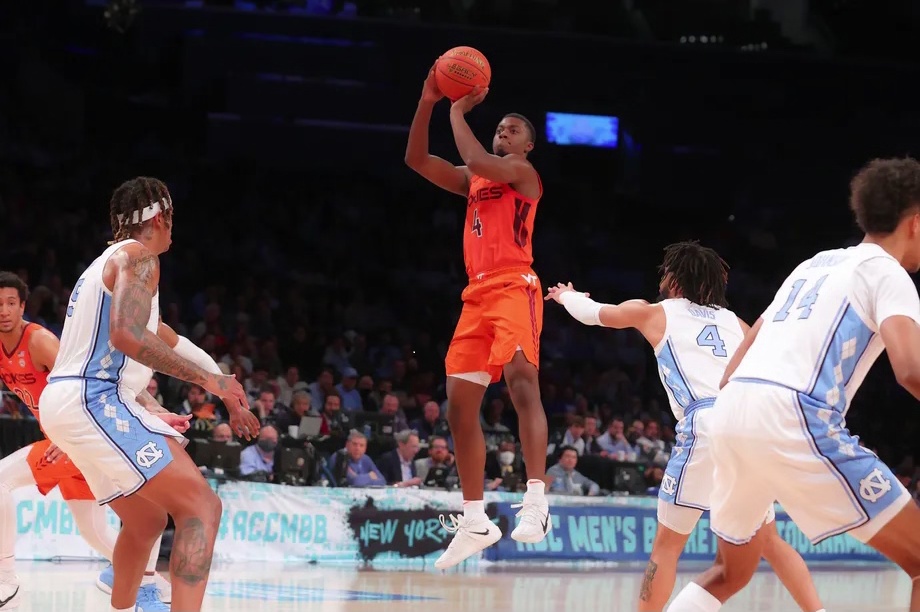
Tristen Newton Should be Playmaker Team Needs at Point

Despite UConn’s success the last three seasons, the program has not been blessed with a reliable scorer and playmaker at point guard. Enter Tristen Newton, formally of East Carolina. He was heavily recruited after entering the transfer portal when the Pirates season ended and the Huskies pounced on him quickly to fill their hole in the backcourt. After his official visit, Newton was quickly on board with playing in Storrs.

Newton was considered one of the top guards in the entire transfer portal and for good reason. He averaged 17.7 points, 5 assists and 4.8 rebounds for the 15-15 Pirates, regularly carrying the team in the AAC. Barring an injury, Newton seems penciled as Newton’s primary point guard next season (although Andre Jackson should run the offense to a decent extent).

The “6-5”, 190 pound Newton can score from anywhere on the floor and is particularly adapt at getting to and finishing at the rim, as well as reaching the free throw line. He was automatic from the stripe last season, shooting 87.9% overall and leading the American with an 87.4% mark. Factor in Newton’s ball-handling, ability to make plays for teammates and rebound and defend, and it’s clear he could have been successful day one at whatever program he transferred to.

Newton’s advanced stats as a junior show why he was a star for ECU. Newton had a true shooting percentage of 57.5% and an effective field goal percentage of 49.9%. In conference play, he ranked 16th in true shooting percentage. While Newton isn’t a huge threat from beyond the arc, his mark of 33.3% last season was more than respectable. Newton’s assist rate in conference play ranked second at33.2, and his overall rate of 34.4 was 24th in the nation. Newton demonstrated he could he could carry an extremely heavy workload last season, averaging the highest percentage of minutes of any AAC player and the third-most percentage of possessions.

Newton’s arrival should give the team a reliable three-true outcome scorer. In particular, Newton can both stretch the floor and effectively find teammates for good scoring opportunities. His versatility will especially be key if Hurley chooses to play four-out on offense for stretches. I can just imagine Andre Jackson and Adama Sanogo getting a lot of quality scoring chances because of Newton’s ability to create.

On defense, Newton’s steal percentage last season was 2.4% and he was excellent on the defensive boards for a point guard, grabbing 13.1% of his opportunities. Newton had multiple steals in 14 games, and five or more rebounds in 15 games. His size and athleticism will allow him to reliably pressure ball-handlers, and Newton’s rebounding ability can help UConn get out ahead of teams and and effectively run the fast-break. Dan Hurley also mentioned that Newton’s length will possibly allow the Huskies to play zone more.

Newton is expected to become UConn’s to-to player from day one along with Adama Sanogo. However, he certainly knows there are things he can immediately improve on both now and throughout the season. Newton specifically pointed to improving his strength and conditioning to withstand the tougher competition in the Big East.

Newton embraced the Huskies when he entered the portal after Hurley and the coaching staff demonstrated knowledge of his background and game, something that was not true of many programs that reached out to Newton. His bond continued to strengthen with the coaches and players once Newton reached campus. Like many players, he appreciates Hurley’s passion on the court.

“Ever since the first phone call, I knew that they cared about their players,” Newton said. “They’re players’ coaches. They’re going to push you hard and want the best for you. That’s what drew me here.”

It’s a question mark right now how likely Newton is to use his extra year. On one hand, he can be a signature player for the Huskies and a leader embraced by fans. On the other hand, Newton can put himself in position to be drafted if he has a strong season.

Newton can surpass R.J. Cole and Tyrese Martin as maybe the highest-impact transfer in UConn history. In particular, he can be the key to the program becoming much more versatile on offense and finally lead them to a tournament run again. If Newton is successful with the Huskies, it will only make them more appealing for transfers going forward. Bring him on!

Naheim Alleyne Brings Experience and Shooting to Storrs

Naheim Alleyne had three strong years at Virginia Tech, averaging 9.9 points. But after a tough first-round NCAA tourney loss for the Hokies, Alleyne was looking for a fresh start in the transfer portal. That’s when Luke Murray and UConn came calling.

While the “6-4” shooting guard was heavily pursued by programs looking for shooting, Murray was the only assistant coach who directly messaged Alleyne on Instagram. Alleyne then forged a close connection with the rest of the assistant coaching staff, and once he met Dan Hurley in person and saw the school up close, Alleyne realized the Huskies were the perfect fit for him.

UConn met the three criteria he was looking for in a program: skill development, a strong relationship with the coaches, and an appealing campus environment. Meanwhile, Alleyne was fulfilling the Huskies desire for a veteran guard who could reliably put the ball in the basket and bring a winning mentality.

As a player, Alleyne profiles as a sharpshooter, reliable ballhandler and skilled defender. He is a career 38.7% 3-point shooter and has been very consistent from deep throughout his career. Last season, he shot 37.3% from three and was twenty-third in ACC play at 37.9%. He made three or more treys in 10 games. With Virginia Tech, Alleyne especially provided himself adept moving without the ball and shooting off of screens.

Overall on offense, Alleyne averaged 9.6 points per game last season with an effect field goal percentage of 48.2% and a true shooting percentage of 51.8%. Alleyne’s shooting inside the arc was again underwhelming (38.8%), but he did shoot over 85% at the line. Alleyne scored in double-digits 17 times and was strong in February during ACCC play, averaging 10 points. However he struggled in the ACC tourney even as the Hokies won, averaging just 6.5 points, and scored four on 1-3 shooting in their first round NCAA tourney loss to Texas.

While Alleyne is known for the three, he has the ability to be a solid midrange shooter as well as take the ball to the rim and score. Alleyne is not going to be a guy who regularly creates his own offense, but he can make a shot from anywhere on the floor with enough spacing. At the same time, Alleyne has the passing ability to find open teammates anywhere on the floor.

Alleyne is a very reliable ballhandler, as he committed just over one turnover per game last season. In ACC play, his turnover percentage of 13% was 19th in the conference. While Alleyne averaged just 1.5 assists, he is universally regarded as a good passer and that percentage should go up if UConn is able to knock down outside shots and spread the floor. Alleyne should especially be able to find teammates like Adama Sanogo and Andre Jackson open inside for easy looks. Because of Alleyne’s size and length, the Huskies can also rely on him to break the press in certain situations.

With his size and agility, Alleyne should be a handful against any guard or small forward he defends. He is known for his aggressiveness and active hands as well as his ability to avoid fouls. The senior transfer averaged a steal a game and had six games with double digit steals last season. With how well Alleyne seems to fit Dan Hurley’s defensive system and the coach’s ability to teach it, I could easily see these numbers going up.

Alleyne certainly has lofty goals now that he has arrived in Storrs. He told the Courant that his goal is to win both the Big East title and national championship as well as improve as a player. He also wants to show more emotion on the court at UConn, emulating Dan Hurley as much as he can.

I believe Alleyne was another great portal pickup for UConn. He’s the ideal 3-and-D player, and we know he want be intimidated playing in the Big East after facing so much talent in the ACC. All the feedback about Alleyne so far this offseason has been positive. Alleyne will definitely push Jordan Hawkins for the third guard spot in the starting lineup, although it’s more likely that he would be the first guard of the bench. Alleyne found a great landing spot, and I look forward to seeing him drain threes in my dreams.

Hassan Diarra Comes Home to Storrs

When Hassan Diarra was starring for Putnam Science Academy in high school, UConn heavily recruited the four-star recruit hard but came up short for the shooting guard, who decided to head to the Southwest and Texas A&M. When Diarra was ready for a new opportunity after his sophomore season, however, it didn’t take much time for Diarra to decide to come home.

Diarra, a ‘6-2’ shooting guard, averaged 6.2 points and 1.4 assists last season and 6 points in his two seasons with the Aggies, who just missed the NCAA tournament last season. He added 19 assists last season in 39 games. Diarra developed a reputation for clutch shooting last season, hitting three 3-pointers that either tied or won the game for Texas A&M. Diarra is certainly not scared of the big moment, telling the media “I think it’s just a testament to how hard I work. I work hard every day, and it showed in the biggest moments.”

Diarra showed some growth last season but still has a lot of room for improvement with the Huskies, who he can play up to three seasons with due to the extra Covid-19 year available. He improved his shooting significantly as a sophomore, going up 13 points in his offensive rating according to KenPom and recording solid jumps in his effective field goal and true shooting percentages as well (to 43.8 and 48.7). Diarra cut down his turnover rate by 7.3 points to 21.4, and improved his assist rate in conference play. After a tough start to conference play, Diarra ultimately ended up with seven double-digit scoring games and ultimately had 11 on the season. The muscular Diarra is a solid finisher and shot 48.7% inside the arc during conference play.

Diarra does not have a great handle and committed multiple turnovers in 12 games. However, he will be capable of providing additional ball-handling when necessary and support Tristen Newton, Andre Jackson and Jordan Hawkins with running the offense during short spurts. Diarra will likely compete with Hawkins for starter’s minutes. A key factor for Diarra earning more minutes is improving his 3-point shooting. He knocked down 31.2% beyond the arc as a sophomore and drained multiple threes in eight games.

Diarra should be a solid defender for the Huskies. He has demonstrated the ability to use his size and athleticism to body up on defenders and pressure the ball. Diarra has a knack for getting steals and earned a steal rate of 2.5% with the Aggies last year, forcing multiple ones in six games.

The long-standing relationship that Hassan’s brother Mamadou has with the UConn program certainly didn’t hurt when Diarra was deciding to transfer. Mamadou played briefly for UConn under Kevin Ollie before injuries ended his on-court career, and has been a member of the coaching staff for four years now. He was recently promoted to the role of Director of Player Development. Ultimately however, Hassan told the media that his final decision in where he transferred came down to the relationship with the coaches, where he could see himself thriving, and the program having winning as a priority.

Diarra is especially valuable to the program as a skilled player who will be with the program for at least two years (barring him transferring) and can develop under the tutelage of Dan Hurley. As a junior, he will likely play 15-20 minutes at most. Diarra should play significantly more minutes next season at shooting guard if Tristan Newton and Naheim Alleyne choose to not use the super senior year available to them due to Covid-19 or Andre Jackson decided to pursue a professional career.   

UConn was in need of two-way players who have had proven success at a high level, and Diarra absolutely fills that niche. If he can provide an immediate impact on defense and continue to become more well-rounded on offense, the Huskies could find themselves with an indispensable piece and fan favorite in Hassan’s final season in Storrs.

Transfer Joey Calcaterra Brings Reliable Outside Shooting to Bench

The former San Diego Torrero will be leaving the West Coast Conference and heading to the East Coast for his sixth and final college season. Calcaterra, a ‘6-3’ shooting guard, played four seasons for USD and averaged 8.5 points and shot 34.4% from three as a regular starter last season. Calcaterra struggled with injuries at times, missing two games, and had a shooting slump in the middle of the season that caused his rate states to go down in comparison to his sophomore and junior seasons, when he averaged double figures.

If one just briefly looks at Calcaterra’s stats from last season, they can be forgiven for wondering why the Huskies would want to bring in a super senior transfer from a mid-major conference that isn’t elite in any one area, especially as the program’s likely final transfer portal acquisition. But looking closer, you recognize that Calcaterra’s perimeter and free throw shooting, passing and experience makes him a great fit for the Huskies as a rotational guard, especially considering Dan Hurley’s stated desire to play a 4-out offense.

In addition to his injury issues, part of Calcaterra’s offensive inconsistency last season was due to the lack of help his teammates gave him. San Diego’s offensive efficiency was ranked 298th on KenPom, and players assisted on just over 39% of field goals, the fourth-worst mark in the nation. Calcaterra is much more suited to playing a catch-and shoot game than creating off the dribble, and it’s easy to see how having to constantly create his own scoring opportunities as well as for others could depress both the sharpshooter’s overall stats and efficiency. With UConn, Calcaterra will benefit from open, high-quality shots and be pressured into turnovers less.

In Storrs, Calcaterra should be an effective off the bench sniper who can consistently provide 10-20 quality minutes on offense, especially against defenders he matches up well with physically that he can shoot over. Calcaterra should be able to get good looks both when set and on the move off of screens. While his shooting splits were mostly down across the board as a fifth-year senior (41/.2/34.4/86.8), they were much more efficient during his pandemic-shortened junior year (44.6/37.7/867), when his true shooting was at 62.3%, and even Calcaterra’s sophomore campaign. When you go back and look at videos of his shooting stroke from last season it appears to be as technically sound as ever, even if the ball didn’t go in the basket as much. With UConn, I expect Calcaterra to improve on his shooting percentage from three as he’s given more space to operate. Even if he doesn’t, similar shooting numbers should be more than acceptable with the other perimeter threats joining the Huskies both through the portal and as freshman.

The feedback fans have gotten back about Calcaterra’s performance in practice and scrimmage since he arrived should make them even more confident about his ability to be a “microwave scorer” off the bench. Associate head coach Kimani Young called him “the best shooter by far” in the summer sessions in early August, and both Andre Jackson and Jordan Hawkins testified to Calcaterra’s shooting prowess as well as his leadership ability.

Calcaterra’s ability to contribute in areas other than perimeter shooting are a little more up in the air. White he could act as a secondary ball handler for brief stretches of time against certain opponents, he was an unspectacular ball handler and passer with the Toreros and did not show the ability to create plays off the dribble for others. This is borne out by both video and Calcaterra’s stats, as he has averaged more turnovers than assists every year of his college career (his rates were 10.8% to 19.5% last season). UConn fans know after last season that its team needs as many spare ball handlers as possible, but don’t expect Calcaterra to soundly develop a great handle or playmaking skills anytime soon. Hurley and the Huskies didn’t recruit him for that role, and it’s mostly fine.

Calcaterra’s ability to be an effective defender is also up in the air. While he is widely seen as a hard worker on that end, Calcaterra may struggle to cover more quicker and more athletic perimeter players who he doesn’t have a size advantage on. At the same time, what was considered strong defense against WCC opponents will definitely not carry over against top Big East and additional power conference foes. Calcaterra’s overall box plus-minus was -2.4 last season. Dan Hurley has shown the ability to especially coach up and help improve players on the defensive end however, and I expect him to be able to do the same for Calcaterra. And again, the transfer is at UConn to provide depth and versatility on offense in likely limited minutes.  

While Calcaterra’s defense and ball-handling may not make a positive impact in his final college season, it is heartening to see how eager he was to play for a prestigious program like UConn and willing to take a reduced role to play for a winner. When he officially transferred, Calcaterra told the media that “It’s just an exciting time to be a part of such a historic program and successful program and the opportunity itself is just really a blessing,” and “I know nothing’s gonna be given to me. Obviously, they have a great roster already, so I’m just excited to get out there and play with the guys that are on the roster.” Every program needs experienced guys who take that mentality, especially as the transfer portal becomes a much bigger part of the game. The Huskies need experienced starters to set an example for such a young team, and Calcaterra’s ability to do so is just as important as the stats he will put up.

After becoming more familiar with Calcaterra over the past few weeks, I think he was a great pickup as a reliable and heavily experienced shooting guard who should be able to regularly play 10-15 minutes and have a few standout performances when his 3-pointers are following. You can’t do much better for a sixth backcourt option, especially now that Hurley has committed to regularly playing a 4-out offense. I can immediately see Calcaterra becoming a favorite of myself and many other loyal fans. One thing is for certain: Hurley’s quartet of transfer pickups (Calcaterra, Tristen Newton, Hassan Diara and Nahiem Alleyne) has to be one of the most impressive of any power conference team and bodes well for their chance of improvement.    

Examining the Transfers Who Left: A Bigger Picture

With UConn getting a trio of strong transfers so far, I will absolutely give coverage of each transfer as well as the larger impact they should have on the program in the next week. Before that however, I have to examine the four transfers UConn lost (Rahsool Diggins, Akok Akok, Jalen Gaffney and Corey Floyd Jr.), the circumstances behind each player’s decision and the impact they had on the Huskies while in Storrs. In a lot of ways, I think the three transfers UConn has gotten in the portal so far this offseason are a net positive over the ones they lost. However, losing each transfer is very disappointing, especially the transfers of Gaffney and especially Floyd. One thing that’s obvious: Having at least one or two players transfer from the Huskies in the portal should be the norm in the next few years, particularly with the attractiveness of NIL deals.

Below are my thoughts about the four transfers. It is said to see them all go. However, I think the transfers will as a group likely find better opportunities with their new programs.

Rahsool Diggins

When Diggins first committed to UConn in the summer of 2020, there was a hope that he could be the next great UConn point guard. The four-star Philly product was seen as a top-10-point guard in the 2021 class and a top-60 player overall, and was named the Pennsylvania Player of the Year as a senior playing for Archbishop Wood High School. The Huskies snagged Diggins over blue-chip programs like Florida, Villanova and Kansas a long with over strong ones. On the recruiting circuit, Diggins was seen as a strong ball handler who could attack and score at the basket, and was especially heavily praised for his leadership ability. When he arrived in Storrs last summer, Diggins continued to be praised for his potential, swagger and leadership potential.

At the beginning of this past season, it was hoped by fans that Diggins could become a reliable backup at point guard to R.J. Cole and Gaffney by the end of the year and a general sparkplug off the bench. However, he never displayed the ability to do so. Diggins only twice played more than seven minutes (against Central in the opener and Grambling State) and no more than three minutes in the four Big East games he played in. Ultimately, Diggins shot just 3-10 and committed 6 turnovers against 4 assists. Diggins turnover rate in the miniscule minutes he played was 45.6%.

Like most fans, I was desperate to see Diggins appear more, especially with Gaffney disappointing throughout Big East play. However, it is understandable to me why Hurley didn’t give him more run time. Diggins appeared overwhelmed when he did appear during garbage time, struggling to run the offense and handle the ball efficiently. There is the caveat that Diggins almost never played with multiple starters. Between his play and the whispers about him struggling on defense and consistently running the offense in practice, it seems that Diggins was not ready for the level of play as a freshman. If Diggins had been performing well in practice as the season went on, I think it’s likely that he would have taken minutes from Gaffney, just as Jalen did as a freshman from Alterique Gilbert.

After looking at a handful of programs on the East Coast, including Penn State, Diggins decided to transfer to UMass and play for new head coach Frank Martin, who led South Carolina to the Final Four five years ago. The decision makes a lot of sense, as Diggins will be able to play for a coach who’s determined to give opportunities to young players and should get more playing time at a slightly lower level of competition. Diggins definitely has the skills to be an effective point guard for a winning A-10 program and possesses the drive to succeed. Diggins decision to not stay longer at UConn to compete for playing time still stings, but it makes sense when he knew Dan Hurley would bring in an experienced point guard as a transfer, which turned into Tristen Newton. Best of luck to him.

Akok Akok

The big man entered Storrs from Putnam Science Academy three years ago with a ton of hype, and his athletic and energetic style of play endured him to fans early on as a freshman. Unfortunately, Akok’s Achilles tear in February of his first year was a devastating injury that had a huge effect on his athleticism and overall game, larger than myself and most fans expected. Even when he re-entered the rotation for good this past season, Akok’s playing time was very inconsistent and he never showed the same athleticism he had as a freshman. After his checkered year and no guarantee he would be a go-to guy as a senior, Akok understandably decided he needed a fresh start and transferred to Georgetown to play for Patrick Ewing.    

Akok played in 23 games this past season and was absent from a decent number due to a combo of health and matchups issues. He appeared in just three of the last 13 games and played double-digit minutes in Big East play just five times. Akok, who is “6-9” and has a larger wingspan but is pretty skinny, scored in double figures just three times (against St. Bonaventure, Grambling State and Coppin State) and grabbed double-digit rebounds just once. Akok was still plenty effective as shot blocker in certain games, recording 3 or more in seven games.

Overall, Akok had an offensive rating of 126.4 and a true shooting percentage of 55.2%. Akok had a defensive rebounding percentage of 16.6% and blocked 8.2% of shots on offense. Akok’s offensive statistics were heavily boosted by his shooting from deep, as he made over 46% of 3-pointers on 28 attempts. However, Akok shot under 50% inside the arc, with most of these coming right at the rim, and missed 12 of 18 free throws.

Because of his shot-blocking and perimeter shooting skills, Akok seemed like a good complement to Isiah Whaley and Adama Sanago in the frontcourt. There was also a good possibility he could become more effective over the course of the season as he built up stamina during the Big East schedule. These hopes never lived up to the reality, however. While Akok remained an excellent weak-side shot blocker, the athleticism he lost from injury and body type made it tough for Akok to be a reliable defender and shut down guys 1-on-1. On offense, Akok similarly lacked explosiveness and never scored consistently in the paint. On both ends of the floor, he looked disengaged at times and now did not have the stamina to play for long stretches at a time.

I agree with some fans that Hurley did not give Akok enough minutes on the floor at times to help spread out the offense or provide another shot-blocking and rebounding threat. In the end though, it was hard to deny that Akok got lost easily on defense and was not well-incorporated on offense. Considering the high ceiling Akok originally indicated he could reach it is a sad story that injuries caused Akok to currently be less skilled.

When Akok decided to transfer he mainly looked at Georgetown, Pittsburgh and West Virginia as possible destinations before deciding to join Georgetown and Patrick Ewing for next season. Akok was told he could get more consistent playing time and maybe even become a starter in DC, and would provide the Hoyas the perimeter scoring and defense they are looking for as the program looks to get back on track. With no guarantee of how much playing time he would see in Storrs and a loaded frontcourt, it is understandable that Akok chose to follow a fresh start. The best of luck to him, and I’ll always remember the highlight-reel plays he provided.

Jalen Gaffney

Before Diggins was looked at as the next great UConn point guard, it was Gaffney (one of many New Jersey natives on the Huskies) who fans hoped would hold that title. Gaffney came in as higher-ranked than James Bouknight and for good reason. And as a freshman, he showed a lot of promise and even took the starting point guard position from Alterique Gilbert late in the season. Unfortunately, Gaffney did not take a huge step forward as a sophomore and then underperformed nearly across the board this past season. When Hurley made it clear that he was going to go after point guards in the transfer portal, Gaffney chose to pursue a starting role at Florida Atlantic, a member of Conference USA.

After having an offensive rating of 107.7 and true shooting percentage of 55.4% as a sophomore, Gaffney’s advanced shooting marks fell to 103.4 and 48.9% as a junior. His traditional field goal shooting percentage also suffered, as Gaffney shot just 38.1% inside the arc and 29.5% on 3-pointers, nearly seven percent lower than 2021. Gaffney attacked the basket much less than expected and struggled to finish in the paint, and his struggles from deep limited UConn’s ability to stretch the floor. This was after he was expected to be one of the team’s main 3-point threats entering the season. Gaffney did not score in double-digits in Big East play and had an offensive rating of just 91.6 while shooting 30% from the field.

Gaffney’s ball-handling did improve somewhat as a junior but slipped in Big East play. He had an assist rate of 27.2% overall against a turnover rate of 21.4%, but his turnover rate jumped to 27.3% in the conference, three points higher from his sophomore year. He frequently had multiple assists outside the conference early in the season but just three times in conference play. Overall, his assist to turnover ratio was roughly 1.5-1. Gaffney generally did a decent job of managing the offense when R.J. Cole played off the ball, but was still inconsistent and could not be relied upon to run the offense with Cole sitting against the best teams. His shooting struggles and mediocre defensive play caused Gaffney to lose playing time over the course of the season and put more pressure on Cole while forcing Andre Jackson to also act as a secondary ballhandler. On defense, Gaffney was a reliable threat to get steals and his on-ball defense was somewhat improved, but still struggled to defend high-quality guards despite his size.

Gaffney’s inability to live up to expectations in 2022 was especially frustrating because of the strong end to his sophomore year how much fans and Dan Hurley were hoping he would bring. All preseason long, they kept hearing about how Gaffney “would be more aggressive” and “take on a leadership role” while allowing Cole to play off-ball more. A large part of the reason UConn didn’t really look at transfers in 2021 was because of how much faith Hurley and the other coaches had in Gaffney, and it’s just sad that he could not fulfill it. By the end of the season, Gaffney appeared timid and somewhat disengaged. I don’t mean to gang up on him, but I had definitely soured on Gaffney by midway through the season.

All this being said, Gaffney could find a lot of success at Florida Atlantic. It’s a program that is trying to build on a solid 2022 season and needed an experienced point guard. Gaffney’s size, athleticism and experience should give him a big heads up against a lot of the competition in C-USA. In addition, I am sure he will be motivated to prove his critics wrong and reach his potential in his two years at FAU (second his extra year of eligibility due to Covid-19). After representing the Huskies well both on and off the court, a fresh start for Gaffney could be wonderful for him and I will be rooting for Gaffney from afar.

Corey Floyd Jr.

The full story of what exactly happened with Floyd Jr.’s decision to leave UConn, where he had redshirted this past year and was primed to get solid playing time in 2023, and transfer to rival Providence (his father’s alma matter) will not likely be understood for a few years. All I know is that hearing he was entering the transfer portal in April and then going to the Friars, where he originally was originally recruited, made me equal parts sad, angry and confused. A month plus later, it’s confusion that reigns the day.

Floyd, another NJ recruit who played at Roselle Catholic, was a “6-4” four-start recruit and considered by recruiters as one of the best combo guards in his class. When he originally committed to the Huskies last winter, he chose them over Providence and Rutgers as well as a handful of other strong programs. Floyd was targeted by Hurley and lead recruiter Kamani Young for his ball-handling skills and ability to attack the basket, jump-shooting and strength. Floyd reclassified to 2022 so he could go to UConn early, and agreed with Hurley and coaches to redshirt this past season to work on improving his game and strength and get the chance to compete against the whole team in practice. When Floyd said that he would initially redshirt, he also promised he would work hard to improve and get it lifted so he could compete in games.   

From all reports, Floyd improved very highly over the course of the season and became stronger. Hurley even said right after the season that Floyd could have helped UConn with the depth issues it experienced at guard, although he gave no indication that Floyd would have played much if at all. There is almost nothing known about why Floyd decided to leave and chose Providence specifically versus the other schools that tried to attract him in the portal, most notably Rutgers. He had not given any interview quotes about the subject and Hurley or Friars coach Ed Cooley isn’t going to reveal Floyd’s thinking process.

However, there were Internet rumors that Floyd and his family had been told by Hurley that his redshirt would be lifted if Floyd performed well enough in practice, and yet Hurley had decided to not do so when Floyd thought he was outperforming members of the rotation in practice before saying Floyd could have helped the Huskies after the season ended. Those rumors caused the Floyd family to lose faith in Hurley and Corey to defect to Providence. Considering how the timeline played out, that tracks. This is especially true if there weren’t any extenuating issues with Floyd’s family that caused him to decide to leave.  

Obviously, I am not a psychic and have no insight into what happened between Floyd and UConn and why he decided to leave so abruptly when it looked like there would be good opportunity to earn playing time next season. It’s not hard to conclude however that Floyd likely mismanaged Floyd. With the transfer portal currently being a Wild West, it makes no sense to redshirt a player for an entire year, especially when he had the potential and immediate strengths that Floyd offered. In retrospect, what should have been done was to try and see if Floyd could have finished his high school credits early and then joined the team for spring practices and workouts in 2021, similar to what Alex Karaban is doing no and what Akok did before him. That way, Floyd would have been able to work on his game and build relationships with teammates while seeing the program and Hurley up close. If he had changed his mind and then decommitted before the season started, it would have made much more sense. Instead, Floyd got to improve his skills and strength and conditioning while not having the reward of playing in games, and UConn, Hurley and Floyd’s former teammates are left holding the short end of the stick.

While my feelings on Floyd’s decision to go to Providence have mostly stabilized in the month since it happened, there was definitely a sense of bitterness when he chose the Friars of all programs. How dare he go to a rival right down the road? But Floyd is entitled to look out for his best interests, and I can see him becoming one of their team’s best players over the next two to three years. I just hope he has his worst games against the Huskies. To all fans, I urge them to not be angry at Floyd or blame Hurley for letting him get away if Floyd becomes a star. Instead, blame how messed up the current transfer portal system is and pray that a similar situation doesn’t occur with another UConn recruit. Adios, Corey. I hardly knew you.